

The Evolution of AI Agents: beyond Simple Query Responses
Artificial Intelligence agents have transcended the realm of mere facts retrieval to become proactive collaborators in problem-solving and task execution.early AI systems were limited to parsing queries and returning static responses, frequently enough requiring users to interpret and act upon the information themselves.Today’s AI agents integrate with diverse platforms, leveraging contextual awareness, natural language understanding, and autonomous decision-making abilities to streamline workflows and enhance user productivity. This remarkable evolution is driven by advances in machine learning algorithms, data accessibility, and continuous feedback loops that refine AI behavior in real-time.
Several key features distinguish modern AI agents from their simpler predecessors:
- Contextual comprehension: They understand the nuances of user intent beyond keywords.
- Task orchestration: AI agents coordinate multiple subtasks, managing dependencies and timelines.
- adaptability: Automated learning from interactions enables customization to individual user needs.
- Integration capability: Seamlessly connect with external tools and services for holistic solutions.
| AI Capability | Early Systems | Modern AI Agents |
|---|---|---|
| Response Type | Static answers | Dynamic task execution |
| User Interaction | Query-response only | Conversational and proactive |
| Learning Approach | Rule-based | Continuous machine learning |
By moving beyond simple query responses, AI agents are reshaping how individuals and enterprises handle complex activities, reducing friction and unlocking new operational efficiencies.
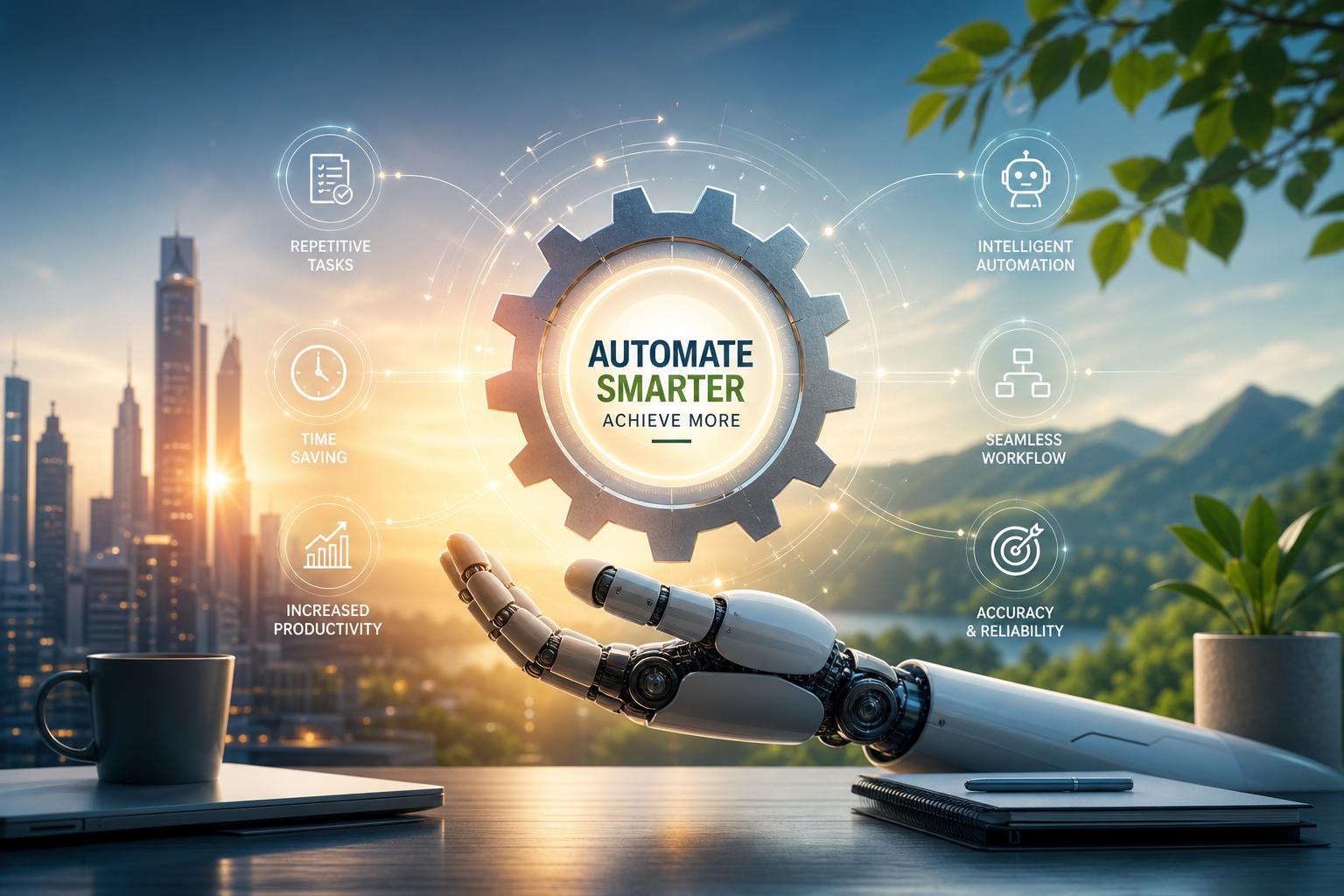
Enhancing Efficiency Through Intelligent Task Automation
intelligent task automation, powered by advanced AI agents, revolutionizes how businesses and individuals approach daily workflows. These AI agents don’t just provide static answers-they dynamically adapt, analyze, and execute complex sequences of actions with minimal human intervention. By leveraging machine learning and natural language processing, they streamline operations that once consumed meaningful time and resources, enabling a shift from reactive problem-solving to proactive task management. Efficiency gains are amplified as AI agents manage scheduling, data processing, and decision-making processes with remarkable precision and speed.
Key advantages of integrating AI-driven automation include:
- Consistency: Automated tasks are completed with uniform accuracy, reducing errors and variability.
- Scalability: Operations can be rapidly expanded without proportional increases in labour costs.
- Real-time Adaptation: AI adjusts workflows on the fly based on new data inputs and shifting priorities.
| Task Type | Traditional Time (hrs) | AI Automation Time (mins) | Efficiency Gain |
|---|---|---|---|
| Data Entry | 4 | 10 | 93% |
| Customer Support Queries | 3 | 5 | 72% |
| Scheduling & Coordination | 2 | 3 | 75% |
Integrating AI Agents for Seamless Workflow Optimization
Modern enterprises thrive on efficiency, and the integration of AI agents plays a pivotal role in achieving seamless workflow optimization. By deploying AI that autonomously manages routine tasks, organizations can minimize human error and accelerate decision-making processes. These agents utilize advanced algorithms to analyze real-time data, identify bottlenecks, and dynamically adjust operations to maintain peak productivity. Key benefits include:
- Automated scheduling and resource allocation
- Intelligent prioritization of tasks based on urgency and impact
- continuous performance monitoring and proactive problem resolution
Moreover,this integration fosters collaboration between humans and machines,where AI agents handle repetitive work while allowing employees to focus on strategic initiatives. The synergy created by these intelligent systems results in not only faster task completion but also enhanced adaptability to shifting buisness demands. Below is a simplified overview of typical outcomes from integrating AI agents in workflow systems, demonstrating measurable improvements:
| Workflow Metric | Before AI Integration | After AI Integration |
|---|---|---|
| Task Completion Time | 5 days | 2 days |
| Error Rate | 7% | 1.5% |
| Employee Focus Time on High-Value Tasks | 30% | 65% |
Best Practices for Leveraging AI Agents in Complex Problem Solving
Harnessing the full potential of AI agents in complex problem solving requires a strategic approach centered on clarity and context. To optimize performance, it is essential to define precise objectives and boundaries for the AI. This enables the agent to focus on the relevant data and processes, minimizing noise and maximizing efficiency. additionally, leveraging iterative feedback loops allows AI agents to refine their insights continually, ensuring that outcomes evolve in alignment with human expertise and dynamic conditions. Incorporating domain-specific knowledge through curated data sets enhances the agent’s ability to interpret nuances and make context-aware decisions, moving beyond surface-level answers to actionable solutions.
Equally crucial is the integration of human oversight in the deployment of AI agents for multifaceted tasks. A collaborative framework where AI acts as an augmentation tool rather than a replacement fosters critical evaluation and ethical obligation. Employing modular architectures enables agents to tackle sub-problems independently before synthesizing solutions, thus breaking complexity into manageable segments. The table below outlines key best practices alongside their core benefits to illustrate effective approaches:
| Best Practice | Core Benefit |
|---|---|
| Clear Objective Definition | Focused processing, reduced ambiguity |
| Iterative Feedback Loops | Continuous refinement, adaptive solutions |
| Domain-Specific Data Integration | Enhanced contextual understanding |
| Human Oversight Collaboration | Ethical assurance, critical validation |
| Modular Problem Decomposition | Manageable complexity, scalable solutions |