

– Understanding the Limitations of Prompting in Ensuring Domain Consistency
While prompting techniques have advanced, their inherent limitations in maintaining strict domain consistency become apparent when deploying models in specialized fields. Prompts rely heavily on contextual cues, which can be ambiguous or interpreted variably by the language model, resulting in outputs that occasionally deviate from the desired domain-specific norms. This variability is especially problematic in industries where precise terminology and contextual strictness are paramount, such as healthcare, legalor technical sectors. As an inevitable result, the model might generate responses that are contextually relevant but lack the nuanced understanding or technical specificity crucial for the domain, thus diminishing trust and reliability.
Key challenges with prompting include:
- Ambiguity in prompt design: even slight changes in phrasing can significantly alter outcomes, making consistency elusive.
- Lack of deep domain internalization: The model may mimic domain-specific language without truly understanding underlying concepts.
- Variability with input complexity: Complex queries can cause inconsistent interpretations and outputs.
| Factor | Prompting Impact |
|---|---|
| Terminology Precision | often inconsistent without explicit examples |
| Context Depth | Shallow understanding, leading to surface-level answers |
| Response Stability | High output variability on similar prompts |
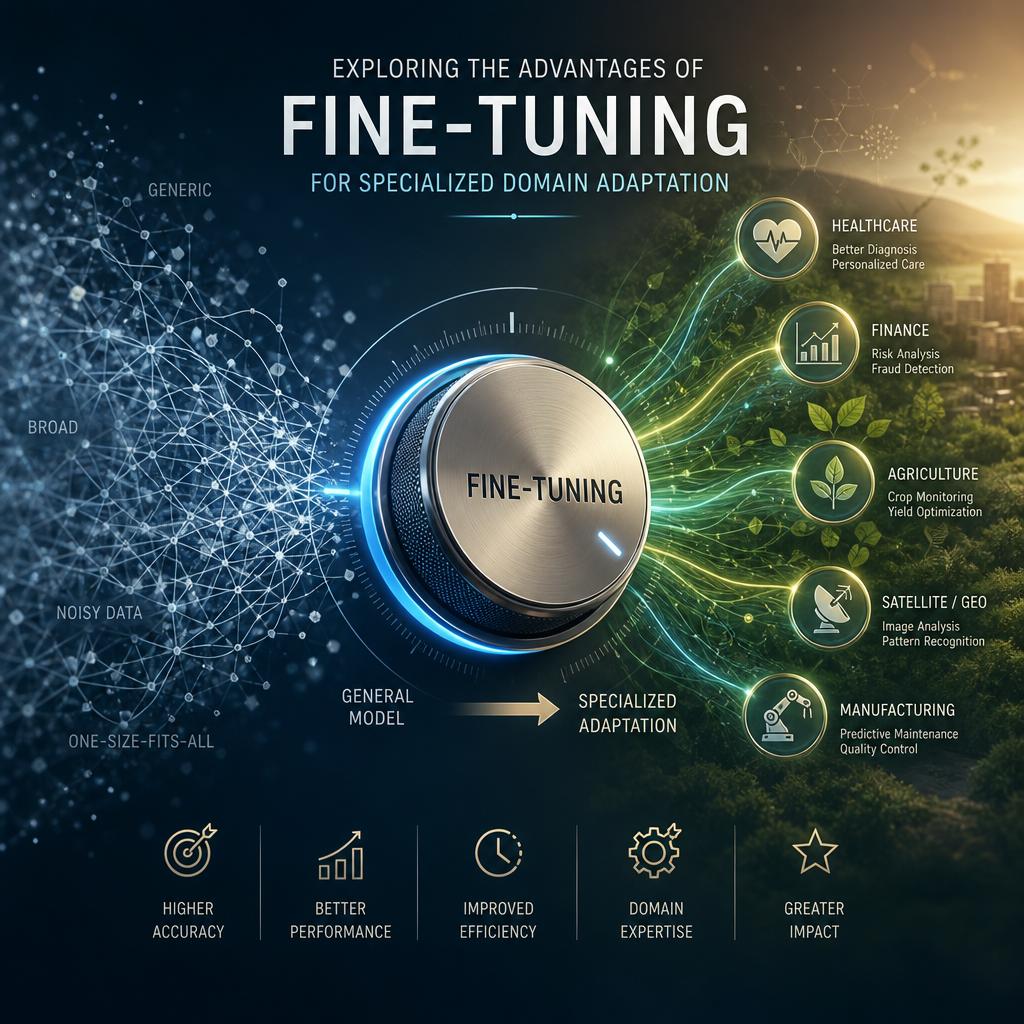
– Exploring the Advantages of Fine-Tuning for specialized Domain Adaptation
Fine-tuning a pre-trained model for a specialized domain enables a kind of precision that generic prompting can seldom achieve. By retraining the model’s parameters on domain-specific data, the model internalizes nuanced terminology, stylistic preferences, and contextual intricacies unique to that field. This results in outputs that are not only coherent but also deeply aligned with domain expectations. Unlike prompting, which attempts to steer a broad-based model via external instructions, fine-tuning essentially reconfigures the model’s intrinsic understanding, delivering a more robust foundation for consistent domain-specific reasoning.
Key advantages of this approach include:
- Improved accuracy in terminology and factual portrayal within the domain
- Reduced ambiguity and variance in generated responses
- Capability to embed complex domain-specific logic directly into the model
- Enhanced reliability when handling specialized queries
| Aspect | Prompting | Fine-Tuning |
|---|---|---|
| Domain consistency | Moderate | high |
| adaptability speed | Instant but surface-level | Requires time but deeply integrated |
| Handling complex nuances | Limited | Robust |
| Reliance on user input | High | Low after training |
– Key Methodologies for Effective Fine-Tuning to Maintain Domain Integrity
Effective fine-tuning hinges on a strategic balance between adapting a model to specific domain nuances and preserving its foundational knowledge. Selective layer Freezing is one pivotal methodology; it involves freezing early neural network layers to retain general linguistic abilities while allowing deeper layers to specialize in domain-specific patterns. This approach prevents catastrophic forgetting and ensures that the model’s core understanding remains intact. alongside this, Curriculum Learning-gradually increasing dataset complexity-lets the model build robust expertise without overwhelming it with heterogeneous data all at onc.
To maintain unwavering domain integrity, thorough data readiness cannot be overstated. Employing Domain-Consistent Validation Sets helps monitor divergence during training, ensuring that any domain drift is caught early. Additionally, Incremental Fine-Tuning-dividing domain-specific data into smaller, manageable batches-reduces overfitting risks and refines the model prudently. Below is a comparison of key fine-tuning strategies that safeguard domain fidelity:
| Methodology | Primary benefit | Risk mitigated |
|---|---|---|
| Selective Layer Freezing | Preserves general language skills | Catastrophic forgetting |
| Curriculum Learning | Progressive expertise building | Model confusion by complex data |
| Domain-Consistent Validation | accurate domain drift detection | Performance degradation unnoticed |
| Incremental Fine-Tuning | Gradual adaptation | Overfitting to narrow data |
– Strategic Recommendations for Implementing Fine-Tuning in Real-World Applications
To harness the full potential of fine-tuning in domain-specific scenarios, it is essential to adopt a strategic approach that prioritizes quality and relevance of training data over quantity.Fine-tuning thrives when models are exposed to meticulously curated, representative datasets that mirror the real-world complexities of the target domain. This approach ensures that the nuanced patterns and terminologies unique to a specific field are internalized effectively by the model. Key considerations include:
- Data Diversity: Incorporate multiple subdomains and contextual variations to enhance robustness.
- Incremental Tuning: Apply periodic fine-tuning cycles rather than one-off adjustments to adapt continuously to evolving domain trends.
- Evaluation Metrics: Use domain-specific benchmarks to accurately measure fine-tuning impact beyond generic accuracy scores.
Implementation frameworks should also emphasize scalability and monitoring to seamlessly transition from experimental to production environments. Deploying automated pipelines that facilitate continuous integration of fresh domain data and retraining routines can significantly improve model longevity and relevance. The following table outlines a practical checklist for fine-tuning deployments that balance precision with operational efficiency:
| Strategic Element | Recommended Practice | Benefit |
|---|---|---|
| data Annotation | Expert review with active learning support | Ensures label accuracy & reduces noisy inputs |
| Model Versioning | Track incremental changes systematically | Facilitates rollback & comparative analysis |
| Performance Monitoring | Real-time domain-specific dashboards | early detection of model drift or degradation |