

Wage Dynamics in the Age of Artificial Intelligence Across Key economic Sectors
Artificial intelligence is reshaping wage structures in diverse ways, reflecting the unique characteristics and competitive dynamics within each economic sector. In technology-driven industries, where innovation thrives, AI tends to amplify wage disparities. Here, workers with advanced AI-related skills command significantly higher salaries, while routine task roles face stagnation or decline. Conversely, in sectors such as manufacturing and logistics, AI integration frequently enough leads to wage compression as automation replaces repetitive jobs, limiting wage growth but stabilizing overall employment costs. The service sector exhibits a more nuanced pattern, with some segments benefiting from AI-enhanced productivity and others confronting downward pressure on wages due to increased automation.
Critical to these wage dynamics is the concept of bargaining power, which varies considerably across sectors.workers in highly organized industries with strong unions or professional associations frequently secure better safeguards against wage erosion in the AI era. In contrast,sectors characterized by fragmented labor markets and weak collective representation frequently enough experience more pronounced wage volatility. Key factors influencing this include:
- Skill specificity: High demand for specialized AI-related expertise boosts wages where bargaining power is strong.
- Automation susceptibility: Roles vulnerable to replacement frequently enough face declining wages unless counterbalanced by collective negotiations.
- Labor market concentration: Greater employer dominance can suppress wage growth behind AI-driven productivity gains.
| Sector | AI Impact on Wages | relative Bargaining Power |
|---|---|---|
| Technology | High growth in skilled wages; increased disparity | Strong |
| Manufacturing | Wage compression; job displacement risk | Moderate |
| Service | Mixed effects; varies by subsector | Variable |
| logistics | Pressure on low-skilled wages | Weak |
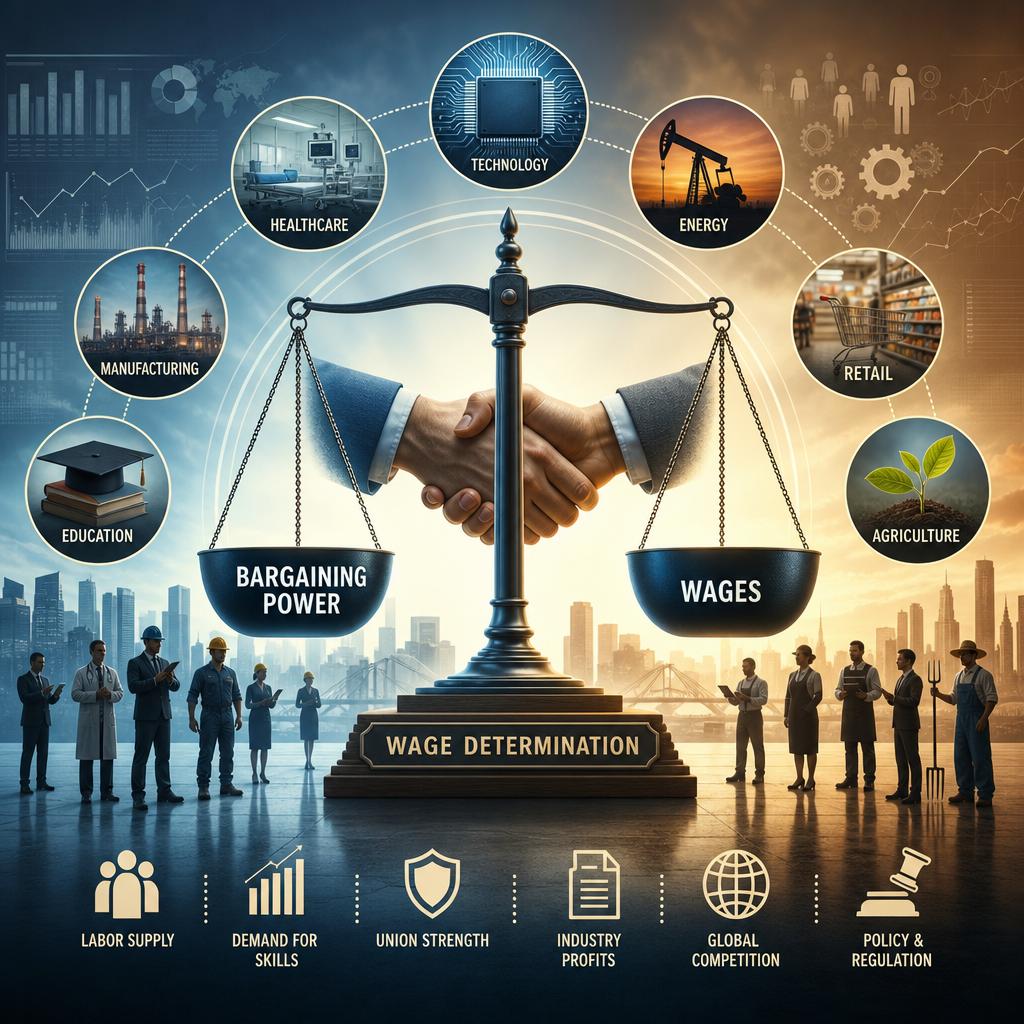
Analyzing the Role of Sector-Specific Bargaining Power in Wage Determination
Understanding the nuanced interaction between artificial intelligence adoption and wage outcomes requires a deep dive into sector-specific bargaining structures. Sectors with strong collective bargaining mechanisms frequently enough exhibit enhanced wage resilience, as unions can effectively leverage their negotiation power to secure fair compensation in the face of automation-induced workforce shifts. Conversely, industries where bargaining power is diffuse or fragmented tend to experience wider wage disparities, as individual workers and employers negotiate under unequal conditions. This dynamic fundamentally reshapes labor market outcomes by determining how effectively wage adjustments reflect productivity gains versus cost-saving imperatives linked to AI deployment.
Key factors influencing wage determination include:
- Union density and influence: Higher union presence typically correlates with better wage preservation.
- Employer coordination: Sectors with employer associations can set industry-wide wage standards, stabilizing earnings.
- Regulatory frameworks: Legislation affecting bargaining processes impacts wage distribution across sectors.
| Sector | Bargaining Power | Wage Impact from AI |
|---|---|---|
| Manufacturing | High (Strong unions) | Moderate wage growth, with protections against drastic cuts |
| Tech Services | Low (Fragmented Workforce) | high wage disparities, rapid adjustment to AI-driven shifts |
| Healthcare | Moderate (Sectoral Agreements) | Steady wage increases, tempered by automation in routine tasks |
Impact assessment of AI-Driven Automation on Employee Earnings and Labor Negotiations
AI-driven automation is reshaping wage structures across industries, but its effects are far from uniform. In sectors like manufacturing and logistics, where routine tasks are highly automatable, the introduction of AI has tended to suppress wage growth by reducing demand for low- and mid-skill labor.Conversely, industries such as technology and finance often experience wage premiums for workers who can complement AI, leveraging advanced skills to drive higher productivity. This divergence highlights the importance of sector-specific dynamics, where the balance between displacement and augmentation fundamentally influences earnings trajectories.
Labor negotiations have also evolved in response to these shifts,with bargaining power taking on new dimensions. Unions and employee groups negotiate not just for wages, but increasingly for reskilling programs, job security provisions, and participation in AI governance. Key factors influencing bargaining outcomes include:
- Density and organization of labor unions in sectors highly exposed to automation
- Degree of technological dependency and capital intensity
- Legal frameworks supporting collective bargaining and worker protections
| Sector | Wage Impact | Bargaining Focus |
|---|---|---|
| Manufacturing | Wage stagnation or decline | Job security and retraining |
| Technology | Wage premium for skilled roles | Skill progress and AI governance |
| Retail | Mixed effects, localized wage pressures | Scheduling flexibility and wage floors |
Strategic Recommendations for Enhancing Wage Equity amidst Technological Transformation
Addressing wage disparities in the face of rapid technological advancements requires a nuanced approach that recognizes both sector-specific dynamics and the shifting balance of bargaining power between employers and employees. Policymakers should prioritize strengthening collective bargaining frameworks to empower workers in industries most disrupted by AI integration, such as manufacturing, retail, and administrative support. This can be achieved by incentivizing unionization and fostering social dialog platforms that include employers, workersand government bodies. Together,targeted wage subsidies and retraining programs should be introduced to support workers transitioning into new roles created by technological change,ensuring that wage growth keeps pace with productivity gains.
In addition, clear wage-setting mechanisms that incorporate technology-driven productivity metrics can help realign compensation structures to reflect the true value added by human labor in AI-augmented environments. The table below outlines strategic interventions mapped against key sectors experiencing varied AI impacts:
| Sector | AI Impact | Strategic Focus |
|---|---|---|
| manufacturing | high automation risk | Skill upgrading & wage guarantees |
| Healthcare | AI-assisted diagnostics | Performance-based pay reforms |
| Retail | Automation of routine tasks | Collective bargaining enhancement |
| IT & services | AI-driven productivity tools | Incentives for innovation-aligned wages |
- Enhance clarity in wage adjustments linked to AI-driven productivity improvements
- Promote multi-stakeholder frameworks to balance power asymmetries in wage negotiations
- Implement sector-specific retraining programs aligned with future labor market demands