

The Differential Effect of Artificial Intelligence on Wages Across Various Sectors
Advancements in artificial intelligence (AI) have not yielded uniform effects on wages. Employees in sectors with a high degree of automation adoption often face wage stagnation or decline, as machines substitute routine tasks. In contrast, industries where human judgment and creativity remain indispensable tend to experience wage growth. This split underscores the importance of the nature of work: routine versus non-routine tasks. Additionally, the capacity of workers to negotiate pay plays a crucial role. As an example, sectors with stronger unions or collective bargaining mechanisms tend to buffer wage erosion through concerted efforts to preserve or increase compensation levels, despite technological displacement.
Key factors shaping wage outcomes include:
- Sector-specific automation intensity: Manufacturing and administrative roles are highly susceptible, whereas healthcare and education show resilience.
- Bargaining power of labor: Unionized or well-organized workforces can leverage negotiations to safeguard wages.
- Skill adaptability: Workers who upskill and transition into complementary AI roles typically command higher pay.
| Sector | AI Impact on Wages | Role of Bargaining Power |
|---|---|---|
| Manufacturing | decline in routine wage levels | Moderate cushioning through unions |
| Healthcare | Wage growth in complex roles | Strong bargaining for specialized staff |
| finance | mixed wage effects,high variance | Limited union influence |
| Education | Stable to rising wages | Significant influence of collective agreements |
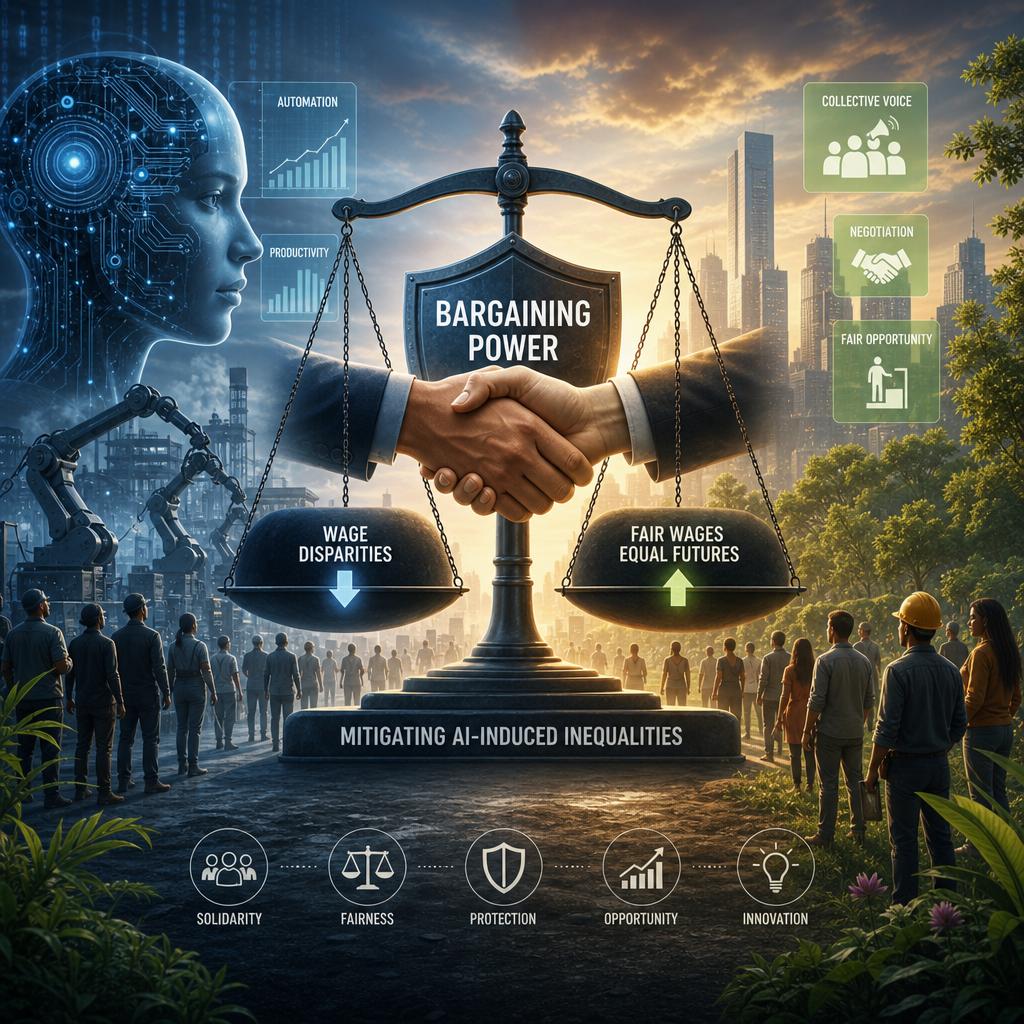
The role of Bargaining Power in Mitigating Wage Disparities Induced by AI
In the evolving landscape shaped by artificial intelligence, bargaining power emerges as a pivotal factor in safeguarding fair wage distribution. Workers endowed with robust collective bargaining capabilities-through unions or sectoral agreements-possess leverage to influence compensation structures, mitigating the adverse wage compression often triggered by AI adoption. This dynamic acts as a counterbalance against the displacement risks AI poses, especially in sectors prone to automation. Equipped bargaining entities can negotiate:
- Wage floors that adjust with productivity gains AI generates,
- Job security provisionsand
- Re-skilling programs ensuring long-term employability.
Conversely, in sectors where bargaining power is fragmented or weak, workers frequently face stagnating or declining wages despite heightened productivity. This disparity underscores how bargaining strength shapes income distribution outcomes across industries impacted by AI. To illustrate, the table below highlights correlations between bargaining power levels and wage adjustment trends across three sectors:
| Sector | Bargaining Power | Wage Adjustment Trend | AI Impact |
|---|---|---|---|
| Manufacturing | High | Moderate Increase | Productivity-Linked Raises |
| Retail | Low | Stagnation | Job Displacement Pressure |
| Data Technology | moderate | Variable Growth | Skill Premiums Rise |
Analyzing Sector-Specific Labor Market Dynamics in the Age of AI Automation
In the evolving landscape shaped by AI automation, wage trajectories diverge considerably across sectors due to variations in technological adoption and labor demand elasticity. Sectors with high exposure to automatable tasks, such as manufacturing and routine clerical services, generally experience wage suppression unless counterbalanced by strong union presence or collective bargaining. Conversely, knowledge-intensive and creative industries often see wage premiums as AI augments skill demands rather than replaces labor. This asymmetry underscores that the mere presence of AI is insufficient to predict wage outcomes; sector-specific labor market structures and bargaining frameworks critically shape the economic repercussions for workers.
Key factors influencing wage dynamics include:
- Automation intensity: Degree to which AI replaces manual versus cognitive tasks.
- Bargaining power: Union density and labor organization strength in wage negotiations.
- Skill complementarity: Extent AI enhances the productivity of skilled workers rather than supplanting them.
| Sector | AI Impact on wages | Bargaining Power | Typical Wage Outcome |
|---|---|---|---|
| Manufacturing | High task automation | Moderate to Strong unions | Wage moderation or stagnation |
| Healthcare | Moderate automation; skill complementarity | Variable, often weaker | Mixed impact; wage growth in specialties |
| Finance & IT | Low task substitution; high skill augmentation | Limited unions | Wage growth and premium |
| Retail & Services | Increasing automation of routine tasks | generally weak | Stagnant or declining wages |
Strategic Policy Recommendations to Protect Worker Wages Amid AI Integration
To effectively safeguard worker wages in an era of rapid AI adoption, policy frameworks must prioritize sector-specific strategies. Different industries experience automation’s impact in unique ways - sectors with high routine tasks are more vulnerable to wage suppression than those requiring complex problem-solving or creative skills. Policies should thus incorporate detailed labor market analyses to identify which sectors demand stronger wage protections and targeted upskilling programs. Moreover, empowering collective bargaining through robust support for unions and worker associations is critical to counterbalance the negotiating power of large tech-driven employers.
Key recommendations include:
- Industry-tailored subsidies for continuous workforce training and AI complementary skills advancement.
- Legal reinforcement of minimum wage standards, especially in sectors highly susceptible to AI disruption.
- Strengthening collective bargaining rights to enable workers to negotiate fair wage adjustments reflective of AI-driven productivity gains.
| Sector | AI Impact Level | Recommended policy Focus |
|---|---|---|
| Manufacturing | High | Upskilling & Wage Floor Protections |
| Healthcare | Moderate | Collective Bargaining Strengthening |
| Creative Services | Low | R&D Incentives & Job Quality Measures |