

Understanding the Role of External Tools in Enhancing AI Capabilities
In today’s rapidly evolving technological landscape, the integration of external tools has become a pivotal factor in advancing artificial intelligence systems. These supplementary applications and software frameworks provide AI models with extended functionalities, such as real-time data processing, enhanced natural language understanding, and sophisticated analytics. By leveraging external tools, AI platforms can transcend their inherent limitations, tapping into specialized resources like cloud-based computing power, third-party APIs, and custom libraries. This synergy not only improves the accuracy and efficiency of AI-driven outcomes but also fosters an ecosystem where continuous innovation is possible.
External tools can be categorized based on their contribution to AI workflows, which can be summarized as follows:
- Data Augmentation: Tools that enrich datasets through synthetic data generation or automated labeling.
- Integration apis: Interfaces that enable AI to communicate with external software or databases for real-time insights.
- Visualization Utilities: Platforms designed to help interpret AI outputs via charts,graphs,or interactive dashboards.
- Optimization Engines: Modules focused on refining algorithms and improving model performance dynamically.
| Tool type | Primary Function | Exmaple Use-Case |
|---|---|---|
| Data Augmentation | Enhance training datasets | Generating synthetic images for computer vision tasks |
| Integration apis | Enable external communication | Connecting chatbots with customer support databases |
| Visualization Utilities | Interpret AI results | Creating interactive dashboards for sales predictions |
| Optimization Engines | Improve algorithm efficiency | Dynamic hyperparameter tuning during model training |
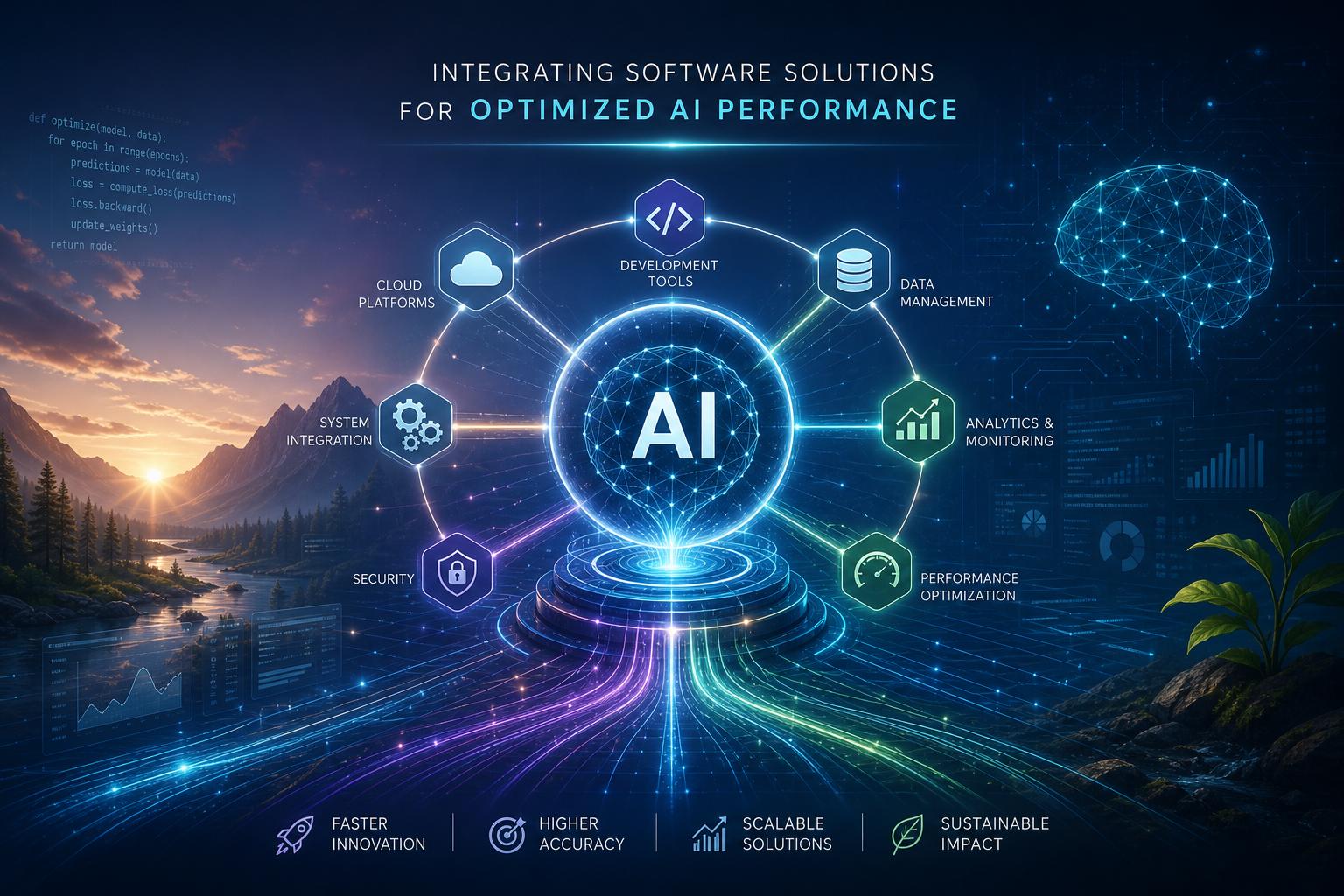
Integrating Software Solutions for Optimized AI Performance
Achieving peak AI performance often hinges on the strategic integration of external software tools designed to enhance processing capabilities and streamline workflows. By embedding specialized applications-ranging from data preprocessing utilities to real-time analytics platforms-AI systems can harness additional computational power and domain-specific expertise, thereby improving output accuracy and efficiency. This modular approach not only facilitates rapid scalability but also allows for custom-tailored solutions that address unique operational challenges within various AI deployments.
Key advantages of integrating external software include:
- Expedited data handling through dedicated preprocessing engines
- enhanced model interpretability via visualization and diagnostic tools
- Seamless interoperability enabling multi-tool orchestration
- Cost-effective resource allocation by utilizing cloud-based services
| Integration Aspect | Benefit | Example Tool |
|---|---|---|
| Data Management | improved cleansing and structuring | Apache NiFi |
| Model Training | accelerated computations | TensorFlow Extended (TFX) |
| Monitoring & Evaluation | Real-time performance tracking | MLflow |
Best Practices for Selecting and Leveraging External Tools in AI Development
when integrating external tools into AI development workflows,it is indeed essential to prioritize compatibility and scalability. Developers should start by evaluating how well the external software aligns with their existing infrastructure, language ecosystems, and project requirements. Avoiding feature overload by selecting tools that fulfill core needs without needless complexity spares resources and reduces learning curves.Moreover, considering the tool’s update frequency and community support ensures long-term viability and access to troubleshooting resources, which are crucial in rapidly evolving AI landscapes.
Equally meaningful is establishing clear governance on usage protocols within your team to maximize the benefits of these tools. Best practices include:
- Setting standardized data input and output formats to maintain consistency across the AI pipeline.
- Regularly reviewing tool performance metrics to identify bottlenecks or opportunities for optimization.
- Documenting integration processes and custom configurations for knowledge preservation.
| Criteria | Importance | Example |
|---|---|---|
| Usability | High | Intuitive UI, API clarity |
| Integration | Very High | Supports REST/GraphQL APIs |
| Community Support | Medium | Active forums, GitHub repos |
| Cost Efficiency | Variable | Subscription vs. one-time license |
Adhering to these strategies fosters a robust, maintainable AI habitat where external software tools substantially enhance productivity without compromising on quality or control.
Addressing Challenges and Ensuring Security in AI Tool Utilization
When integrating AI tools with external software, it is indeed crucial to recognize and mitigate inherent challenges. Data privacy and integrity become paramount, as the exchange of sensitive facts between AI systems and third-party applications can expose vulnerabilities. ensuring secure data transmission protocols, such as encryption and multi-factor authentication, is essential in preventing unauthorized access. Moreover, the compatibility of AI outputs with external software interfaces requires detailed attention to maintain seamless operation. Addressing version control and updates promptly prevents disruptions and unintended behavior in automated workflows.
To fortify security and reliability in AI tool utilization, organizations should adopt these best practices:
- implement stringent access controls and role-based permissions
- Regularly audit and monitor API interactions for anomalies
- Utilize sandbox environments for testing new integrations before deployment
- Maintain comprehensive logs and exception handling for traceability
| Challenge | Security Best Practice | Impact |
|---|---|---|
| Data Leakage | End-to-end Encryption | Protects sensitive data during transmission |
| API abuse | Rate Limiting and Authentication | Prevents unauthorized or excessive access |
| Compatibility Issues | Consistent Version Control | Ensures smooth integration across platforms |