

Understanding the Fundamentals of Model auditing and Its Importance
The process of model auditing serves as a critical checkpoint to verify that analytical models are functioning as intended, reducing risks and ensuring compliance.At its core, model auditing involves a thorough review of the model’s design, assumptionsand calculations to confirm integrity and accuracy. This scrutiny helps uncover hidden errors, biasesor oversights that can lead to flawed decision-making. Key controls typically reviewed include:
- Validation of input data quality and consistency
- verification of computational logic and algorithms
- Assessment of compliance with regulatory standards
- Examination of documentation and traceability of changes
Understanding the impact of model auditing extends beyond mere fault detection; it actively contributes to building stakeholder confidence and supports better governance. Organizations benefit from improved openness and accountability, which are essential when models influence significant financial, operationalor strategic decisions. The table below highlights the major benefits aligned with their corresponding organizational impacts:
| Benefit | Organizational Impact |
|---|---|
| Error Reduction | Minimizes financial losses and reputational damage |
| Regulatory Compliance | Avoids penalties and strengthens legal standing |
| Enhanced Model reliability | Enables confident decision-making and strategic planning |
| comprehensive documentation | Facilitates audit trails and continuous improvement processes |
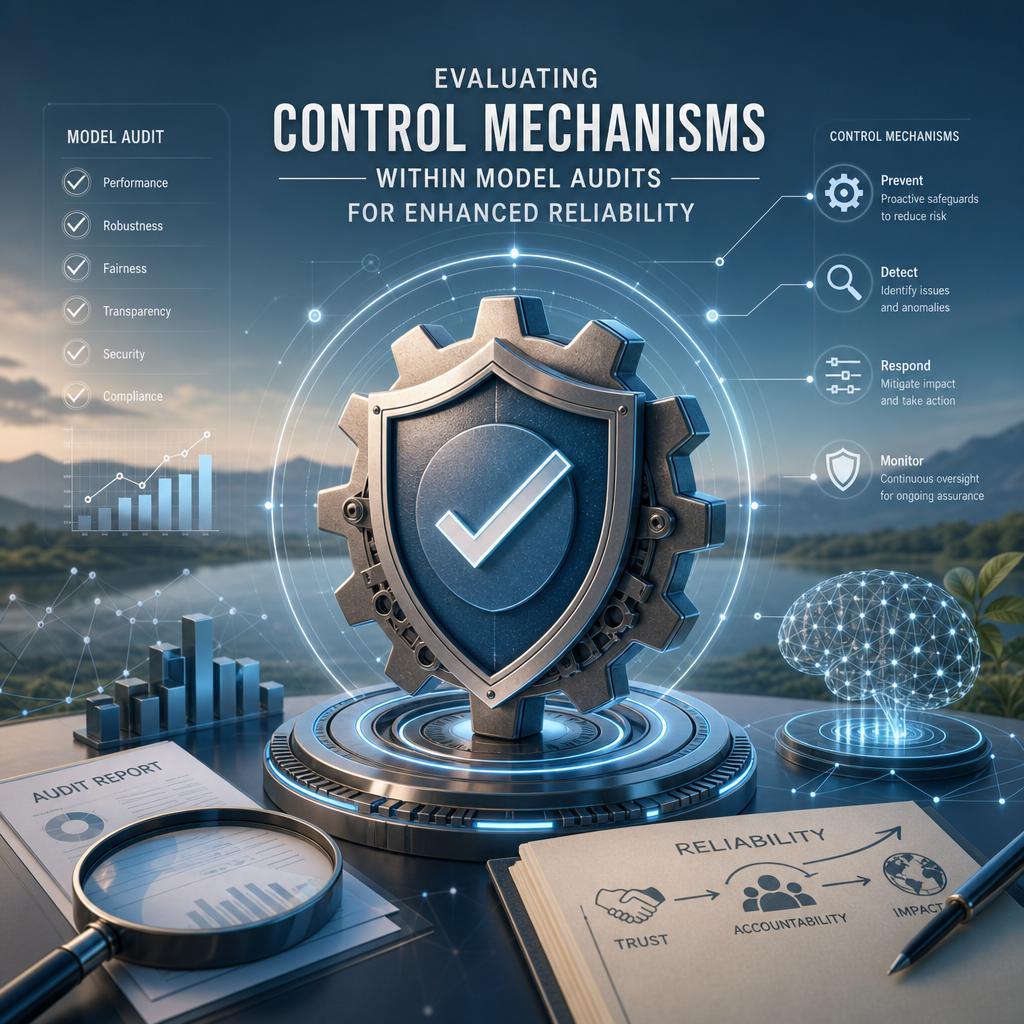
evaluating Control Mechanisms Within Model audits for Enhanced Reliability
Effective model auditing is contingent upon the rigorous evaluation of control mechanisms that govern model integrity. These controls are designed to detect, rectifyand prevent errors at various stages of the model’s lifecycle, fostering enhanced trustworthiness. Critically, the assessment focuses on verifying the accuracy of input data, the appropriateness of modeling assumptionsand the robustness of outputs under diverse scenarios. A proactive approach utilizing continuous feedback loops and real-time monitoring not onyl mitigates risks but also drives iterative improvements, elevating the model’s operational reliability and governance standards.
key control dimensions typically reviewed include:
- Data validation protocols: ensuring data quality and consistency
- Algorithmic scrutiny: checking for biases,errors,and alignment with business logic
- Documentation completeness: maintaining transparency of methodologies and decisions
- Stakeholder engagement: incorporating multi-disciplinary insights to refine controls
| Control Area | Primary Focus | Impact on Reliability |
|---|---|---|
| Input Verification | Accuracy and Completeness | Reduces errors cascading from faulty data |
| Assumption Testing | Consistency & Reasonableness | ensures model behavior aligns with real-world dynamics |
| Output Validation | Result Plausibility | Prevents decision-making based on flawed insights |
| Audit Trail | Traceability and Documentation | Facilitates accountability and process transparency |
Assessing the Practical Impact of model Auditing on Organizational Risk Management
Thorough model auditing plays a critical role in fortifying an association’s risk management framework by ensuring that predictive models perform reliably and transparently.By systematically reviewing controls embedded within model development and deployment, organizations can identify underlying assumptions, data quality issuesand potential biases that might or else lead to flawed decisions. Effective audits empower stakeholders with actionable insights, such as:
- identification of model weaknesses: Uncovering blind spots that increase operational risks.
- validation of compliance: Ensuring alignment with regulatory requirements and internal policies.
- Enhancement of governance: Strengthening oversight through documented audit trails and accountability.
Quantifying the impact of model auditing on mitigating risks can be illustrated through metrics frequently enough tracked by risk management teams. Consider the simplified comparison below, which highlights key risk indicators before and after implementing regular model audits:
| Risk metric | Pre-Audit | Post-Audit | impact |
|---|---|---|---|
| Model Error Rate | 8.5% | 3.2% | -5.3% |
| Compliance Incidents | 4 | 1 | -75% |
| Operational Losses (in $K) | 120 | 45 | -62.5% |
These reductions not only demonstrate enhanced model integrity but also translate into measurable financial and reputational benefits, reinforcing how diligent auditing is a cornerstone of resilient risk management strategies.
Implementing Best Practices and Strategic Recommendations for Effective Model auditing
Ensuring robust model auditing necessitates embedding systematic control frameworks within the development lifecycle. organizations should adopt a layered approach where audit trails are clearly documented, verification checkpoints are standardizedand continuous validation mechanisms are instituted. Leveraging automated tools to monitor data flows and algorithmic changes helps mitigate risks associated with human error and enhances transparency. Additionally,fostering a culture of cross-functional collaboration between data scientists,auditors,and compliance officers strengthens the integrity of model governance.
- Establish clear ownership of each model segment to ensure accountability.
- Implement regular scenario testing to evaluate model resilience under various conditions.
- Maintain comprehensive documentation capturing assumptions, methodologies, and updates.
- Enforce access controls to secure sensitive model data and intellectual property.
| Audit Practice | Strategic Benefit | Impact on Model Robustness |
|---|---|---|
| Automated Monitoring | Real-time Anomaly Detection | Early identification of deviations |
| Model Version Control | Ancient Traceability | Facilitated rollback and replication |
| Cross-functional Reviews | Diverse Insight Integration | Broadened validation perspectives |