
– The Essential Components of MLOps for Scalable machine Learning Deployment
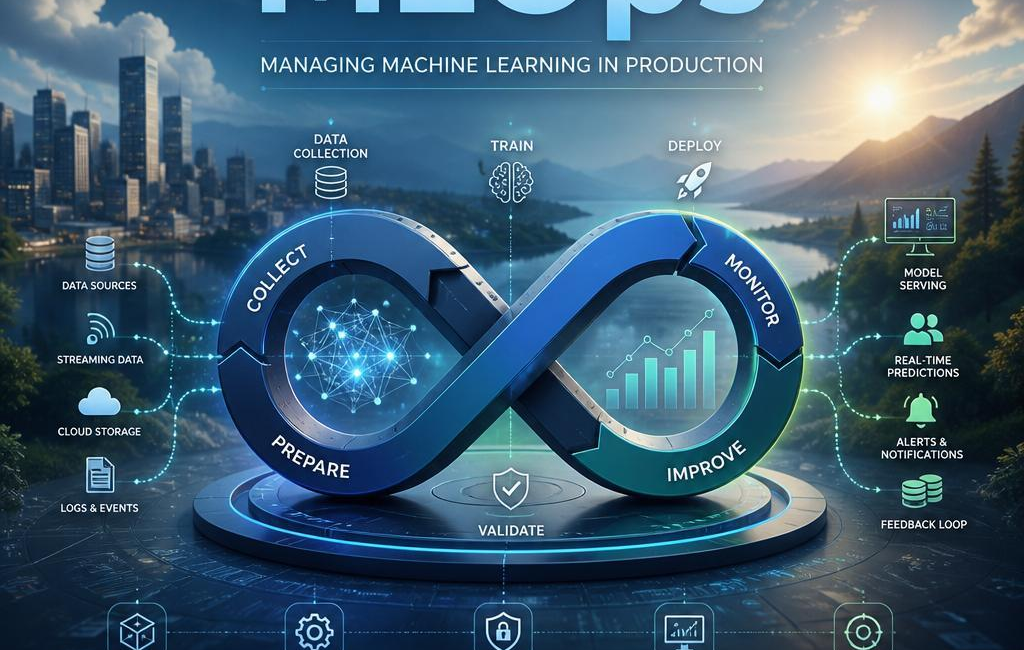
To ensure successful deployment adn management of machine learning models at scale, several critical components must be integrated within your MLOps framework. First, automated pipelines are essential.Thes pipelines streamline the entire workflow-from data ingestion and preprocessing to model training, evaluationand deployment-minimizing human intervention and error. Coupled with continuous integration and continuous deployment (CI/CD), these pipelines facilitate rapid iteration and consistent delivery of models into production environments. Additionally, model versioning keeps track of different iterations, enabling seamless rollbacks if newer models underperform.
- Data monitoring: real-time tracking of input data quality and distribution changes to detect drift early.
- Model monitoring: Observing performance metrics like latency, accuracyand resource utilization to ensure models behave as expected.
- Scalable infrastructure: Utilizing cloud or containerized environments to handle varying workloads without compromising performance.
Moreover, collaboration tools that integrate with version control systems foster transparency and reproducibility among multidisciplinary teams of data scientists, ML engineers, and DevOps professionals. Employing robust security and compliance policies protects sensitive data and aligns with regulatory standards,which is non-negotiable in many industries. the table below summarizes key components and their roles in scalable MLOps frameworks:
| Component | Role |
|---|---|
| Automated Pipelines | Streamlining and error reduction in ML workflows |
| CI/CD | Rapid,reliable deployment of model updates |
| Model & Data Monitoring | Early detection of performance or data quality issues |
| Scalable Infrastructure | Efficient resource allocation to meet demand |
| Security & Compliance | Protection of data and adherence to regulations |
– Best Practices for Continuous Integration and Continuous Delivery in MLOps
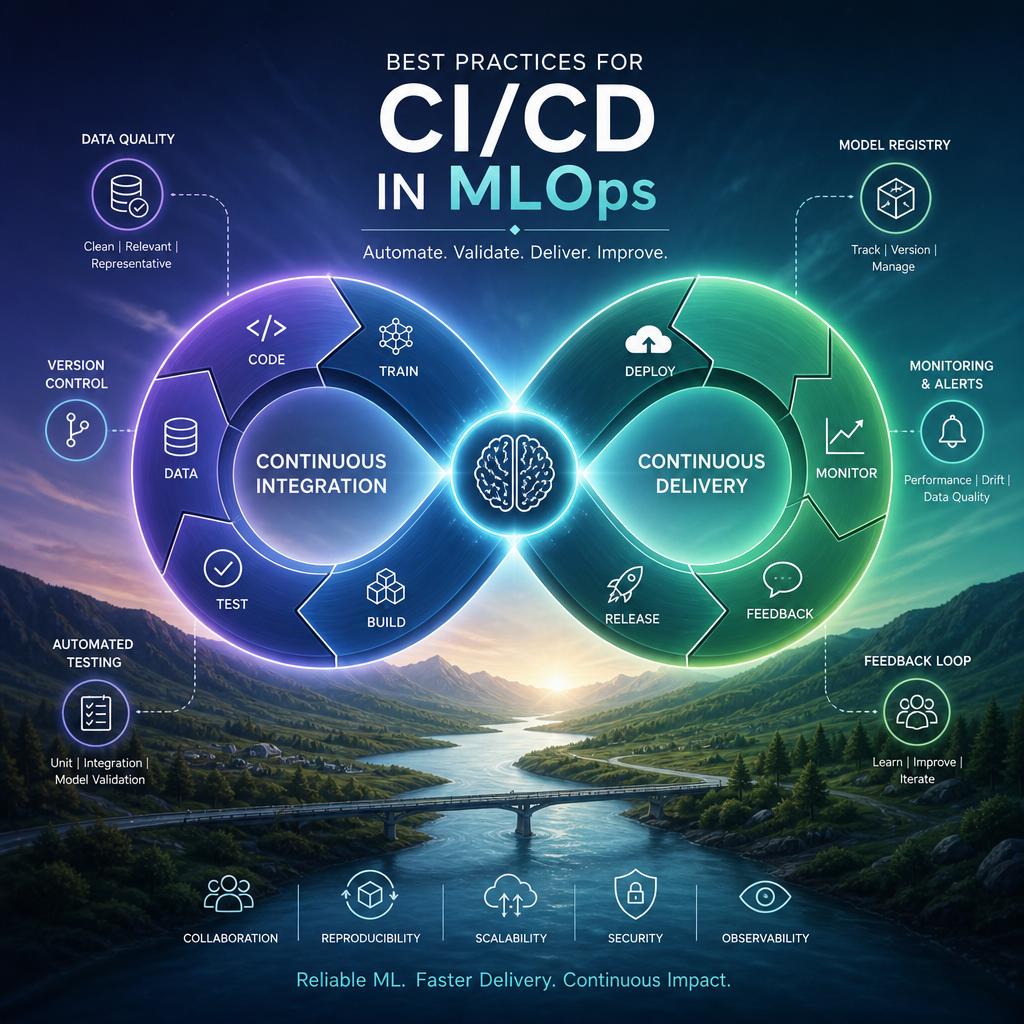
To ensure seamless deployment and reliable performance,automating testing and validation workflows before integration is imperative. this includes unit tests for individual components, integration tests for combined modules, and continuous monitoring of model performance post-deployment. Leveraging tools that support automated pipelines such as Jenkins, GitLab CIor specialized MLOps platforms can drastically reduce human errors and accelerate model iteration cycles. Incorporation of feature stores and data versioning controls within the CI/CD pipeline guarantees data consistency and traceability throughout the ML lifecycle.
Another essential aspect lies in managing habitat parity across development, testingand production stages. Containerization technologies like Docker and orchestration with Kubernetes provide scalable and reproducible environments,minimizing the “it works on my machine” dilemma. Below is a concise overview of key CI/CD considerations tailored for machine learning workflows:
| Aspect | Best Practice | Benefit |
|---|---|---|
| Code & Model Versioning | Integrate with Git and MLflow | Ensures reproducibility and rollback |
| Automated Testing | Implement comprehensive test suites | Detects defects early and ensures quality |
| Deployment Strategy | Use blue-green or canary deployments | Minimizes downtime and risk |
| Monitoring & Alerts | Establish real-time performance tracking | Promptly addresses model drift and failures |
– Strategies for Monitoring and Maintaining Model Performance in Production Environments
Ensuring that machine learning models continue to deliver reliable and accurate results after deployment requires a systematic approach to monitoring their performance. Key to this is establishing automated metrics tracking that constantly evaluates models against predefined benchmarks. Common metrics include accuracy, precision, recalland latency-each carefully chosen based on the model’s purpose. Incorporating real-time alerting systems helps teams promptly detect performance degradation or data drift, enabling swift intervention before business impact occurs. Additionally, periodic re-evaluation against fresh data keeps models adaptive to changing environments and evolving user behaviors.
Maintenance in production also demands robust version control and retraining pipelines.Clearly documenting model versions alongside their training data, hyperparameters, and evaluation results ensures accountability and reproducibility. By leveraging CI/CD tools specifically tailored for ML workflowsorganizations can automate retraining triggered by performance drops or notable shifts detected in the input data distribution. Below is a simplified overview of vital components in this model management ecosystem:
| Component | Purpose | Priority |
|---|---|---|
| Metrics Dashboard | Visualizes ongoing performance and anomaly detection | High |
| Alerting Mechanism | Automatically notifies teams of model failures or drift | High |
| Version Control | Tracks changes and promotes reproducibility | Medium |
| Retraining Pipeline | Initiates updates with fresh data to maintain accuracy | High |
| Data Drift Analysis | Identifies shifts in input feature distributions | medium |
– Overcoming Common Challenges in mlops Implementation for Sustainable AI Operations
Successfully deploying machine learning models into production environments requires navigating a complex array of obstacles that can hinder sustainable AI operations. One main challenge lies in data and model versioning, where inconsistent tracking can lead to irreproducible results and deployment errors. To address this, teams must adopt robust version control systems that handle datasets, codeand model artifacts uniformly. Moreover, automation gaps often cause delays and manual errors. Implementing CI/CD pipelines tailored for ML workflows can significantly streamline model retraining, validation, and deployment cycles, ensuring agility without compromising reliability.
Another critical hurdle involves ensuring scalability and monitoring robustness after deployment.Machine learning models can degrade in performance due to data drift or evolving environments, which demands continuous monitoring integrated with alerting mechanisms.Building feedback loops between model inference metrics and training pipelines enables early detection and remediation of issues. Consider the following framework to manage these challenges effectively:
| Challenge | Key Strategy | Benefit |
|---|---|---|
| Data & Model Versioning | Unified version control tools | Reproducibility & transparency |
| Automation Gaps | CI/CD for ML pipelines | Efficiency & reduced errors |
| Scalability & Monitoring | Continuous performance tracking | Model reliability in production |