

The Evolution and Definition of Digital Workers in Modern Automation
Over the past decade, the landscape of workforce automation has undergone a profound transformation, driven largely by advancements in artificial intelligence and machine learning.Initially rooted in basic task automation, modern digital workers have evolved into sophisticated AI-powered entities capable of handling complex processes that mimic human decision-making. Thes digital entities seamlessly integrate with existing business infrastructures to augment human capabilities, improve operational efficiencyand reduce errors. Unlike conventional automation tools, digital workers operate autonomously across diverse functions-from customer service to data analysis-offering scalability and adaptability that meet the dynamic demands of contemporary enterprises.
Understanding the core characteristics that define digital workers helps organizations leverage their full potential. Key attributes include:
- Autonomy: Ability to perform tasks independently without continuous human intervention.
- Cognitive Capabilities: Use of AI techniques such as natural language processing, computer visionand predictive analytics to make informed decisions.
- Interoperability: Seamless integration with multiple software systems and platforms.
- Scalability: Rapid deployment across various departments, adjusting to workload demands.
| Feature | Traditional Automation | Digital Workers |
|---|---|---|
| Task Complexity | Simple, repetitive tasks | Complex, multi-step processes |
| Decision Making | Rule-based | AI-driven, context-aware |
| Flexibility | Limited to pre-defined scripts | Adaptive and learning capability |
| Human Interaction | minimal or none | Capable of human-like engagement |
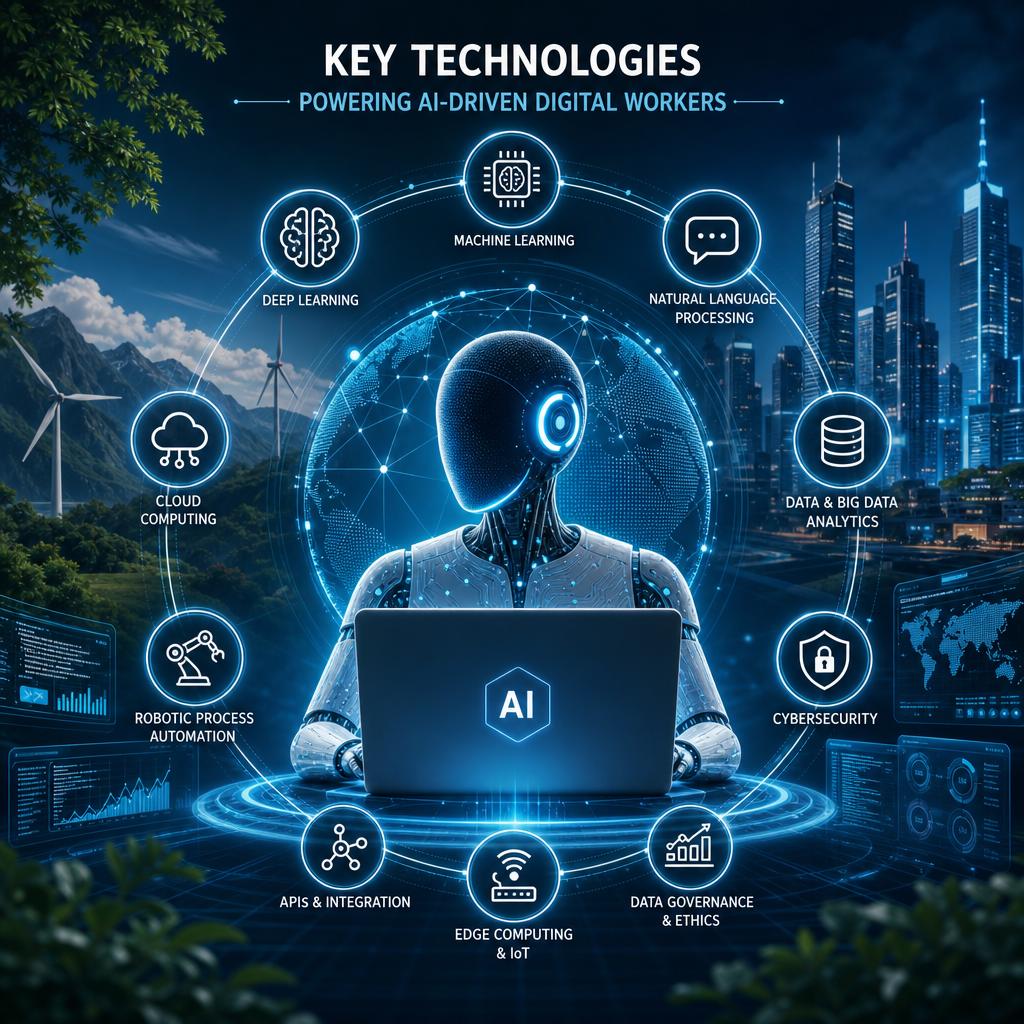
Key Technologies Powering AI-Driven Digital Workers
At the core of AI-driven digital workers lies an intricate blend of advanced technologies that collectively redefine operational efficiency. Machine learning algorithms enable these digital workers to learn from vast datasets, identifying patterns and making predictions that enhance decision-making processes. natural Language Processing (NLP) stands out as a transformative component, allowing digital workers to understand, interpret, and respond to human language seamlessly. This capability is crucial for automating customer interactions, extracting insights from unstructured data, and facilitating intuitive interaction between humans and machines. Additionally, computer vision empowers digital workers to analyze visual inputs-such as images and videos-broadening their applicability across industries from manufacturing to healthcare.
Supporting these intelligent core technologies are robust frameworks and infrastructures that ensure scalability,security,and integration versatility. Cloud computing platforms provide the necessary computational power and storage capabilities, while API-driven architectures facilitate smooth interoperability with existing enterprise systems. Below is a concise overview of pivotal technologies and their primary functions:
| Technology | Role in Digital Workers | Key Benefits |
|---|---|---|
| machine learning | Data analysis and predictive modeling | Adaptive intelligence, continuous improvement |
| Natural Language Processing | Understanding and generating human language | Enhanced communication, automated support |
| Computer Vision | Visual data interpretation | Quality control, real-time recognition |
| cloud Computing | Infrastructure and resource management | Scalability, accessibility, cost efficiency |
Impact of Digital Workers on Business Processes and Workforce Dynamics
Digital workers, powered by advancements in AI and machine learning, are transforming traditional business frameworks by automating complex, repetitive tasks and augmenting human capabilities. These intelligent agents enhance operational efficiency by minimizing human error and accelerating workflow throughput, allowing organizations to focus on strategic initiatives rather than routine processes. Key business impacts include:
- Reduction in operational costs through streamlined processes
- Improved accuracy and compliance in data handling
- Scalability in service delivery without proportional increases in headcount
As these AI-driven tools become more integrated, workforce dynamics evolve significantly. Rather than displacing employees, triumphant adoption often results in the redefinition of roles, emphasizing creative problem solving and relationship management over manual task execution. Employees increasingly collaborate with digital workers, enhancing productivity and job satisfaction. Consider the following comparison outlining traditional and digital workforce impacts:
| aspect | Traditional Workforce | Digital Worker Integration |
|---|---|---|
| Task Type | Manual,repetitive | Automated,routine handled by AI |
| Error Rate | higher due to human factors | Minimized errors with AI validation |
| Employee Focus | Task execution | Creative and strategic roles |
| Scalability | Limited by human resources | Flexible with digital capacity |
Best practices for Implementing and Managing Digital Worker Solutions
Successful integration of digital worker solutions hinges heavily on thoughtful planning and continuous optimization. Start by identifying specific business processes ripe for automation-prioritize repetitive, rule-based tasks that can benefit most from AI-driven speed and accuracy. Stakeholder involvement from the outset is crucial; engaging IT, operationsand end users ensures alignment on goals and smooth adoption.Additionally, investing in scalable technology platforms with robust APIs future-proofs implementation as organizational needs evolve.Regularly monitor performance metrics to detect bottlenecks, measure ROIand guide iterative improvements that maintain the system’s effectiveness over time.
Ensuring secure and ethical management of digital workers is equally critically important. Implement complete governance frameworks that define operational boundaries,data privacy standards,and accountability protocols. Below is a concise best practise checklist for ongoing management:
- Continuous training: Update AI models with fresh data to improve accuracy.
- User empowerment: Provide training and support to staff interacting with digital workers.
- Robust security: Apply encryption, access controlsand audits to safeguard sensitive information.
- Compliance adherence: Align automation policies with industry regulations and ethical guidelines.
| Aspect | Recommended Action |
|---|---|
| Scalability | Choose modular, cloud-based architectures |
| Performance Monitoring | implement real-time dashboards |
| Data Privacy | Enforce role-based access controls |
| User Training | Conduct periodic workshops |