

Understanding the Core Functionality of AI Coding Agents
At their essence, AI coding agents operate by synthesizing multiple components in a seamless workflow designed to maximize programming efficiency. Thes agents harness advanced natural language processing (NLP) models to comprehend user intentions and translate human-readable instructions into executable code.Integral to their performance are robust toolkits that facilitate interaction with APIs, testing environmentsand debugging utilities, enabling them to not only generate code but also to evaluate and refine it continuously. This interconnected framework empowers AI coding agents to break down complex programming tasks into manageable subtasks, ensuring precise and context-aware outputs.
iteration remains at the heart of their operational cycle. AI coding agents perpetually revisit and refine their code through repeated evaluation phases,employing automated testing and feedback loops that mimic human-like debugging processes.The agents leverage knowledge repositories and code libraries, allowing them to iterate intelligently based on prior successes and failures. The table below summarizes the key capabilities that form the backbone of these agents’ core functionality:
| Capability | Description | Example Use Case |
|---|---|---|
| Natural Language Understanding | Translates instructions into coding logic | Generating boilerplate code from requirements |
| tool Integration | Connects to external APIs and debuggers | Automated error detection |
| Code Generation | Creates functional and optimized source code | Developing feature modules |
| Iterative Refinement | Uses testing feedback to improve code | Fixing bugs through continuous loops |
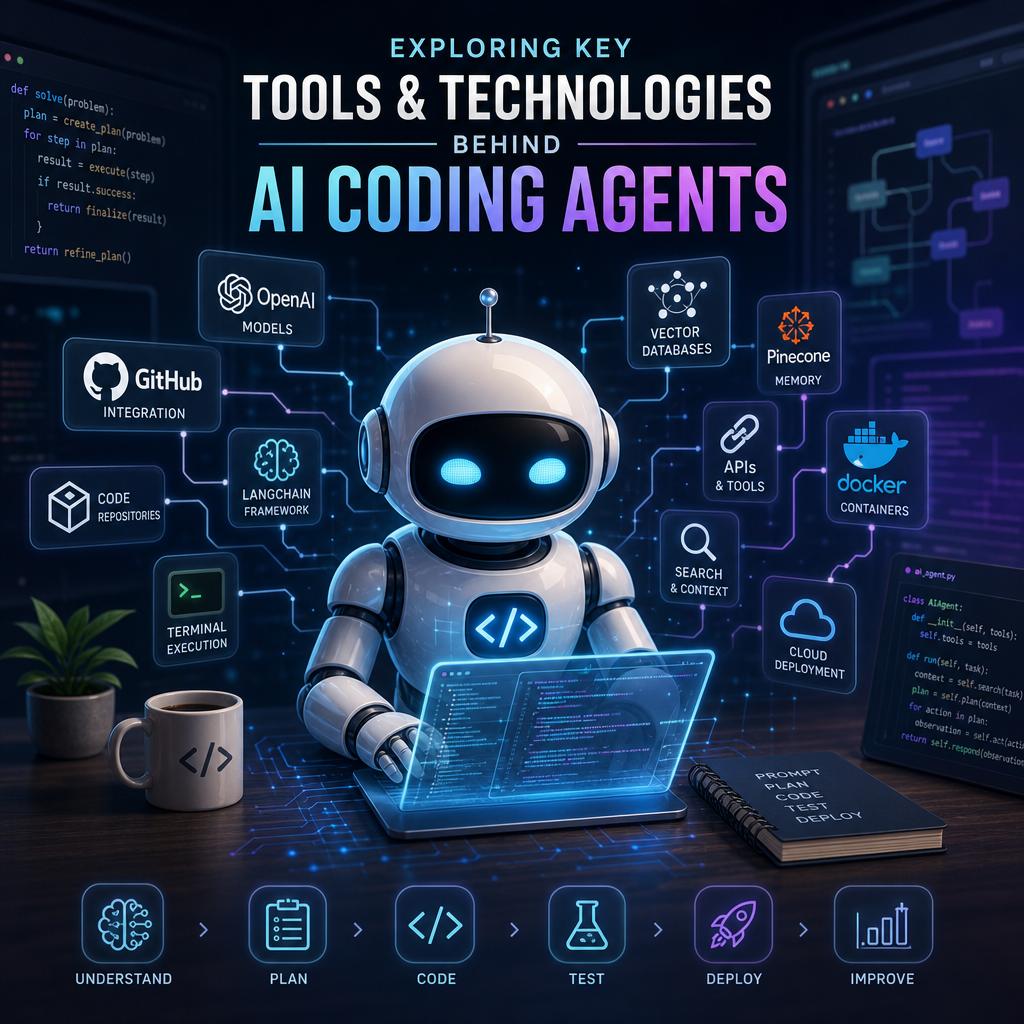
Exploring Key Tools and technologies Behind AI Coding Agents
At the heart of AI coding agents lies a sophisticated blend of technologies designed to mimic and enhance human programming capabilities. These agents integrate Natural Language Processing (NLP) to interpret and translate human instructions into executable code, leveraging frameworks such as Transformer models and attention mechanisms.Coupled with dynamic code generation engines, these systems pivot between writing syntactically correct code and iterating on it through feedback loops. Key to their success is the ability to parse vast repositories of example code, documentation, and user queries, creating a continuous learning environment where refinement happens in real-time. This fusion of data-driven insight and rule-based logic underpins the robustness of contemporary AI developers.
Central to the iterative improvement process are integrated advancement environments (IDEs) embedded with AI-powered debuggers and test generators. These tools automate error detection and suggest optimal fixes based on past bug patterns, drastically reducing the manual overhead of traditional debugging. below is a concise overview of crucial components powering AI coding agents:
| Component | Function | Example Technology |
|---|---|---|
| Language Models | Generates and understands code semantics | GPT, Codex |
| Code Execution Engines | Runs generated code in controlled environments | Docker, Sandboxes |
| Feedback Loops | Iterates code quality from runtime feedback | automated Testing Suites |
| Version Control Integration | Tracks changes and collaborates on code | git, github Actions |
best Practices for Implementing and Customizing AI Coding Workflows
To maximize the effectiveness of AI-driven coding workflows, it is essential to adopt a strategic approach that balances automation with human oversight. Begin by integrating modular AI agents specialized in discrete tasks such as code generation, debugging, and version control. This approach allows teams to customize workflows tailored to specific project requirements while retaining flexibility for iterative improvements.Key considerations include:
- Establishing clear objectives for each AI agent to avoid overlapping roles that can introduce inefficiency or conflicting outputs.
- Encouraging continuous feedback loops between developers and AI agents to refine algorithms based on real-world performance and evolving coding standards.
- Leveraging AI explainability tools to ensure the logic behind autogenerated code is clear and auditable.
customization should also prioritize scalability and maintainability through standardized interfaces and documentation practices. By maintaining a repository of reusable AI components and workflows, development teams can streamline onboarding and foster collaborative innovation. The table below outlines a simple yet effective matrix for evaluating workflow components based on customization complexity and impact:
| Workflow Component | Customization Complexity | Impact on Efficiency |
|---|---|---|
| Code Generation Agents | Medium | High |
| Automated Testing Scripts | Low | Medium |
| Debugging Assistants | High | High |
| Version Control Integrations | Low | Low |
Strategies for Effective Code Iteration and Improvement Using AI agents
“`html
Unlocking the full potential of AI agents in coding requires a systematic approach focused on iterative refinement and continuous enhancement. Triumphant developers prioritize incremental improvements over sweeping changes, leveraging AI’s ability to analyze, suggestand even refactor code with precision. By maintaining a clear feedback loop between the AI outputs and human oversight, teams can rapidly identify bottlenecks, eliminate redundanciesand adapt the codebase dynamically to evolving requirements. This synergy between human insight and machine efficiency fosters a development environment where experimentation is encouraged, yet tightly controlled through measurable outcomes.
Effective iteration also depends on strategic use of AI-driven tools that facilitate detailed code analysis, testingand documentation. Consider this table illustrating essential AI agent capabilities that streamline coding iterations:
| Capability | Benefit |
|---|---|
| Automated Bug Detection | Reduces manual debugging time |
| Context-Aware Refactoring | improves code readability and performance |
| Test Case Generation | Ensures coverage and stability |
| Version Diff Analysis | Highlights meaningful changes |
- Establish repeatable workflows: Design AI interactions that fit seamlessly into your existing development cycle.
- Set clear objectives: Define what success looks like for every code iteration to keep AI-guided changes purposeful.
- Prioritize incremental feedback: Use small, frequent AI recommendations to avoid overwhelming the codebase with drastic modifications.