

Understanding the Core Principles of AI Agents in Complex Environments
At the heart of AI agents operating within complex environments lies a synergy between planning, actingand adaptation. These agents continuously analyze their surroundings, map out possible future statesand select optimal actions to achieve predefined objectives. Through this dynamic interplay, they demonstrate the capability to navigate uncertainty, manage resources efficientlyand respond to unexpected changes in real-time. This goal-driven approach ensures that every decision is purposeful and aligned with overarching system goals, rather than being reactive or random.
To better understand the operational mechanics, consider the following essential components that empower AI agents:
- Perception: Sensing and interpreting environmental data.
- Decision-Making: Formulating strategies based on current goals and predictive modeling.
- Execution: Acting upon chosen strategies while monitoring outcomes.
- Learning: Refining future behaviors via feedback mechanisms.
| Component | Role | Impact on Agent Behavior |
|---|---|---|
| Planning | Mapping sequences of actions | Enhances foresight and efficiency |
| Goal Management | Prioritizing objectives | focuses agent intent |
| Adaptation | Responding to changes | Ensures resilience and flexibility |
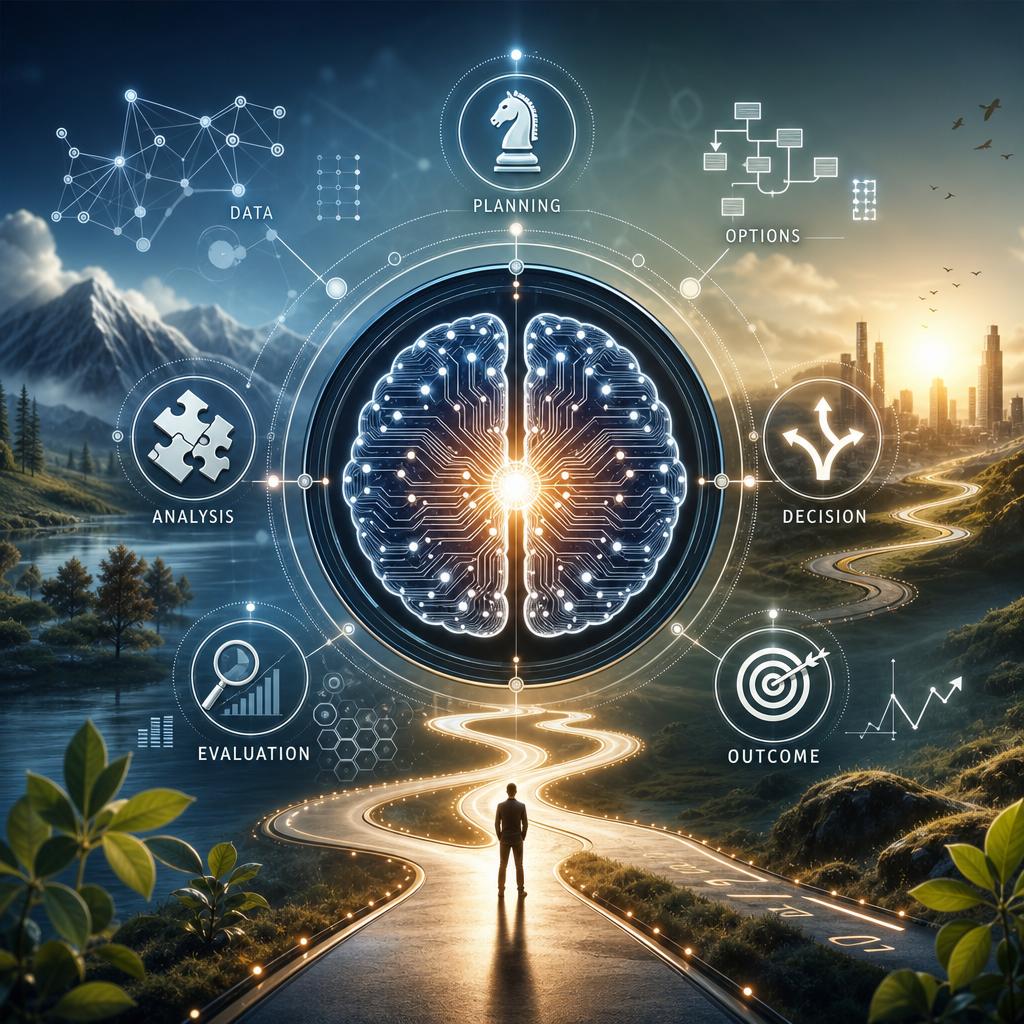
Exploring the Mechanics of Planning and Decision Making in AI Systems
At the core of an AI system’s ability to navigate complex environments is a complex blend of planning and decision-making processes. These systems rely on goal-oriented frameworks that enable them to formulate sequences of actions aimed at achieving desired outcomes. Planning involves constructing potential future states and evaluating various pathways to reach specific goals efficiently. This process is not a static sequence but a dynamic interplay where the AI agent constantly re-evaluates possible actions based on new data or changing conditions. The decision-making mechanism then selects the most appropriate action by weighing factors such as probability of success, resource constraints, and temporal considerations.
The mechanics underpinning these capabilities often utilize a range of algorithmic techniques, which can be broadly outlined as follows:
- Model-Based Planning: Uses an internal representation of the habitat to simulate outcomes of possible action sequences.
- Heuristic Search: Employs heuristic functions to guide the search for optimal or near-optimal solutions in a computationally efficient manner.
- Reactive Decision-making: Allows the system to respond immediately to environmental changes without extensive deliberation.
| Planning Aspect | Primary Function | Example Techniques |
|---|---|---|
| State Representation | Defines possible configurations of the environment | Graphs, Decision Trees |
| Goal Formulation | specifies desired outcomes or targets | Logical Statements, Constraints |
| Action Selection | Chooses the next move to progress towards the goal | utility Functions, Reinforcement Learning |
The Role of Autonomous Acting in Achieving Adaptive and Efficient Outcomes
In the landscape of AI development, autonomous acting stands as a cornerstone for systems that must dynamically interpret their environment and execute decisions without constant human intervention. This capability allows AI agents to evaluate situational variables independently, prioritize objectives based on real-time dataand take actions that optimize goal fulfillment. Autonomous acting is not simply reactive but anticipatory, integrating predictions about future states into current decision-making processes. this leads to systems that are not only adaptive but also efficient, as they continually recalibrate their approach to align with shifting contexts and emerging priorities.
Key attributes of autonomous AI agents include:
- Real-time decision making: Ability to promptly respond to environmental changes without external prompts.
- Self-regulation: Monitoring and adjusting their actions to prevent goal conflicts and resource waste.
- Goal-directed flexibility: Reformulating strategies as circumstances evolve while maintaining alignment with overarching objectives.
| Attribute | Impact | Example |
|---|---|---|
| Real-time decision making | Faster response times | Autonomous vehicles rerouting around obstacles |
| Self-regulation | Reduced errors | Energy-efficient smart thermostats adjusting usage |
| Goal-directed flexibility | Adaptive strategies | Robots modifying tasks when conditions change |
Implementing Goal-Driven Architectures for Enhanced AI Performance and Reliability
Goal-driven architectures serve as the backbone for constructing AI systems capable of navigating complex environments with both autonomy and precision. These architectures prioritize objectives by decomposing high-level goals into manageable sub-tasks,enabling AI agents to maintain focus and adapt dynamically. Such design fosters a robust planning mechanism that aligns action sequences with intended outcomes, ensuring the system not only reacts but proactively anticipates changes. Incorporating modular goal representations improves scalability and allows flexible integration of new functionalities without compromising reliability.
Effective implementation rests on several critical principles:
- Hierarchical Goal Structuring: Organizing goals into layers facilitates pinpointed decision-making and error containment.
- Feedback Loops: Continuous real-time assessment steers the AI agent toward goal completion efficiently.
- Context-awareness: Adapting plans based on environmental inputs enhances resilience and minimizes malfunction risks.
| Component | role in Goal-driven AI | Benefit |
|---|---|---|
| Goal Manager | Priority assignment and monitoring | Enhanced focus and resource allocation |
| Planner | Sequence generation for task completion | Optimized decision pathways |
| executor | Real-time action performance | Reliable task execution |