

Top Industries Driving AI Job Growth
Several sectors are currently spearheading the robust demand for AI expertise, transforming traditional job roles and creating fresh opportunities. Technology and software growth continue to lead, with companies leveraging AI to enhance product features, automate complex processesand deliver personalized user experiences. Meanwhile, the healthcare industry is rapidly adopting AI-driven diagnostics, predictive analytics, and personalized medicine, significantly increasing the need for professionals skilled in machine learning, data analysisand biomedical informatics. Financial services, to, are harnessing AI to optimize fraud detection, algorithmic trading, and risk management, making this another hotbed for AI job growth.
beyond these frontrunners, industries such as manufacturing, retailand automotive are also embracing AI to innovate their operations and customer engagement strategies. Such as, manufacturing plants use AI-powered robotics and predictive maintenance, while retailers apply AI to inventory management and customer behavior analytics. In automotive, autonomous driving technology is reshaping traditional engineering roles. The diversity of these industries illustrates how AI skills have become indispensable,creating a vast ecosystem of career pathways for data scientists,AI engineers,and domain-specific AI specialists.
| Industry | Key AI Applications | In-Demand Roles |
|---|---|---|
| Technology | Natural language processing, computer vision | AI Engineers, Software Developers |
| Healthcare | Diagnostic imaging, predictive analytics | data Scientists, Biomedical Engineers |
| Finance | Fraud detection, algorithmic trading | Quantitative Analysts, Risk Managers |
| Manufacturing | Predictive maintenance, robotics | Automation Engineers, AI Specialists |
| Retail | Customer behavior analysis, inventory management | Data Analysts, Buisness Intelligence Experts |
| Automotive | Autonomous driving, sensor fusion | Systems Engineers, AI Researchers |
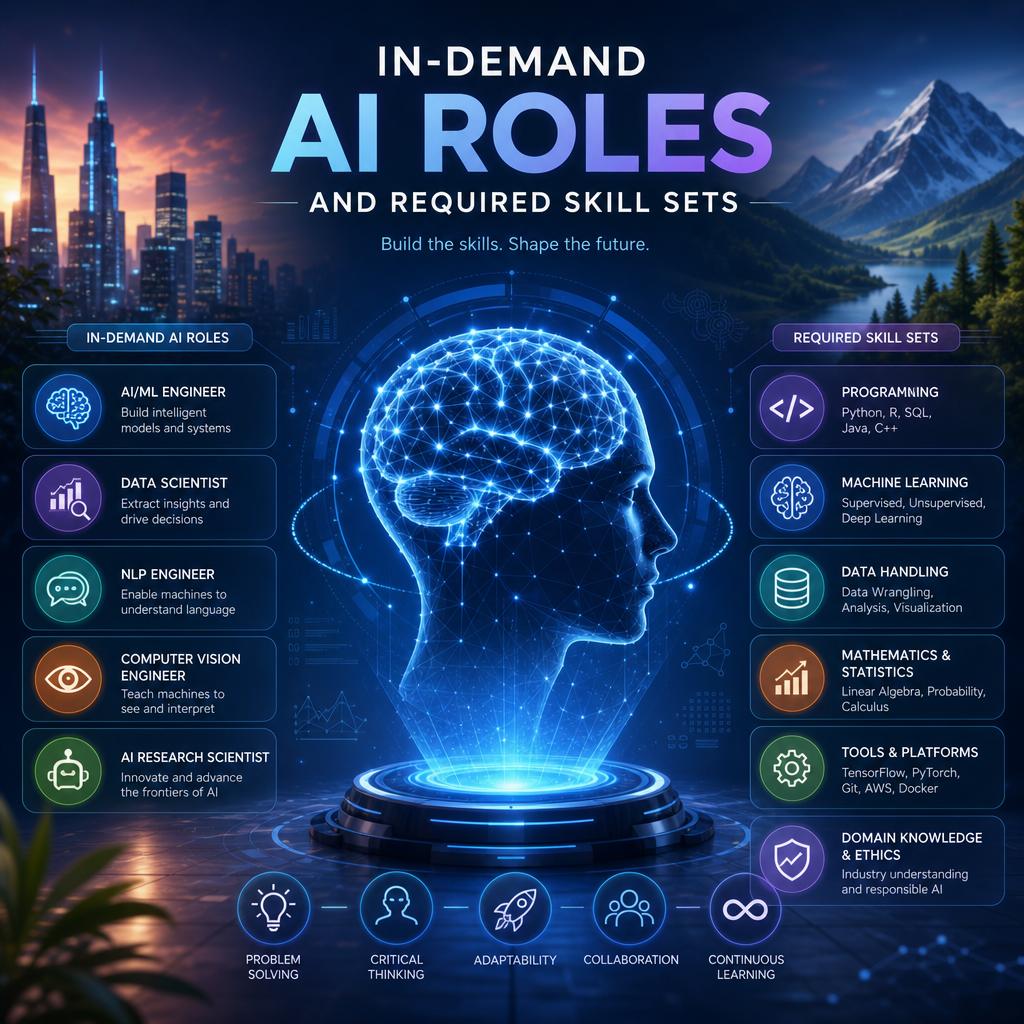
In-Demand AI Roles and Required Skill Sets
Artificial Intelligence has spurred a variety of specialized roles that are crucial to driving innovation and operational efficiency in technology-driven sectors. Among the most sought-after positions are Machine learning Engineers, who design algorithms and build predictive modelsand Data Scientists, experts in interpreting complex datasets to uncover actionable insights. The demand for AI Researchers continues to grow as companies invest heavily in advancing core AI techniques. Meanwhile, AI Ethics Specialists have emerged to ensure responsible AI development, balancing innovation with societal implications.
- Machine Learning Engineers: Proficient in Python, TensorFlowand model deployment technologies
- Data Scientists: Skilled in statistics, data visualization, and advanced analytics tools
- AI Researchers: deep understanding of neural networks, natural language processing, and computer vision
- AI Ethics Specialists: Knowledgeable in policy frameworks, bias mitigation, and regulatory compliance
| Role | Core Skills | Key Tools & Technologies |
|---|---|---|
| Machine Learning Engineer | Algorithm design, software engineering | Python, TensorFlow, PyTorch |
| Data Scientist | Statistical analysis, data storytelling | R, SQL, Tableau |
| AI Researcher | Deep learning, NLP, computer vision | PyTorch, Keras, Python |
| AI Ethics Specialist | Ethical frameworks, risk assessment | Policy research, compliance tools |
Strategies for Building a Successful Career in AI
Building a thriving career in AI requires a blend of technical expertise, continuous learningand strategic networking. Professionals should focus on mastering foundational skills such as machine learning algorithms, data analysisand programming languages like Python. Equally crucial is developing a solid understanding of domain-specific applications, as AI roles are increasingly specialized. embrace project-based learning to gain hands-on experience and showcase your capabilities through portfolios or contributions to open-source AI projects.
Additionally, cultivating soft skills such as critical thinking, problem-solvingand effective communication is essential. These complement technical knowledge and enable professionals to translate complex AI insights into actionable business strategies. Consider leveraging mentorship opportunities and participating in AI-focused communities to stay updated on industry trends. Below is a simple table highlighting key competencies and growth actions for AI career success:
| Core competency | Recommended Growth Actions |
|---|---|
| Technical Proficiency | Master AI frameworks, attend workshops, complete certifications |
| Domain Knowledge | Specialize in healthcare, finance, or other industries using AI |
| Project Experience | Build portfolios with real-world AI applications and challenges |
| Soft Skills | develop communication and leadership for cross-functional teams |
| Continuous Learning | Engage with online courses, webinarsand AI research publications |
Emerging Trends Shaping the Future of AI Employment
The landscape of AI employment is rapidly evolving, driven by advancements in machine learning, natural language processingand automation technologies. One significant trend is the rise of hybrid roles where professionals combine domain expertise with AI proficiency to enhance decision-making and operational efficiency. As a notable example, healthcare specialists now collaborate closely with AI tools to interpret complex data, while marketing strategists leverage predictive analytics to tailor customer experiences. This fusion is creating opportunities across sectors such as finance, retailand biotechnology, where adaptability to emerging AI capabilities becomes a key employment asset.
additionally, the demand for roles focused on AI ethics, governanceand explainability is surging as companies prioritize transparency and accountability in AI deployment. These positions often involve developing frameworks to ensure AI systems are unbiased and compliant with evolving regulatory standards. Below is a snapshot of targeted emerging roles that are shaping the future AI workforce:
| Emerging Role | Primary Focus | Key Skill |
|---|---|---|
| AI ethics Officer | Ethical implementation & bias mitigation | Ethical frameworks, policy knowledge |
| Data Storyteller | Translating AI data into business insights | Narrative skills, data visualization |
| AI Operations Manager | Seamless integration of AI systems | Project management, AI infrastructure |