

The Historical Development of Search Technology and Its Impact on Information Access
From the earliest days of computing, search technology has undergone a profound conversion, steadily reshaping how individuals interact with vast reservoirs of information. Initial methods relied heavily on simple keyword matching, often resulting in broad and imprecise results. As technology advanced, innovative algorithms like PageRank refined the relevance of search results by analyzing the structure of the web itself. This evolution unveiled the power of context-aware indexing and semantic understanding, moving beyond mere keywords to embrace the meaning embedded within queries and content.
Key milestones in the progression of search technology include:
- 1960s: Introduction of basic text-based search systems focused on document retrieval.
- 1990s: Web crawlers and early engines set the stage for mass information indexing.
- 2000s: Emergence of algorithmic ranking techniques for improving result relevance.
- 2010s: Incorporation of natural language processing and machine learning enabled more intuitive searching experiences.
- 2020s: AI-driven conversational agents deliver clever, context-rich answers instead of simple lists of links.
| Era | Dominant Technology | Impact on access |
|---|---|---|
| 1960s-1980s | Text-based Indexing | Basic keyword matching, limited scope |
| 1990s-2000s | Web Crawlers & Algorithmic Ranking | More relevant and vast search results |
| 2010s-present | AI & Natural Language Processing | Contextualized and conversational responses |
This dynamic trajectory not only revolutionized how users find information, but also democratized access to knowledge worldwide. It fostered an environment where answers are no longer buried deep beneath layers of data, but are instead brought forward swiftly and intelligently, empowering users to make informed decisions with unprecedented ease.
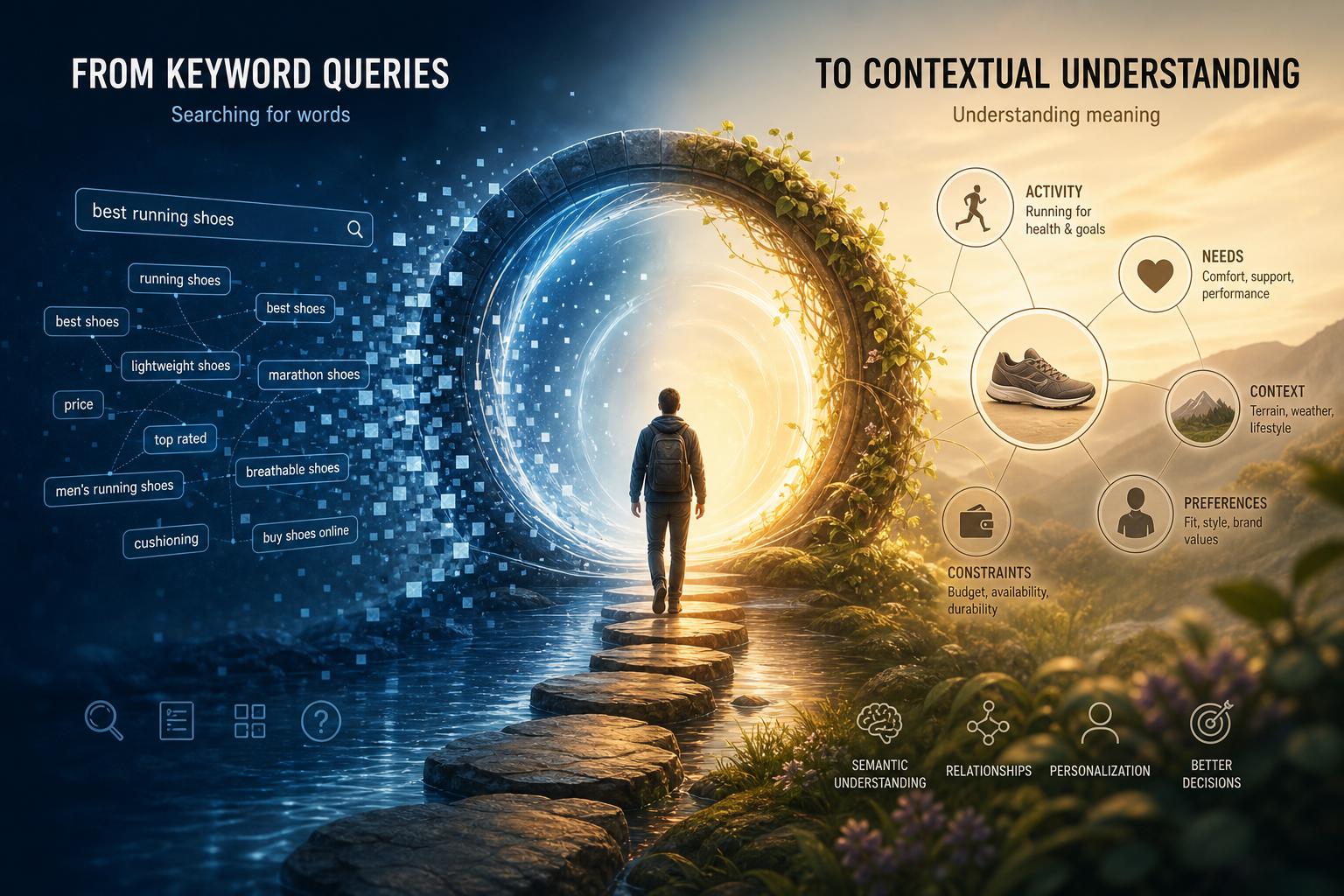
Understanding the Transition from Keyword Queries to contextual Understanding
conventional search engines relied heavily on keyword matching to interpret user intent, often leading to results that were keyword-stuffed but contextually irrelevant. Users had to carefully craft their queries, using specific words or phrases to extract useful information. however, this approach was limited by an inability to grasp nuances such as synonyms, homonyms, or complex sentence structures. The evolution toward contextual understanding means search engines now analyze the complete query, considering the surrounding words and the broader user intent instead of isolated keywords.
To illustrate the transformation, consider the shift in how search engines handle a query like “best places to visit in spring”:
| Keyword-Based Search | Contextual Understanding |
|---|---|
| returns results scoring high on exact word matches (“best”, ”places”, “spring”) | Identifies user intent for travel recommendations and seasonal tips |
| Focuses on pages that repeat query keywords frequently | Processes semantic meaning and suggests curated travel guides or personalized itineraries |
| May overlook useful content with different phrasing | Includes synonyms and related concepts like “top destinations” or ”spring travel tips” |
- Natural language processing (NLP) models analyze grammar and context.
- Machine learning algorithms adapt results based on user behavior and preferences.
- Semantic search connects queries with concepts, not just words.
This profound shift enables search engines to deliver intelligent,insightful answers tailored to user needs rather than simple lists of links,vastly improving the search experience for everyone.
exploring the Role of Artificial Intelligence in Delivering precise and Intelligent answers
Artificial Intelligence (AI) has revolutionized the way search engines interpret and respond to user queries,transitioning from mere keyword matching to delivering contextually rich,precise answers. This evolution is grounded in advanced technologies such as natural language processing (NLP), machine learning, and semantic understanding, enabling systems to grasp not only what the user is searching for but also the intent behind it. Consequently, AI-driven search platforms excel in filtering through vast data sources to provide intelligent answers that are concise, relevant, and personalized, elevating the overall search experience beyond the traditional list of links.
- Context-aware responses: AI algorithms analyze query context to disambiguate and refine results.
- Multi-layered indexing: Enhanced indexing techniques incorporate entity recognition and relationship mapping.
- Dynamic learning: Continuous feedback loops allow AI to improve the accuracy of answers over time.
| AI Capability | Impact on Search | Example |
|---|---|---|
| Natural Language understanding | Interprets the nuances of queries | Answering “best places to run in spring” |
| Machine Learning | Improves over time with user interaction | Personalized content ranking |
| Semantic Analysis | Links concepts and context accurately | Providing definitions and related topics |
Best Practices for Optimizing Content in an Era of Advanced Search Algorithms
In today’s landscape, optimizing content means embracing a holistic approach that anticipates the nuanced intentions behind user inquiries. Prosperous optimization extends beyond keyword stuffing to focus on contextual relevance and semantic richness. This involves crafting content that addresses user intent directly, ensuring clarity and depth on each topic. Key elements include maintaining a natural tone, leveraging structured data, and optimizing for voice and mobile searches. By focusing on how advanced algorithms interpret meaning and relationships, content creators can enhance discoverability and engagement.
Essential strategies include:
- Incorporating related keywords and synonyms to build semantic networks
- Utilizing
schema markupfor enhanced search result features - Creating content clusters that interlink related pages and topics
- Ensuring fast loading speeds and mobile-pleasant layouts
- Employing clear, concise answers within FAQ sections to target rich snippet opportunities
| Optimization Focus | Impact on Advanced Algorithms | Example Tactic |
|---|---|---|
| Contextual Relevance | Improves understanding of content intent | Use natural language and related phrases |
| Structured Data | Enables rich snippets, enhancing SERP visibility | Implement schema.org tags |
| User Experience | Boosts ranking via engagement metrics | Optimize site speed & mobile responsiveness |