

The Evolution of Energy Demands in AI Model Development
As AI technology has rapidly advanced, the energy demands required for model development have surged dramatically. Early AI models were relatively simple, requiring modest computing power and, consequently, less energy.Though, the scale and complexity of contemporary AI architectures-such as deep learning networks with billions of parameters-demand exponentially greater computational resources. This rise in model complexity has fueled not only increased training times but also a significant spike in the associated carbon footprint of AI research and deployment. Understanding these shifts is crucial for creating enduring AI systems that are efficient both in terms of performance and environmental impact.
the evolution can be broadly understood through several key elements contributing to energy consumption:
- Model Size: Larger models require more GPU/TPU cycles, directly correlating with higher electricity usage.
- Training Duration: Extended training periods, often necessary for fine-tuning and hyperparameter optimization, escalate energy demands.
- Data complexity: The volume and sophistication of the datasets increase processing overhead, raising power consumption.
- Infrastructure Efficiency: Advances in hardware efficiency and cooling technologies can mitigate energy use but are frequently enough offset by the scale of modern workloads.
| Year | Average Model Size (Parameters) | Estimated energy Consumption per Training (kWh) |
|---|---|---|
| 2010 | 10M | 100 |
| 2015 | 100M | 1,200 |
| 2020 | 10B | 120,000 |
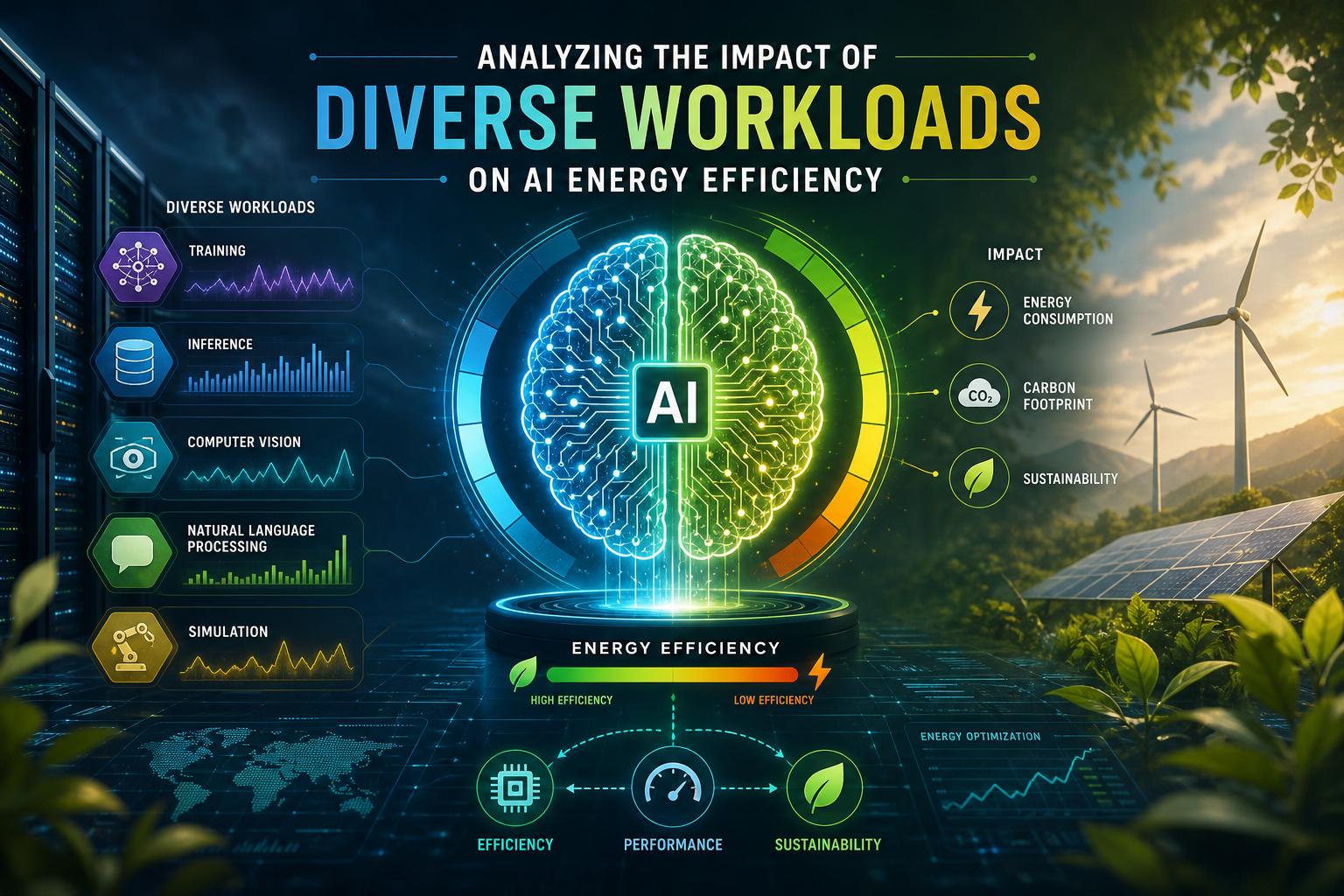
Analyzing the impact of Diverse Workloads on AI Energy Efficiency
The influence of diverse workloads on AI energy efficiency is multifaceted, deeply interwoven with the operational demands and architectural design of AI systems. Models tasked with varying complexity and data sizes exhibit distinct energy consumption patterns. As an exmaple, image recognition models processing high-resolution inputs demand substantially more computational power compared to simpler natural language processing tasks with smaller datasets. This variation inevitably influences the overall carbon footprint of AI applications, making it imperative to tailor energy management strategies specifically to workload characteristics.
Key factors that affect energy efficiency across workloads include:
- Model Complexity: Larger, deeper neural networks require exponentially more energy during both training and inference phases.
- Data Throughput: High-volume data streams amplify energy demands, especially in real-time processing scenarios.
- Task Specificity: Specialized workloads,such as generative models,often involve repetitive cycles that intensify energy use.
| Workload Type | Typical Energy Use (kWh) | Dominant Energy Factor |
|---|---|---|
| Image Classification | 25 | GPU Computation |
| Language Translation | 15 | Memory Access |
| Speech Recognition | 18 | Data Preprocessing |
| Generative Modelling | 40 | iterative Training Cycles |
Optimizing AI Architectures for Sustainable Energy Consumption
Understanding the energy demands of various AI architectures reveals critical pathways to reducing power consumption without compromising computational efficacy. modern AI models vary extensively in their resource intensity, influenced by factors such as model size, layer depth, and operational complexity. By implementing techniques like model pruning, quantization, and efficient neural architecture search, developers can significantly cut down the energy footprint. For instance, less complex architectures tailored to specific tasks often consume 30-50% less energy while maintaining comparable performance to their larger counterparts. This balance between efficiency and accuracy forms the cornerstone of sustainable AI design.
Workload-specific optimization is equally pivotal.Different AI tasks-ranging from natural language processing to computer vision-exert distinct loads on hardware, affecting energy draw. Strategies such as adaptive batch sizing, dynamic voltage and frequency scaling (DVFS), and hardware-aware training algorithms enable optimization tailored to workload characteristics. Consider the comparative data below illustrating average energy consumption for typical AI workloads:
| AI Workload Type | Average Energy Consumption (kWh) | Optimization Potential (%) |
|---|---|---|
| Natural Language Processing | 120 | 35 |
| Computer Vision | 150 | 40 |
| Reinforcement Learning | 170 | 30 |
- Model pruning: Reduces unnecessary neural connections to conserve energy.
- Quantization: Lowers precision to decrease computation without harming output quality.
- Hardware-aware training: Aligns model design with hardware capabilities to maximize energy efficiency.
Strategic Recommendations for Reducing the Carbon Footprint of AI Systems
To effectively curb the environmental impact of AI systems, prioritizing energy-efficient model architectures is essential. Embracing lightweight or sparsely activated models can dramatically reduce computational demand without significant loss in performance. Additionally, organizations should leverage dynamic workload management strategies-scaling resources up or down in real-time based on demand to optimize energy usage. Incorporating renewable energy sources to power data centers where AI training and inference occur further amplifies sustainability efforts, making the entire lifecycle of AI more eco-conscious.
- optimize model size: Select smaller, tailored models whenever possible.
- Implement adaptive scheduling: Allocate compute resources during off-peak renewable energy availability.
- Invest in energy monitoring: Continuously measure energy consumption metrics to identify inefficiencies.
- Adopt carbon-aware training: Schedule heavy training sessions when grid carbon intensity is lowest.
| Strategy | Benefit | Implementation Complexity |
|---|---|---|
| Lightweight Models | Reduces compute time by 40%-60% | Medium |
| Renewable energy Integration | Cuts carbon emissions significantly | High |
| Dynamic Workload Scaling | Optimizes energy use dynamically | Medium |