

The Origins of the Power Myth Surrounding Artificial intelligence
From the earliest days of computing, artificial intelligence was imbued with an almost magical aura, fueled by sensationalized media and speculative fiction. This led to the widespread belief that AI possesses an innate, omnipotent power-a capacity to solve any problem or even dominate humans.In reality, AI systems operate strictly within the bounds of their programming and data inputs.They excel in pattern recognition and automation but lack consciousness, intent, or volition. The root of this power myth lies in a combination of cultural narratives and a misunderstanding of AI’s technical limitations.
Key factors driving the myth include:
- Overhyped media portrayals that exaggerate AI’s capabilities.
- Lack of public understanding around AI’s dependence on data quality and human-designed algorithms.
- The conflation of intelligence with autonomy and control, ignoring AI’s operation as a tool rather than an independent agent.
| Myth Aspect | Reality |
|---|---|
| AI as an all-powerful force | AI has narrow, task-specific capabilities |
| AI works independently without human input | AI requires human data and oversight |
| AI can understand and think like humans | AI lacks consciousness and reasoning |
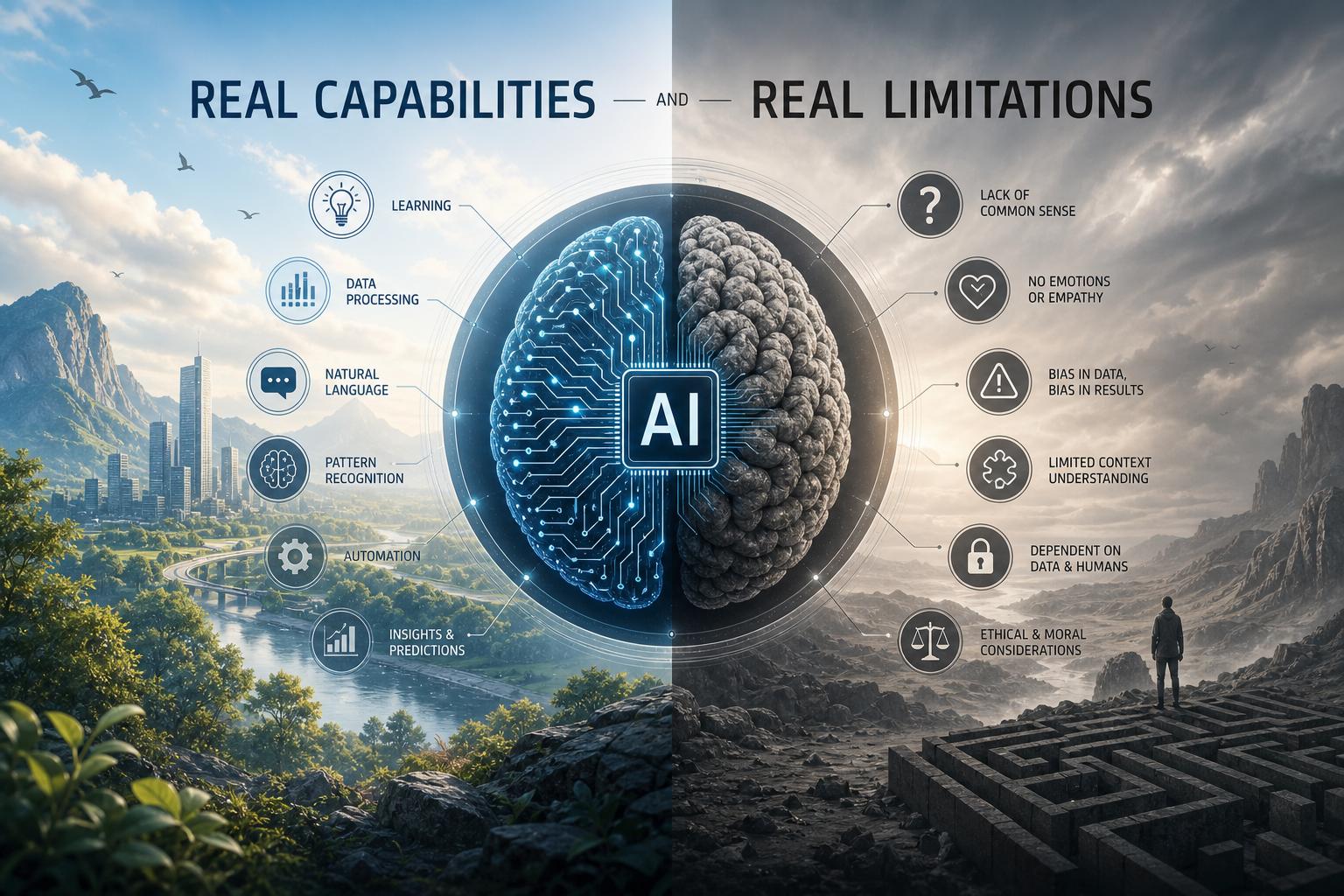
Clarifying the Real Capabilities and limitations of AI Technology
Artificial Intelligence (AI) is frequently enough enveloped in a fog of exaggerated expectations and myths. While the technology is undeniably powerful, it’s important to discern that AI operates within the strict boundaries of its programming and the data it consumes. It excels in pattern recognition, data analysis, and automating repetitive tasks, but it does not possess genuine understanding or consciousness. The perception that AI can independently make moral judgments, possess intuition, or truly innovate like a human mind is a misconception that leads to both unrealistic hopes and unwarranted fears.
Understanding AI’s real capabilities and limitations requires recognizing several key points:
- Data dependency: AI’s performance depends heavily on the quality and breadth of data it processes.
- Task-specific design: Most AI systems are built for narrowly defined tasks; general intelligence remains beyond reach.
- Lack of self-awareness: AI does not possess consciousness or emotions, limiting its decision-making depth.
| Capability | Reality |
|---|---|
| Processing large data sets | Extremely efficient |
| Creative thinking | Simulated via pattern combinations |
| Emotional intelligence | Absent; only simulated responses |
| Ethical decision-making | Dependent on human input and guidelines |
The Societal Impact of Overestimating AI Power
overestimating AI capabilities has led to a distorted perception of what artificial intelligence can realistically achieve. This misconception frequently enough fuels unrealistic expectations within society, causing a ripple effect across various sectors. When the public and policymakers treat AI as an infallible panacea,it can overshadow critical discussions about ethical use,fairness,and clarity. As an example, algorithms widely believed to be unbiased may inadvertently perpetuate systemic inequalities due to flawed training data or design-raising grave concerns that are frequently underestimated in the rush to embrace AI innovation.
Furthermore, this overestimation contributes to several societal challenges that demand urgent attention:
- Job displacement anxiety: Exaggerated fears about AI replacing the workforce can stunt productive dialog about reskilling and job evolution.
- Privacy erosion: Blind trust in AI-driven surveillance and data processing may erode fundamental rights without adequate scrutiny.
- Policy paralysis: Overhyping AI’s capabilities can lead to either premature regulation based on myths or delayed intervention until real harm occurs.
| Impact Area | Common Misconception | Reality |
|---|---|---|
| Job Market | AI will replace all human jobs soon | AI augments tasks but creates new employment opportunities |
| Privacy | AI always protects user data | AI can exploit data without stringent safeguards |
| Decision Making | AI decisions are unbiased and objective | AI reflects biases in training data and design |
Practical Guidelines for Realistic AI Integration and Usage
Effective AI integration demands a clear understanding of the technology’s capabilities and limitations. It is indeed crucial to prioritize practical applications that align with your institution’s core objectives rather than chasing automation hype. Start by assessing existing workflows to identify bottlenecks where AI can add measurable value-not as a magic fix, but as a supportive tool. Emphasizing transparency in AI deployment builds trust both internally and externally, preventing unrealistic expectations that can lead to frustration. Remember, AI success is rooted in human oversight combined with robust data quality and continuous iteration.
- Set Clear Objectives: Define specific problems AI should solve rather than vague ambitions.
- Invest in Training: Equip teams with skills to interact with AI systems critically and effectively.
- Monitor Outcomes: Regularly review AI performance through metrics and qualitative feedback.
- Maintain Ethical Standards: Ensure fairness,accountability,and privacy in all AI-driven decisions.
| Practical Step | Key Focus | Expected Benefit |
|---|---|---|
| Pilot Projects | Controlled, small-scale testing | Reduced risk, real-world insights |
| Data Governance | Quality and ethical use | Reliable, compliant outcomes |
| Collaborative Teams | Cross-functional expertise | Balanced solution design |