
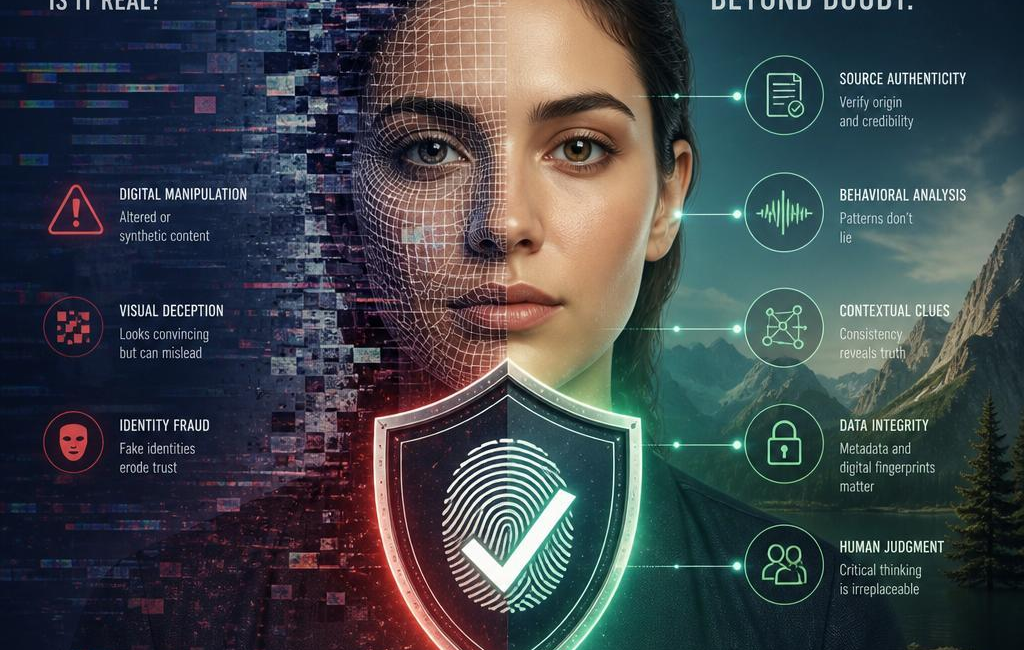
Spotting AI Deepfakes through Behavioral and Contextual Cues
Artificial intelligence has refined visual synthesis to the point where conventional detection methods, relying solely on pixel-perfect analysis, often fall short. To effectively identify deepfakes,one must look beyond the surface and examine subtle behavioral anomalies. These include unnatural facial microexpressions, inconsistent blinking patternsand irregular speech rhythms-features that AI still struggles to replicate authentically. By honing attention on these behavioral indicators, observers can develop a more robust understanding of when an interaction or video might be artificially manipulated.
Contextual clues also play a vital role in trust verification. Scrutinizing the source, cross-referencing the timingand analyzing environmental consistency are critical steps.For instance, inconsistent background noises, mismatched lighting conditionsor discrepancies in the setting’s logical timeline often reveal fabrication. The following table summarizes key behavioral and contextual cues to strengthen yoru detection capabilities:
| Cue Type | Key Indicators | Detection Tip |
|---|---|---|
| Behavioral | Unnatural blinking, awkward facial emotions | Use slow playback to observe inconsistencies |
| Contextual | Lighting mismatch, off-timed background sounds | Cross-check video environment details |
| Technical | Pixel distortion, audio-visual sync issues | Leverage forensic software tools |

Leveraging Technological Tools for Authenticity Verification
In the battle against AI-generated deepfakes, technological tools have become indispensable allies. Advanced algorithms now go beyond mere pixel analysis, employing blockchain-based verification to ensure the origin authenticity of multimedia files. This method creates a tamper-proof digital ledger that tracks the life cycle of visual and audio content, making it tough for deepfakes to masquerade as original media. Additionally, machine learning models trained specifically on detecting synthetic artifacts-such as irregular blinking patterns, unnatural facial movementsor audio mismatches-offer a crucial layer of defense by scrutinizing subtle anomalies that human eyes often miss.
Beyond detection models, an ecosystem of complementary tools has emerged, revolutionizing authenticity verification through multifaceted analysis:
- Metadata Forensics: Reveals inconsistencies in timestamps, geolocation, and device signatures embedded in the file.
- Reverse Image Search: Cross-references images and videos to identify reused or slightly altered media across the web.
- Voice Biometrics: Authenticates audio sources by matching vocal patterns against verified databases.
| Tool | Main Function | Key Benefit |
|---|---|---|
| Deepware Scanner | Detects visual deepfake signatures | High accuracy in facial manipulation detection |
| Truepic | Blockchain media verification | Immutable proof of authenticity |
| Serelay | Metadata integrity validation | Prevents metadata tampering |
Understanding the Limitations of Visual Inspection in Deepfake Detection
Relying solely on what the human eye perceives when trying to identify deepfakes frequently enough leads to oversimplifications and errors. Advanced artificial intelligence algorithms today are capable of generating visuals so convincing that even trained experts struggle to distinguish them from authentic footage. This visual indistinguishability creates a critical challenge: superficial inspection frequently falls short because deepfakes exploit subtle facial microexpressions, lighting consistencyand natural movements that traditional methods expect to flag. Moreover, malicious actors continuously refine their techniques, making visual cues an unreliable line of defense.
- Visual artifacts are often too subtle or intentionally removed.
- Contextual inconsistencies require knowledge beyond the frame.
- Biometric markers may not always be visible or interpretable.
| Limitation | Impact on detection | Why It Matters |
|---|---|---|
| False Positives | Authentic videos flagged as fake | Undermines trust in genuine content |
| False Negatives | Deepfakes go undetected | Allows misinformation to spread freely |
| Subjectivity | Relies on human discretion | Inconsistent results across evaluators |
Thus, combating deepfake deception demands verification protocols that go beyond the screen. Leveraging corroborative metadata, forensic analysis of inconsistencies invisible to visual inspection, and deploying AI-driven detection tools that analyze behavioral and contextual signals form a more holistic verification pipeline. Emphasizing a multi-dimensional approach reduces dependence on flawed visual assessments, equipping content verifiers with robust defenses against evolving synthetic media threats.
Implementing Multi-layered Trust Verification strategies in Digital Communications
In an era dominated by sophisticated AI-generated content, relying solely on visual cues to verify authenticity is increasingly insufficient. The evolution of deepfakes demands a multi-layered approach to trust verification, combining technological, behavioraland contextual indicators. Advanced algorithms now analyze voice modulation patterns, metadata inconsistenciesand communication contextualization to unmask fraudulent content that appears visually impeccable. Evaluating factors like digital signaturesorigin chain verificationand cross-referencing with trusted databases forms the backbone of this layered defense, making it possible to detect manipulations that evade the naked eye.
The integration of human judgement and machine precision is crucial. While AI tools parse data for anomalies, human expertise interprets subtleties within language, toneand interaction dynamics. For instance, unusual pauses, inconsistent emotional cues, or irregular speech pacing can signal deception. Below is a summary table illustrating key verification layers essential for confronting AI deepfakes:
| Verification Layer | Key Indicators | Primary Tools |
|---|---|---|
| Technical Analysis | Compression anomalies, metadata tampering | Forensic software, blockchain validation |
| Behavioral Patterns | Speech cadence, facial micro-expressions | AI behavioral analytics, expert review |
| Contextual Consistency | Source verification, situational alignment | Cross-referencing databases, social audits |