

Understanding Copyright issues in AI-Generated Art
The intersection of artificial intelligence and intellectual property law presents a complex landscape for creators and sellers of AI-generated art. In many jurisdictions, traditional copyright laws require a work to be created by a human to qualify for legal protection. This raises crucial questions about ownership when an artwork is produced wholly or partially by an AI system. Key considerations include:
- Whether the AI tool is merely an extension of the artist’s creative process or an autonomous creator.
- The role of the human operator in selecting inputs, guiding the AIand refining the final output.
- The absence of clear legislation specifically tailored for AI-generated works, leading to ambiguous legal standings.
On the practical side,sellers must be aware that different platforms may enforce unique rules about the commercialization of AI art,which intersect with licensing requirements. For example,some platforms demand proof of original creation or restrict the sale of AI-generated images derived from copyrighted datasets. The following table summarizes common legal and platform considerations:
| Aspect | Potential Challenge | Seller’s Action |
|---|---|---|
| Copyright Ownership | Unclear if AI or human owns the rights | Document creative process and human input |
| Platform Licensing | Restrictions on AI art sales | Review platform terms and comply rigorously |
| Derivative Works | Use of copyrighted training data | Ensure dataset legality or obtain licenses |
Navigating Licensing Options for Selling AI Art
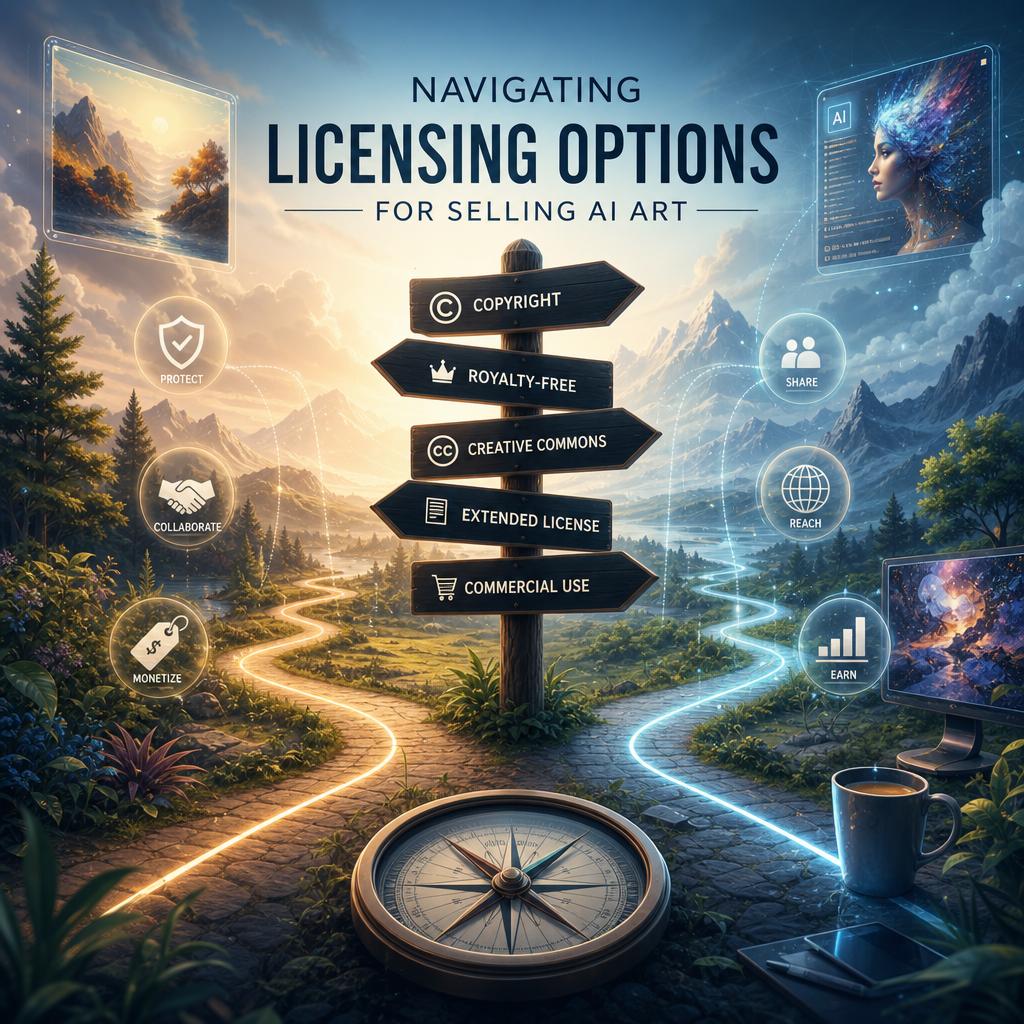
When selling AI-generated artwork,understanding your licensing options is crucial to protect both your rights and those of your buyers. Unlike traditional art, AI art frequently enough involves layered intellectual property considerations – from the underlying datasets used in model training to the AI tool’s user terms.Sellers must determine whether they retain full copyright, grant exclusive or non-exclusive licenses, or simply offer usage rights.Common licence types for AI art include:
- Exclusive license: Grants one buyer sole usage rights, potentially increasing the artwork’s value.
- Non-exclusive license: Allows multiple buyers to use the art under specified conditions.
- Creative Commons: provides flexible sharing options but often requires attribution.
Platforms hosting AI art sales often impose specific licensing frameworks to standardize transactions and limit liability.It’s essential to review their terms carefully as these can affect how you structure your licenses and disclose usage rights. Below is a concise comparison of key platform licensing policies to consider:
| Platform | License Flexibility | User Attribution Required | resale Rights |
|---|---|---|---|
| Artify | high | Yes | Allowed |
| AIArtHub | Moderate | No | Disallowed |
| CreativeBlend | Low | Yes | Allowed with restrictions |
Complying with Platform Policies for AI Art Sales
understanding and adhering to the specific rules set forth by online marketplaces and galleries is critical when selling AI-generated artwork. Each platform has crafted policies addressing content originality,intellectual property rights,and clarity. Sellers must carefully review terms related to AI art, including restrictions on the use of copyrighted materials or trademarks within generated images. Platforms may also require explicit disclosure that the artwork is AI-generated to ensure consumer clarity and avoid potential misrepresentation.
Common compliance requirements often include:
- Verification of ownership or license rights for any underlying datasets or models used in creation, ensuring no infringement occurs.
- Restrictions on content types to avoid prohibited or offensive imagery generated by AI.
- Clear labeling and metadata specifying AI involvement, giving buyers informed purchasing decisions.
| Platform | AI Art Policy Focus | Licensing Requirements |
|---|---|---|
| Artify Market | transparency & Ownership | Proof of dataset clearance |
| GalleryX | Content Moderation | Copyright-free generation mandates |
| CreativeHub | Disclosure & Metadata | Explicit AI attribution |
By thoroughly aligning with these platform standards, AI artists not only protect their reputations but also foster consumer trust, leading to sustainable sales growth and a respected presence in the digital art market.
Best Practices for Protecting Your AI Art Legal Rights
Maintaining control over your AI-generated artwork starts with understanding and asserting your intellectual property rights. Clearly documenting the creation process-including the algorithms used, source data, and any human input-can serve as crucial evidence in case of disputes. Additionally, always retain original files and metadata to establish authenticity. When licensing your art, opt for agreements that explicitly state permitted uses and restrictions. This protects against unauthorized reproduction or commercial exploitation while allowing you to retain ownership.
Leveraging platform-specific tools and standards further safeguards your interests. utilize copyright registration services offered by many online art marketplaces to formally secure your legal rights.Apply watermarks tastefully, using CSS classes like .wp-block-image figcaption for subtle but clear attribution. Moreover, stay informed about evolving Terms of Service on the platforms you use, as compliance can prevent inadvertent rights forfeiture. The table below summarizes common precautions trusted by AI artists:
| Protective Measure | Purpose | Recommended Frequency |
|---|---|---|
| Metadata Preservation | Authenticity & provenance proof | Every artwork |
| Contractual Licensing | Control of usage rights | Per sale or commission |
| Platform Compliance Review | Prevent policy breaches | Monthly or before listing |