

– Understanding the Mechanics Behind AI-Driven Voice Scams
AI-driven voice scams exploit advanced technologies like deep learning and natural language processing to create highly convincing imitations of real human voices. These systems analyze vast databases of speech patterns and intonations, enabling scammers to generate synthetic audio that mimics trusted individuals or official representatives. By leveraging voice cloning and text-to-speech synthesis, attackers craft messages that bypass customary suspicion filters, increasing the likelihood of deceiving targets. The sophistication of these scams lies not only in vocal mimicry but also in context-aware scripts that adapt dynamically to conversational cues, making automated detection increasingly challenging.
The underlying mechanics frequently involve multi-layered approaches: initial contact frequently enough comes thru a seemingly benign phone call or voicemail, followed by a callback request or urgent verification step to extract sensitive details. Below is a brief overview of the common components found in these schemes:
- Voice Cloning: High-fidelity reproduction of a target’s voice from limited audio samples.
- Contextual AI: Generating responses and questions that feel natural and personalized.
- Callbacks & verification: Requesting sensitive data under the guise of authentication or security.
| Step | Technique | Goal |
|---|---|---|
| 1 | Initial Voice Contact | Establish trust with familiar voice |
| 2 | Contextual Script Application | Engage with credible dialog flow |
| 3 | Urgent Callback Request | Prompt immediate response without suspicion |
| 4 | Verification Steps | Extract personal or financial data |
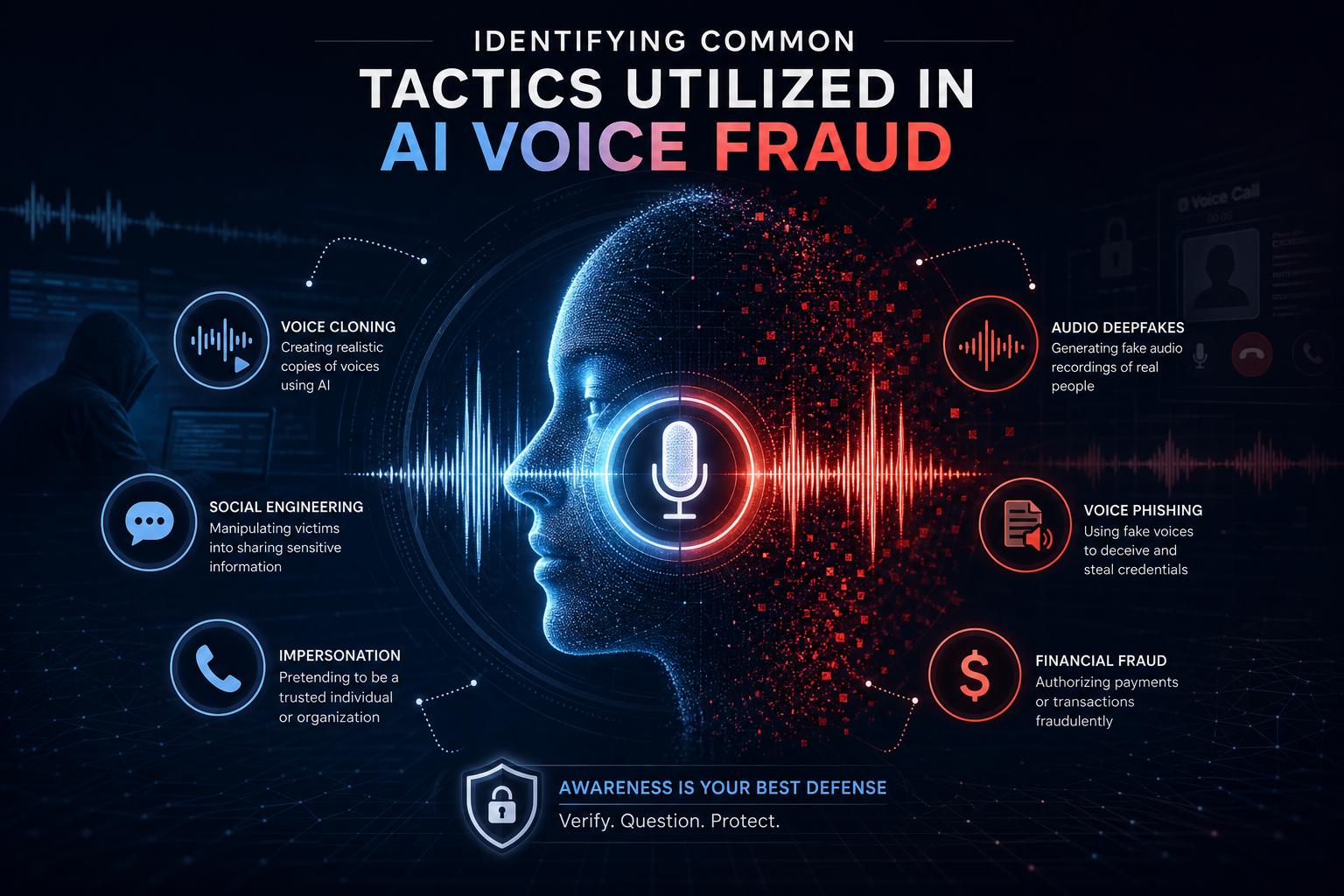
– Identifying Common Tactics Utilized in AI Voice Fraud
AI voice fraudsters frequently enough deploy sophisticated techniques that exploit the trust and immediacy associated with phone communications. One prevalent strategy involves voice cloning,where scammers utilize AI to replicate the voice of a trusted individual,such as a company executive or a family member. This often leads victims to unwittingly divulge sensitive information or authorize financial transactions. Another common tactic is social engineering through deepfake audio,which crafts highly convincing scenarios to manipulate targets into compliance,frequently under the guise of urgency or confidentiality.
- Impersonation of bank or government officials to elicit private data or payment.
- Automated phishing calls using AI-generated scripts that adapt in real-time to responses.
- Replay attacks where recorded phrases are stitched together to create fraudulent requests.
| Tactic | description | Common Use Case |
|---|---|---|
| Voice Cloning | Replicates victim’s or trusted contact’s voice | Fraudulent bank transfer requests |
| Deepfake Audio | Creates realistic voice commands or conversations | Corporate espionage or ransom demands |
| Replay Attacks | Merges recorded speech to simulate authentic calls | Bypassing voice authentication systems |
– Essential Verification Procedures to Safeguard Against Callbacks
In today’s landscape of sophisticated AI-driven voice scams, verifying the authenticity of callbacks is paramount. Start by scrutinizing the caller ID for inconsistencies or numbers that don’t match official contact details.Always request a callback number and verify it independently through trusted sources like company websites or official communications. Never rely solely on the information provided during the call, as scammers often manipulate caller ID or impersonate legitimate organizations with alarming accuracy. Additionally, avoid divulging personal or financial information until you have full confidence in the caller’s legitimacy.
Implementing a few strategic verification steps can considerably reduce exposure to fraudulent callbacks. Consider adopting a verification checklist that includes:
- Confirming the caller’s identity via a separate, trusted channel
- Asking for specific details only a legitimate representative would no
- Verifying the callback time and purpose against existing records or recent activity
- Documenting the conversation and callback details for further reference
| Verification Step | Purpose |
|---|---|
| Autonomous Number Verification | Ensure the contact number matches official sources |
| Identity Cross-Check | Validate caller information against internal records |
| Information restriction | prevent premature disclosure of sensitive data |
| Call Documentation | Create an audit trail for suspicious calls |
By integrating these verification protocols into daily communication workflows, individuals and organizations can significantly mitigate the risks posed by AI voice scams and callback fraud.
– Strategic Recommendations for enhancing Caller Authentication Protocols
To effectively counteract the surge in AI-driven voice scams, organizations must prioritize the implementation of robust multi-factor caller authentication mechanisms. Traditional Single-factor authentication methods such as caller ID alone are no longer sufficient, given how easily they can be spoofed using advanced AI technologies. Incorporating voice biometrics combined with behavioral analytics offers a strong line of defense, enabling real-time verification based on unique vocal patterns and interaction habits. equally essential is integrating callback verification protocols, where the customer-initiated callback to a verified number acts as a crucial checkpoint in confirming caller legitimacy.
Key strategic actions include:
- Deploying AI-driven anomaly detection systems that flag unusual call patterns instantly.
- Employing dynamic, context-based security questions that adapt according to customer profiles.
- Training customer service agents rigorously to recognize subtle cues of synthetic voice manipulations.
- Instituting a layered security framework, blending technology with procedural verification to mitigate risk.
| Measure | Benefit |
|---|---|
| Voice Biometric Authentication | Accurate caller ID that’s tough to spoof |
| Callback Verification | Ensures calls originate from trusted contacts |
| behavioral Analysis | Detects irregular caller behavior patterns |
| AI Anomaly Detection | Real-time threat identification |