

Renewable Energy Integration Challenges and AI’s Optimization Potential
Integrating renewable energy sources into existing power grids poses a complex array of challenges that transcend mere production capacity.The intermittent nature of solar and wind power demands advanced forecasting and real-time balancing to prevent grid instability.Additionally, energy storage technologies remain costly and, in some cases, insufficient, limiting the seamless integration of renewables into the energy mix.Key obstacles include:
- Voltage and frequency regulation difficulties
- Grid congestion and distribution inequities
- Uncertainty in supply-demand matching
- Infrastructure limitations and retrofitting costs
Artificial Intelligence emerges as a transformative force capable of optimizing not only the operational reliability of renewable integration but also the broader systemic footprint. AI algorithms enhance predictive maintenance, optimize energy dispatchand intelligently coordinate distributed energy resources. Beyond the grid, AI-powered analytics also foster improved lifecycle management, reducing embodied carbon and enhancing the sustainability of hardware components. Consider the following comparison illustrating AI’s impact on grid efficiency:
| Aspect | traditional Management | AI-Enabled Optimization |
|---|---|---|
| Forecast Accuracy | Moderate (60-70%) | High (85-95%) |
| Energy Wastage | Significant | Minimal |
| Response Time to fluctuations | Minutes to Hours | Seconds to Minutes |
| Operational Costs | High | Reduced by up to 30% |
Environmental and Resource Constraints of AI in Renewable Systems
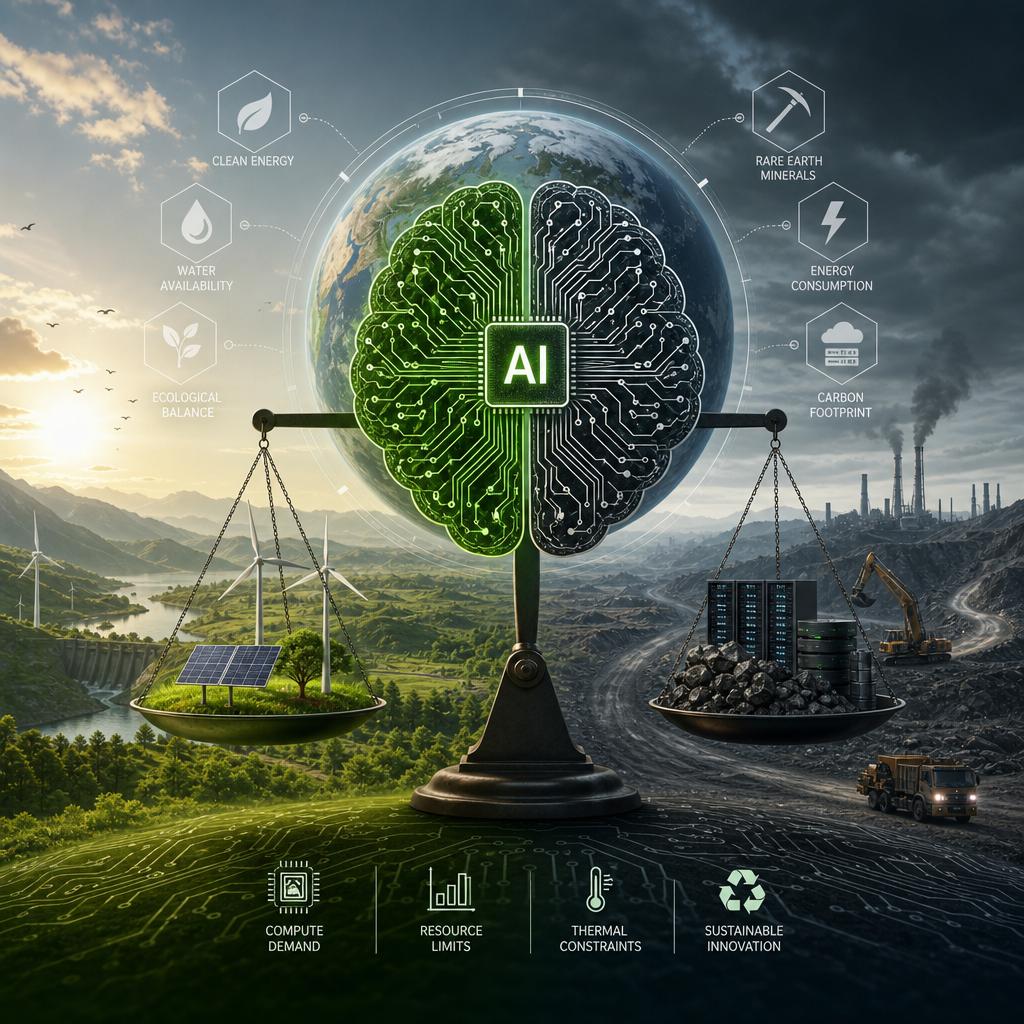
While artificial intelligence substantially optimizes renewable energy systems, the environmental toll of its infrastructure cannot be overlooked. The production and disposal of AI hardware, including GPUs and custom chips, demand rare earth minerals and considerable energy consumption during manufacturing processes. These resource-intensive requirements contribute to a growing ecological footprint, raising concerns about mining impacts, electronic wasteand carbon emissions that underlie AI deployment in ostensibly green technologies.
Key environmental and resource constraints include:
- Material scarcity: Critical minerals like lithium, cobalt, and neodymium are indispensable for both AI processors and renewable batteries but are finite and frequently enough sourced with significant ecological and socio-political risks.
- Energy demands: Data centers powering AI can require vast amounts of electricity, sometimes offsetting renewable gains if sourced from non-renewable grids.
- Waste management: The lifecycle of AI hardware leads to increasing electronic waste, challenging current recycling systems and creating potential soil and water contamination issues.
| Constraint | Impact | Potential Mitigation |
|---|---|---|
| Rare Earth Mining | Habitat destruction & pollution | Recycling & alternative materials |
| High Energy Usage | Increased carbon footprint | Renewable-powered data centers |
| Electronic Waste | Soil and water contamination | Improved e-waste policies |
Balancing Computational Demand with Sustainable Energy Goals
As the push for renewable energy intensifies globally, the technological sector, particularly artificial intelligence, faces mounting pressure to optimize not only energy sources but also computational efficiency. The surge in AI applications demands extensive data processing, which inherently strains energy resources despite the clean energy powering data centers. To truly align with sustainable energy goals, it is essential to innovate at the intersection of algorithmic design and hardware efficiency, reducing the energy footprint per computation. This involves adopting smarter resource allocation models, integrating energy-aware AI frameworksand leveraging advancements in low-power chip technologies that dramatically cut down consumption without sacrificing performance.
Understanding this balance requires a detailed look at how computational demand parallels energy usage. Consider the following breakdown of typical energy consumption sources in AI workloads:
| Component | Energy usage (%) |
|---|---|
| Data Center Cooling | 30 |
| Compute Processing Units (CPUs/GPUs) | 50 |
| Networking | 15 |
| Storage | 5 |
- Enhance algorithmic efficiency to reduce energy per inference cycle.
- Invest in renewable-compatible infrastructure design.
- Promote cross-sector collaboration to innovate energy-saving techniques applicable to AI advancement.
Strategic Recommendations for Minimizing AI’s Ecological Impact in Renewable Energy Applications
To curb the environmental footprint of AI within renewable energy domains, it is essential to adopt strategic measures that amplify efficiency while conserving resources. Optimization of AI algorithms tailored to the specific needs of renewable systems can significantly lower computational demands, thereby reducing energy consumption. integrating edge computing can localize data processing, minimizing data transfer loads and shrinking associated energy costs. Additionally, fostering collaborations between AI developers and renewable energy engineers ensures that AI tools are purpose-built with sustainability as a foundational principle, rather than an afterthought.
Equally critical is the deliberate choice of infrastructure and materials that underpin AI technologies utilized in renewable sectors. Prioritizing hardware that operates on renewable power, along with the adoption of biodegradable or recyclable components, mitigates the lifecycle environmental impacts of AI devices. Consider the following strategic pillars:
- Energy-aware model design: develop lightweight models requiring fewer computations.
- Sustainable data centers: Use renewable-powered data centers with advanced cooling techniques.
- Lifecycle assessment: Regularly evaluate ecological impacts from hardware production to disposal.
- Regulatory alignment: Encourage policies supporting transparency and environmental standards for AI use.
| Strategy | Primary Benefit | Key Action Point |
|---|---|---|
| energy-Aware Models | Lower computational energy use | Employ model pruning and quantization |
| Sustainable Data Centers | Reduce carbon emissions | Transition to solar and wind-powered facilities |
| Lifecycle Assessment | Minimize cradle-to-grave impact | Implement eco-design audits |
| Regulatory Alignment | Ensure accountability and standards | Advocate for green AI certification |