

Regulatory Frameworks Enabling Safe AI Adoption in Financial Services
In financial services,AI implementation is harmonized with robust regulatory standards that uphold both innovation and consumer protection. Central to this is the compliance with data privacy laws such as GDPR and CCPA, which ensure that customer data is handled with the highest confidentiality and security. Additionally,sector-specific regulations like the Dodd-frank Act and the Bank Secrecy Act embed oversight mechanisms that require AI systems to be transparent and auditable. These frameworks mandate continuous risk assessment and validation processes to mitigate biases and systemic risks that AI models might introduce.
Financial institutions also leverage multilayered governance structures that include:
- Dedicated AI ethics committees to review model fairness and accountability
- Regular third-party audits for compliance assurance
- Thorough documentation of AI decision-making workflows
- Real-time monitoring systems to detect anomalous behaviors early
| regulatory Component | focus Area | Key Attribute |
|---|---|---|
| Data Privacy Laws | Customer Information | Confidentiality & Consent |
| Financial Compliance Acts | Operational Transparency | Auditability & Risk Control |
| Ethics Committees | Model Integrity | Fairness & Accountability |
These controls form the backbone of regulatory frameworks, ensuring that AI technologies not only advance financial capabilities but also sustain trust and stability in the marketplace.
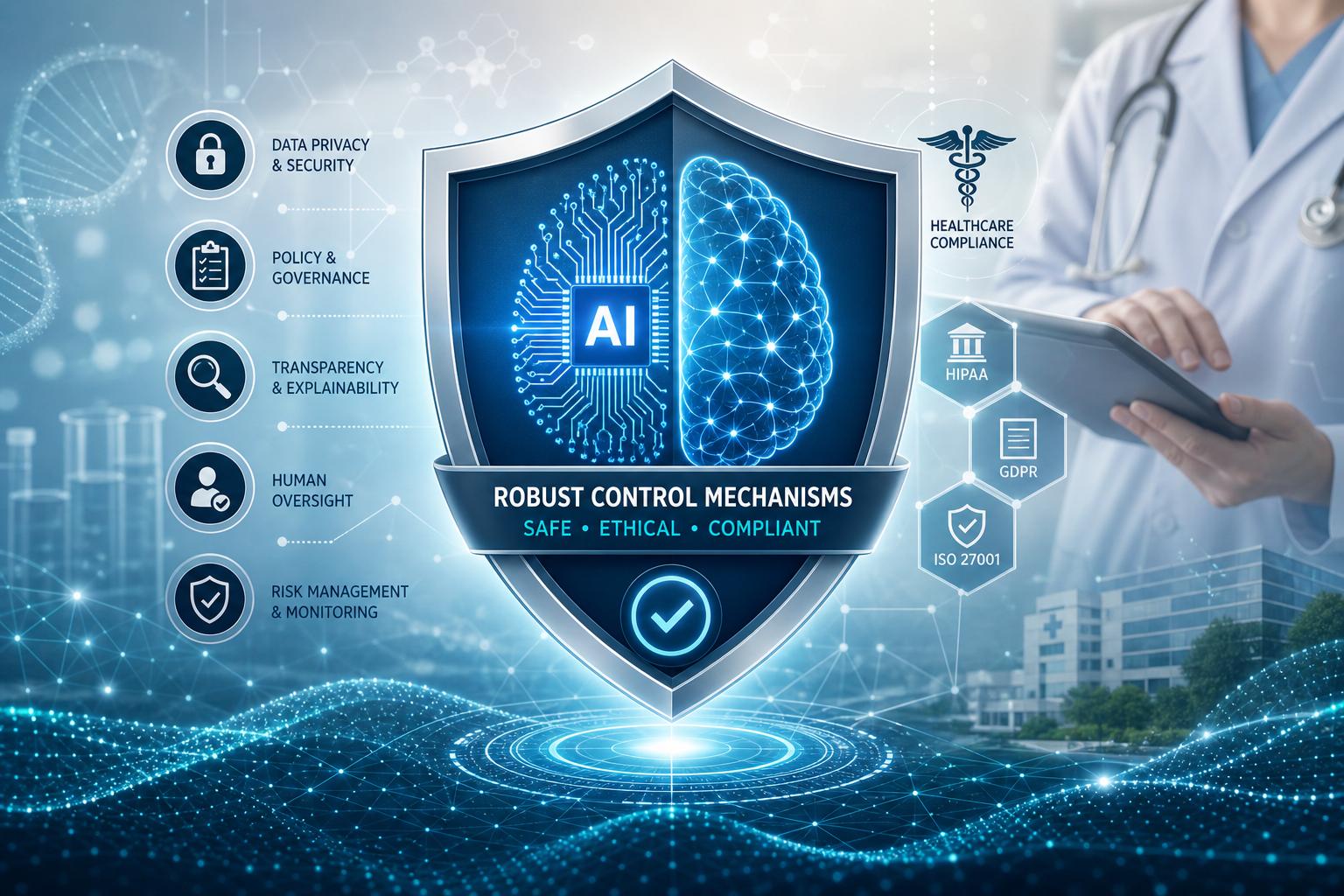
Implementing Robust Control Mechanisms for AI in healthcare Compliance
In the healthcare sector, deploying artificial intelligence demands stringent oversight to ensure compliance with regulatory standards and safeguard patient welfare. Advanced control mechanisms are integrated into AI systems to monitor data provenance, algorithmic transparency, and ethical use. These controls include real-time audit trails, role-based access restrictions, and automated alerts for deviations from approved protocols. such layered oversight ensures that AI-driven decisions can be traced, validated, and corrected promptly, minimizing risks associated with erroneous or biased outputs.
Key components of robust control frameworks include:
- Continuous model validation: Regular retraining and testing to maintain accuracy across diverse populations.
- Compliance checkpoints: Embedded regulatory adherence verification during every stage of AI deployment.
- Data integrity safeguards: Encryption and anonymization protocols to protect sensitive patient information.
| Control Aspect | Purpose | Example |
|---|---|---|
| Audit Trails | Verification & accountability | Immutable logs for decision history |
| Access Control | Data protection | Multi-factor authentication |
| Model Calibration | Maintain performance | Periodic bias assessment |
Balancing Innovation and Risk Management in AI-driven Energy Sectors
In industries where safety, compliance, and sustainability are paramount, integrating AI technologies demands a strategic approach that prioritizes both progress and protection. companies are instituting rigorous controls designed to assess every facet of AI application-from algorithmic transparency to data integrity-ensuring that innovation does not outpace the necessary governance frameworks. This dual focus enables organizations to harness AI’s transformative potential while mitigating risks such as system failures, cybersecurity threats, and ethical breaches.
Key practices adopted in these regulated sectors include:
- Comprehensive Auditing: Continuous monitoring of AI models to detect anomalies and verify compliance with evolving regulations.
- Cross-functional Oversight: Collaboration between AI experts, legal teams, and operational staff to align AI deployments with organizational policies.
- Scenario-based Risk modeling: Stress-testing AI outcomes against diverse operational scenarios to anticipate and address potential failures before deployment.
| AI Application Area | Risk Control Measure | Benefit |
|---|---|---|
| Predictive Maintenance | Automated Alerts with Manual Override | Enhanced reliability & reduced downtime |
| Demand Forecasting | Regular Data Validation | Accurate resource allocation |
| Energy Trading Algorithms | Regulatory Compliance Checks | Mitigated financial & legal risks |
Best Practices for Continuous Oversight and Ethical AI Governance
Ensuring that AI systems align with ethical principles requires more than one-time assessments; it demands continuous oversight that adapts to evolving technologies and regulatory landscapes. Organizations should establish governance frameworks that integrate real-time monitoring tools, allowing for the swift detection of biases, inaccuracies, or unintended consequences. These frameworks frequently enough rely on multidisciplinary teams including ethicists, technical experts, and compliance officers collaborating to maintain transparency and accountability throughout the AI lifecycle. Implementing robust audit trails and periodically revisiting risk assessments fortify trust and adherence to both internal standards and external regulations.
Key components of sustaining ethical AI governance include:
- Clear roles and responsibilities: defining accountability across departments to ensure smooth oversight.
- Dynamic policy updates: Regularly revising guidelines to reflect new insights or changes in law.
- Stakeholder engagement: Involving users and affected communities to capture diverse perspectives.
- Automated compliance checks: Leveraging AI-assisted tools to enforce ethical parameters in real-time.
| Oversight element | Purpose | Example Practice |
|---|---|---|
| Ethical Impact Assessment | Identify potential harms before deployment | Scenario simulations and bias detection audits |
| Continuous Auditing | monitor AI behavior in real-world use | Scheduled performance reviews and anomaly detection |
| Transparency Reporting | Foster stakeholder trust and regulatory compliance | Publishing accessible summaries of AI decisions |