

Optimal Integration of AI Agents in Structured Environments
Integrating AI agents into environments governed by strict protocols and clear-cut rules yields critically important efficiency and accuracy enhancements. When AI operates within a structured framework, its decision-making process aligns seamlessly with predefined criteria, reducing ambiguity and errors. This habitat allows for optimized task automation, where AI can manage repetitive processes, execute complex calculationsand enforce compliance consistently without deviation. teh use of AI in such systems not only accelerates workflow but also provides valuable data insights by systematically tracking and analyzing performance metrics over time.
Key benefits of utilizing AI in structured workflows include:
- Predictability: AI agents follow rules precisely, ensuring outcomes are consistent and reliable.
- Scalability: Such agents can effortlessly handle increased workloads while maintaining accuracy.
- Compliance: Automated adherence to regulations reduces legal risks and enhances governance.
| Environment Feature | AI Agent Strength | Resulting Advantage |
|---|---|---|
| Clear Rules | High precision in execution | Minimized errors |
| Repetitive Tasks | Endless stamina | Increased throughput |
| Data-Driven Decisions | Rapid processing | Timely insights |
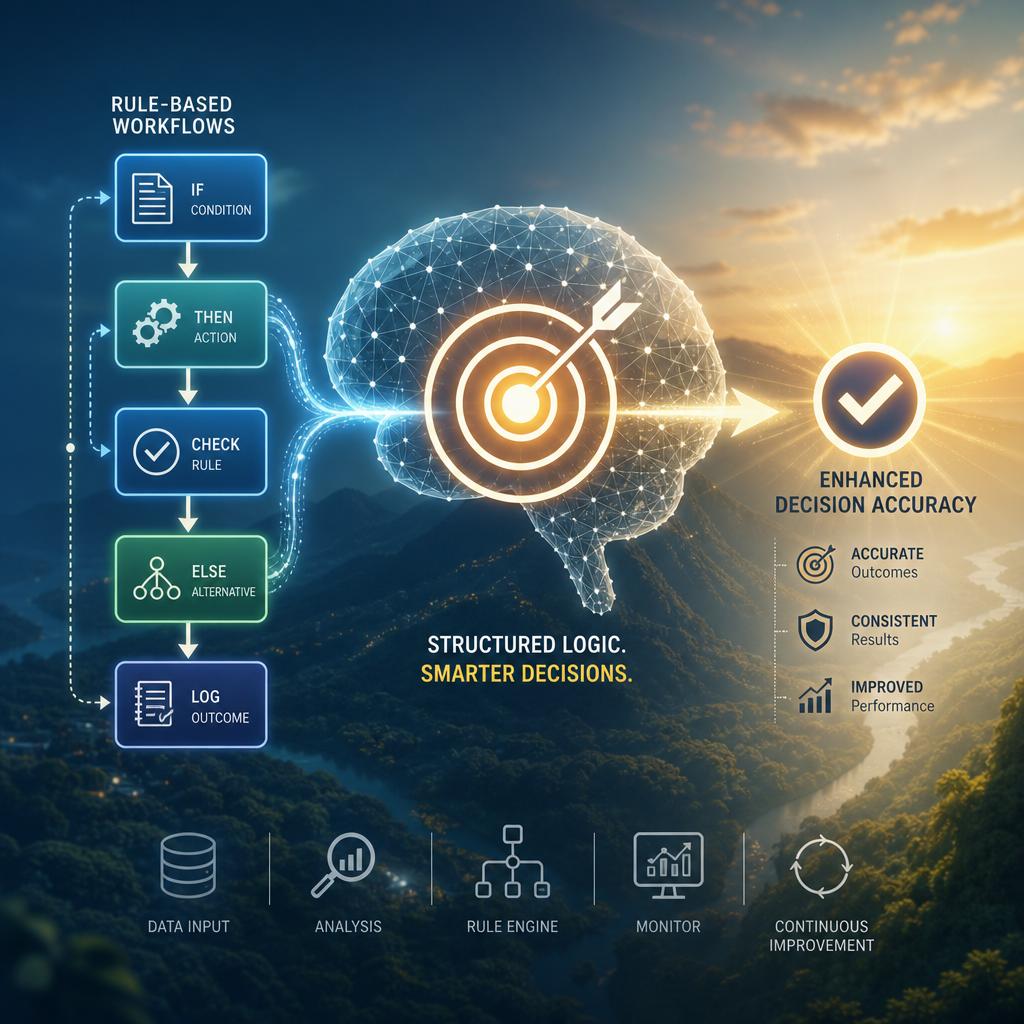
Leveraging rule-Based Workflows for Enhanced Decision Accuracy
Integrating structured, rule-based workflows within AI agents brings a significant uplift in the precision of automated decision-making processes. These workflows operate by methodically defining explicit rules and conditions that the AI must follow, effectively reducing ambiguity and enhancing consistency across decision points. this structured format provides an environment where diverse data inputs are evaluated against well-established criteria, ensuring that every outcome aligns tightly with business objectives and compliance mandates. Moreover, such clarity in decision paths aids in creating transparent audit trails, which are crucial for regulatory environments and continuous improvement loops.
Key advantages of rule-based workflows include:
- Predictability: Decisions adhere to predefined patterns minimizing unexpected outcomes.
- Scalability: Easily updated rules accommodate evolving business needs without retraining complex models.
- Efficiency: accelerates processing by automating routine decisions,freeing human resources for higher-level analysis.
- Compliance: Maintains strict adherence to legal and corporate standards through codified logic.
| Workflow Component | Purpose | Outcome |
|---|---|---|
| Input Validation | Ensures data integrity before processing | Accurate, reliable data feed |
| Rule Engine | Applies conditional logic to inputs | Consistent, standardized decisions |
| Decision Output | generates actionable results or recommendations | Timely and relevant decisions |
Best Practices for Implementing AI Agents in Predictable task Domains
Leveraging AI agents in domains characterized by well-defined rules and outcomes enhances efficiency and predictability. These environments are ideal for deploying AI because the structured nature of the tasks minimizes ambiguity, allowing bright systems to operate with high accuracy. For optimal performance, it is crucial to ensure comprehensive mapping of task rules into the AI’s decision framework. This approach not only streamlines workflows but also significantly reduces the risk of errors that emerge from unpredictable variables. Key strategies include:
- Defining clear, exhaustive workflows before AI integration
- Regularly auditing AI decisions against established standards
- implementing fallback mechanisms for unexpected input or exceptions
- Ensuring transparency in AI decision-making for accountability
To better illustrate the impact of structured implementation, consider the following comparison between AI agent deployment in predictable vs. unpredictable domains:
| Aspect | Predictable Task Domains | Unpredictable task Domains |
|---|---|---|
| Rule Complexity | Low to moderate | High |
| AI Performance Consistency | High | Variable |
| Error Rate | minimal with Proper Calibration | Elevated |
| Human oversight Required | Reduced | Extensive |
| Implementation Cost | Lower | Higher |
Maximizing Efficiency Through Tailored AI Workflow Automation
When deploying AI agents in business operations,tailoring workflows to harness their strengths is paramount. Structured,rule-based workflows allow AI systems to function with precision,handling repetitive and predictable tasks with unmatched consistency. These workflows minimize human error, accelerate task completionand free up valuable human resources for more complex decision-making processes. Key benefits include:
- Enhanced reliability through predefined rules and conditions
- scalability in handling large volumes of standardized tasks
- Consistency in output and decision logic
- Seamless integration with existing business software
Consider the following comparison to understand the impact of tailored AI workflow automation:
| Aspect | Generic AI Workflow | Tailored AI Workflow |
|---|---|---|
| Task Accuracy | Moderate, with frequent exceptions | High, minimal errors |
| Processing Speed | Limited by manual checkpoints | Optimized for maximum throughput |
| Versatility | Reactive, less predictable | Proactive, rule-governed |
| User Intervention | Frequently enough required | Rare and exception-based |