

Measuring Financial Performance Indicators to Quantify AI Value
Financial performance indicators offer an essential framework to quantify the tangible impact AI initiatives have on a buisness’s bottom line.Key metrics such as Return on Investment (ROI), cost savings, and revenue growth transform abstract AI benefits into measurable value. Such as, analyzing operational cost reductions driven by AI-powered automation or calculating incremental sales uplift from AI-enhanced customer targeting provides concrete evidence of AI’s commercial contribution. These indicators serve not only to justify AI projects financially but also to optimize resource allocation, ensuring that investments are strategically directed towards the highest-impact solutions.
To gain deeper insight, organizations track a combination of short- and long-term financial metrics, often presented in a clear, comparative format:
| Metric | Description | Measurement Example |
|---|---|---|
| Cost Reduction | Decrease in operational expenses due to AI automation | 15% lower processing costs post-AI deployment |
| Revenue Increase | Additional income generated using AI-driven sales strategies | 10% rise in Q4 revenue attributed to AI-powered upselling |
| Efficiency Gains | Improved productivity and throughput rates | 20% faster customer service response times |
| Payback Period | Time needed to recoup AI investment costs | 8 months until break-even point |
By systematically evaluating these financial indicators, businesses can precisely quantify AI’s value, foster data-driven decision-making, and continuously refine their AI strategies to maximize returns.
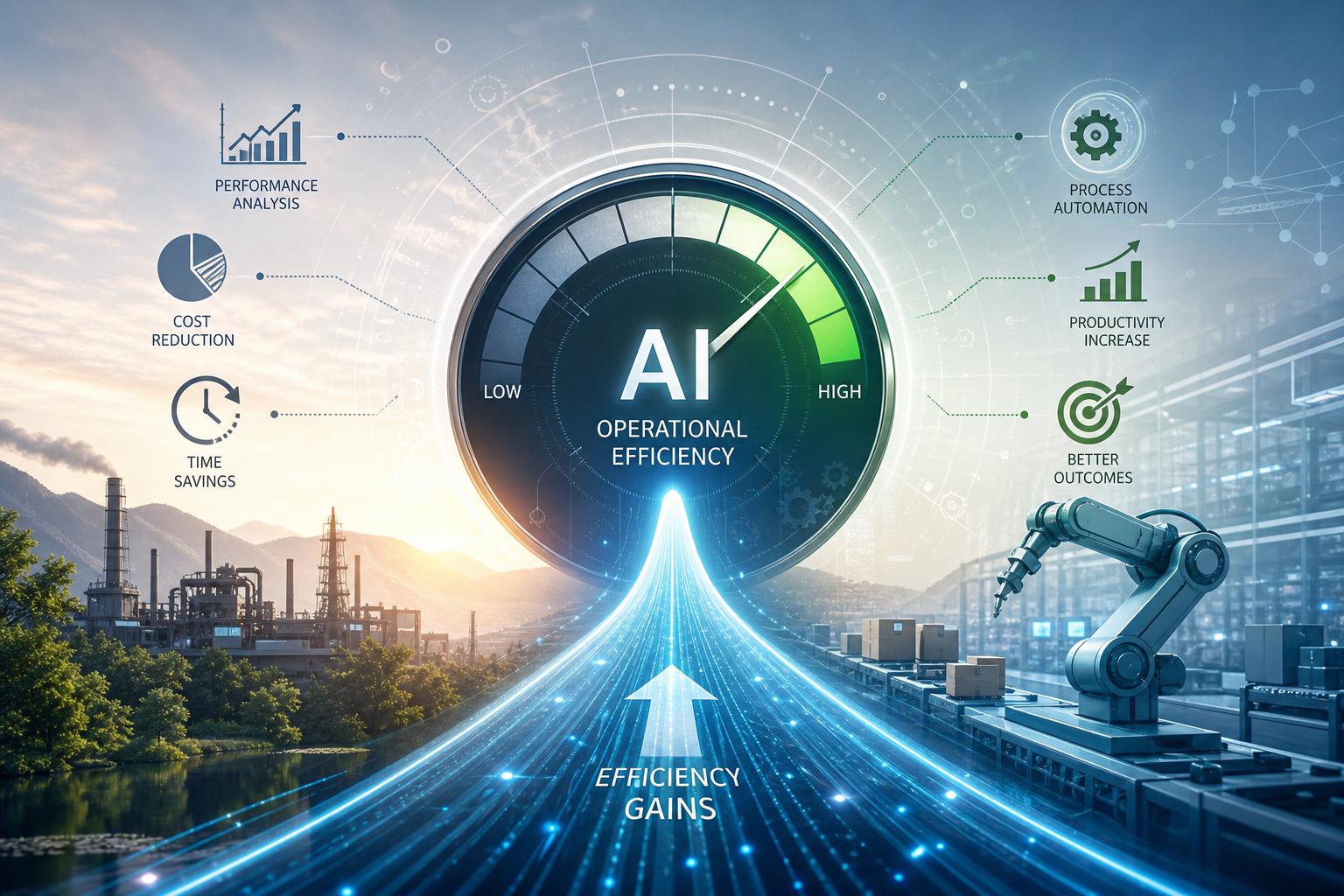
evaluating Operational Efficiency Gains through AI Implementation
Operational efficiency is often the first and most tangible benefit businesses observe following AI implementation. To truly gauge these gains, focus on metrics such as process cycle time reduction, which measures how AI streamlines workflows by automating repetitive tasks. Another critical indicator is resource utilization rate, highlighting how well AI optimizes workforce allocation and machine usage. Monitoring these can illuminate the specific areas where AI trims waste and accelerates output, providing clear evidence of ROI in operational contexts.
- task automation rate: Percentage of manual tasks replaced or enhanced by AI
- Error rate reduction: Decline in human or system errors due to AI oversight
- Throughput increase: Volume of goods or services processed per unit time after AI deployment
| Metric | Pre-AI | Post-AI | Impact (%) |
|---|---|---|---|
| Cycle Time (hours) | 48 | 30 | 37.5% |
| Resource Utilization | 68% | 85% | 25% |
| Error Rate | 5.2% | 1.1% | 78.8% |
Beyond quantitative improvements, qualitative metrics play a key role in evaluating AI’s operational impact. Employee satisfaction can serve as a proxy for efficiency gains, as AI reduces workload drudgery and fosters engagement with higher-value work.Additionally, customer satisfaction and retention rates frequently enough improve when operational processes become faster and more reliable, reflecting the broader business value AI delivers. Combining these quantitative and qualitative insights creates a extensive view that helps leadership pinpoint not only cost savings but also strategic advantages driven by AI.
Assessing Customer Experience Improvements Driven by AI Solutions
Evaluating the enhancements in customer experience powered by AI involves both qualitative and quantitative approaches. Businesses should systematically track customer satisfaction scores and net promoter scores (NPS) to capture shifts in customer sentiment. Moreover, monitoring changes in response times during customer interactions, especially in AI-driven chatbots and support systems, provides immediate insight into efficiency gains. These metrics help to quantify how AI tools reduce friction points and enhance engagement, ultimately fostering stronger loyalty and retention.
to gain a comprehensive view,combine these metrics with behavioral data such as repeat purchase rates and customer lifetime value (CLV) after AI implementation. A concise overview of key metrics for tracking customer experience impact might look like this:
| Metric | What it Measures | Typical Impact of AI |
|---|---|---|
| customer Satisfaction Score (CSAT) | Customer happiness with interactions | Increased clarity and speed of responses |
| Net Promoter Score (NPS) | Likelihood of customer suggestion | Improved personalization and trust |
| first Response Time | Speed of initial customer support reply | Reduced delays via AI automation |
| Repeat Purchase Rate | Frequency of returning customers | Higher through consistent satisfaction |
Strategic Recommendations for Maximizing AI Return on Investment
To truly harness the value of AI investments, organizations must prioritize a clear alignment between AI initiatives and overarching business objectives. This begins with defining measurable outcomes that directly correlate with strategic goals, such as revenue growth, cost reduction, or customer experience enhancement. Implementing continuous performance tracking through a combination of real-time dashboards and periodic reviews ensures that AI projects remain transparent and accountable.Key stakeholders should focus on embedding cross-functional collaboration to facilitate knowledge sharing and accelerate the iteration process, enabling rapid course corrections that optimize financial and operational returns.
Moreover, an agile governance framework is critical for maximizing the impact of AI deployments. Establishing robust risk management procedures along with ethical guidelines ensures the lasting adoption of AI technologies. Consider the following focal areas to elevate ROI effectiveness:
- Investment Prioritization: allocate resources based on predictive ROI models and scalability potential.
- Talent integration: Blend domain experts with AI specialists for contextualized innovation.
- Technology Stack Optimization: Leverage modular and interoperable systems to reduce deployment friction.
- Feedback Loops: Utilize user and system data to refine AI models continuously.
| Strategic Element | Example Metric | Business Impact |
|---|---|---|
| Customer Experience | Net Promoter Score (NPS) | Improved brand loyalty and retention |
| Operational Efficiency | cost per Transaction | reduced operational expenses |
| Product Innovation | Time to Market | Faster product deployment cycles |