

Key Architectures Driving GPU Performance in Artificial intelligence
Modern AI systems harness the raw computational power of GPUs through a combination of specialized architectures designed to optimize parallel processing and efficiency. Among these, tensor cores stand out as a game-changer; they speed up deep learning by handling matrix multiplications directly on-chip, a task at the heart of neural network calculations. complementing this, the widespread adoption of SIMD (Single Instruction, Multiple Data) architecture in GPU designs ensures thousands of cores can perform identical operations together, significantly accelerating data throughput. These innovations not only reduce training times but also enable real-time inference, critical for applications such as autonomous driving and natural language understanding.
The complexity of AI workloads also demands smart memory management,where architectures like high-bandwidth memory (HBM) and multi-level cache hierarchies play a vital role. by minimizing data transfer latencies and maximizing bandwidth, GPUs maintain the high-speed data flow essential for AI computations. Below is a concise summary of the core architectural features driving GPU performance in AI:
| Architecture Feature | Primary Benefit | Example Usage |
|---|---|---|
| Tensor Cores | Matrix Math Optimization | Deep learning training and inference |
| SIMD execution | Parallel Data Processing | Image and signal processing |
| High-Bandwidth Memory | Reduced Data Latency | Large AI model datasets |
| Cache Hierarchies | Efficient Data Reuse | Real-time AI applications |
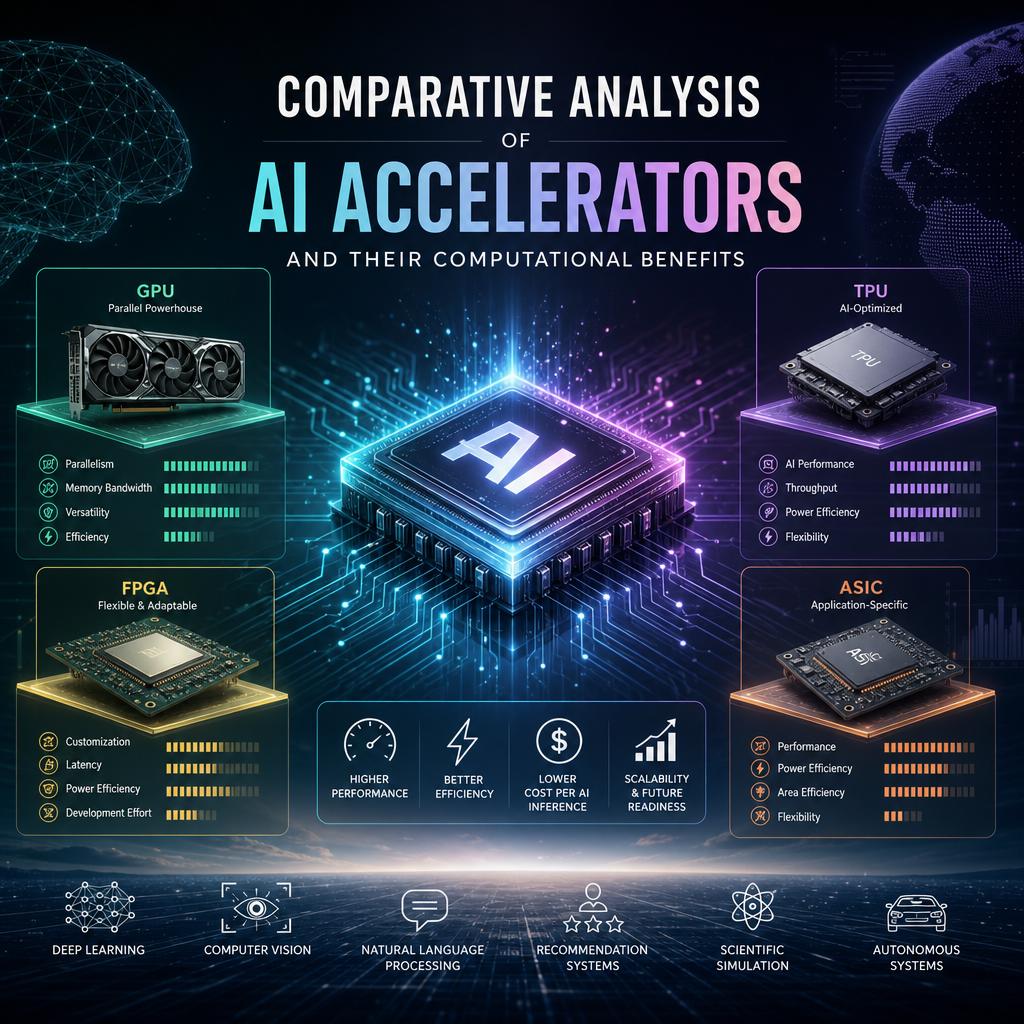
Comparative Analysis of AI Accelerators and Their Computational Benefits
modern AI workloads demand immense computational resources that customary CPUs struggle to deliver efficiently. That’s where specialized AI accelerators and GPUs come into play, offering tailored architectures optimized for machine learning and deep learning processes. GPUs, originally designed for graphics rendering, excel in parallel processing, enabling them to handle thousands of simultaneous operations. This capability translates into superior throughput for matrix multiplications, a core operation in neural network training and inference. Meanwhile, AI accelerators like TPUs and dedicated ASICs are purpose-built chips designed to optimize specific AI tasks, often achieving better energy efficiency and faster computation by focusing on narrow but intensive operations.
Key advantages of these chips include:
- Parallelism: High thread counts for executing multiple calculations concurrently.
- Energy efficiency: Custom circuitry reduces power consumption per operation.
- Optimization: Architectures designed to enhance AI model throughput and latency.
- Scalability: Versatility to address a range of workloads from edge devices to large data centers.
| Chip Type | Primary Benefit | Common Use Cases |
|---|---|---|
| GPU | Massive Parallel Processing | Training large neural networks, image processing |
| TPU (Tensor processing Unit) | Operation-specific Efficiency | Google AI services, deep learning inference |
| ASIC (Request-Specific Integrated Circuit) | Custom Performance Enhancement | Embedded AI devices, dedicated ML tasks |
Optimizing AI Workloads Through Effective Chip Selection and Integration
Selecting the right chip architecture is essential to harness the full potential of AI workloads.graphics Processing Units (GPUs) continue to dominate due to their massive parallel processing capabilities, making them ideal for training deep learning models. Their highly optimized floating-point performance accelerates matrix computations fundamental to AI, while their flexible cores allow for various simultaneous tasks. However, specialized AI accelerators, such as Tensor Processing Units (TPUs) and field Programmable Gate Arrays (FPGAs), are gaining prominence by offering efficiency gains tailored to specific neural network operations, often reducing latency and energy consumption significantly compared to general-purpose GPUs.
- GPUs: Exceptional parallelism, broad developer ecosystem, optimized for dense linear algebra.
- TPUs: Custom ASICs specifically designed for tensor operations in AI models, optimizing throughput and power efficiency.
- FPGAs: Hardware-level customization that balances performance and flexibility for dynamic AI workloads.
Effective integration of these chips requires an understanding of the application’s computational needs and data flow. Workloads demanding high throughput and scale benefit from the raw power of multi-GPU configurations and distributed computing frameworks. In contrast,edge AI applications prioritize low power consumption and real-time responsiveness,where accelerators like FPGAs excel. A strategic combination of these chipsorchestrated by advanced software stacks and middleware, can create a synergistic ecosystem. This integration not only elevates performance but also optimizes cost-efficiency and scalability across diverse AI deployment scenarios.
| Chip Type | Ideal Use Case | Key Advantage |
|---|---|---|
| GPU | Large-scale model training | Massive parallelism & broad support |
| TPU | High-throughput inference | Custom tensor optimization |
| FPGA | Edge AI & low-latency | customizable hardware efficiency |
Future Trends and Recommendations for Leveraging AI Hardware Advancements
The relentless pace of innovation in AI hardware is set to redefine capabilities across industries, with emerging technologies pushing the boundaries of AI performance and efficiency. Among these, the integration of specialized AI accelerators such as tensor processing units (TPUs), neuromorphic chipsand quantum-inspired processors promises to complement traditional GPUs by targeting specific AI workloads with unmatched precision.these advancements will enable developers to optimize solutions for power consumption, latencyand scalability, making AI applications not only more powerful but also accessible in edge devices and decentralized environments.
Key recommendations for harnessing these hardware advancements include:
- Investing in heterogeneous computing architectures that combine GPUs,TPUs,and ASICs to maximize task-specific efficiency.
- focusing on software-hardware co-design to align AI models with the strengths of the underlying hardware, thereby reducing bottlenecks.
- Prioritizing energy-efficient hardware to support sustainable AI deployments without sacrificing computational power.
- Encouraging cross-disciplinary collaboration between hardware engineers, AI researchersand system architects for innovation acceleration.
| hardware Type | strength | Ideal use Case | Future Potential |
|---|---|---|---|
| GPU | Parallel processing power | Deep learning, image/video processing | Enhanced multi-precision support |
| TPU | Tensor operation optimization | Neural network inference and training | Integration in edge devices |
| Neuromorphic chips | Event-driven efficiency | Real-time sensory data processing | Low-power AI in mobile robotics |
| Quantum-inspired | Complex problem solving | Optimization and simulation | Hybrid classical-quantum AI systems |