
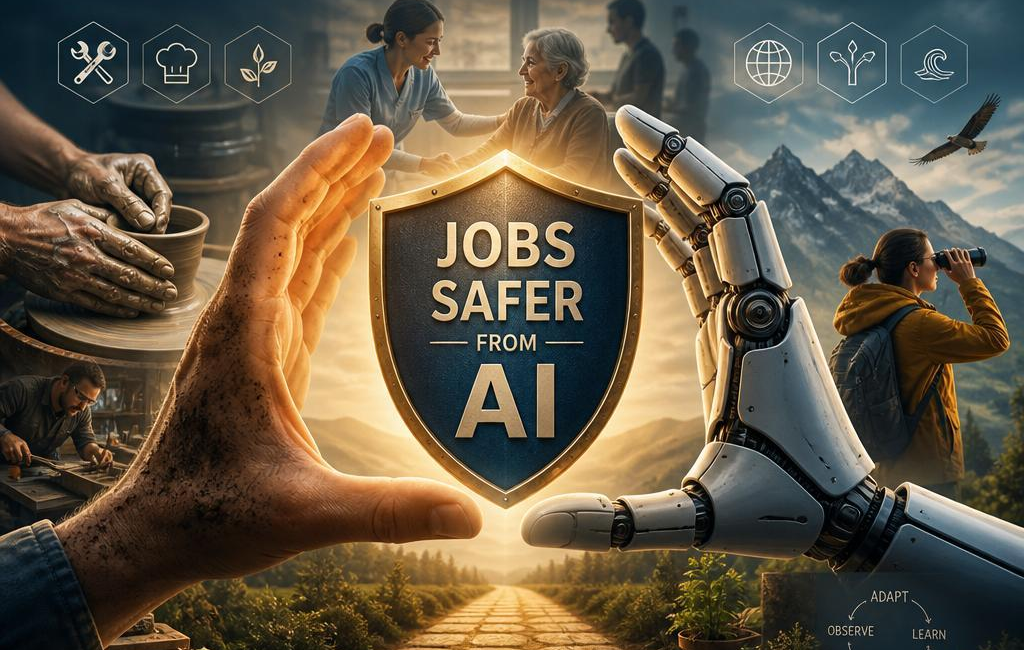
Jobs Requiring Manual Dexterity and Complex Motor Skills Resist Automation
In an era dominated by rapid advancements in artificial intelligence and automation, certain jobs naturally resist mechanization due to their reliance on manual dexterity and intricate motor skills. Tasks demanding fine hand-eye coordination, precise tactile feedback, and adaptable hand movements remain challenging for AI systems and robots to replicate with consistent quality.Professions such as surgical specialists, artisan craftsmenand specialized technicians require a level of nuanced skill and adaptability that machines cannot yet match, making these roles inherently safer from automation.
Moreover, these roles often involve unpredictable environments and trust-based interactions, where human judgement and experience are pivotal. Below are some key reasons why such occupations endure:
- Complex tactile feedback: Skilled hands interpret subtle textures and resistance impossible for current AI sensors.
- Adaptive motor responses: Human motor skills dynamically adjust in real time to unpredictable changes during task execution.
- Interpersonal trust: Many hands-on jobs involve direct client or patient care, where empathy and trust are irreplaceable.
| Job Category | Why Resistant to Automation | Examples |
|---|---|---|
| Medical Surgeons | High precision,real-time adaptation,patient trust | Neurosurgeons,Orthopedic surgeons |
| Artisan Craft Workers | Unique handcrafted attributes,sensory feedback | Jewelry makers,Potters |
| Technical Repair Specialists | Diagnosing complex issues,hands-on adjustments | Watchmakers,Electronics repair |
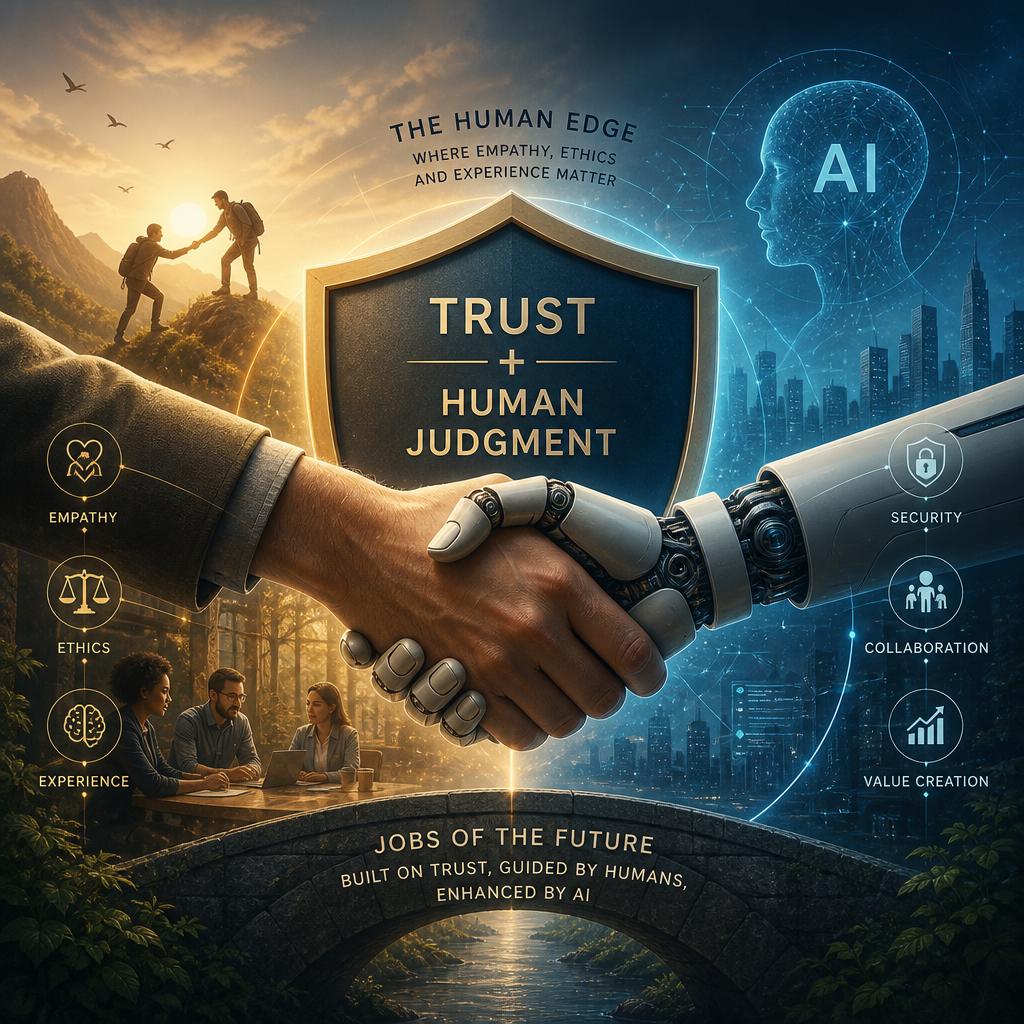
The Crucial Role of Trust and Human judgment in Job Security against AI
In an age where AI continues to advance rapidly, human trust and nuanced judgment remain irreplaceable assets in the workforce. jobs that demand interpersonal relationships, ethical decision-makingand hands-on expertise build a fortress against automation. AI may excel at data processing and pattern recognition, but it struggles to replicate the deep empathy and contextual understanding cultivated through real-world human interactions. Consequently, roles that hinge on trust-building and complex human discretion naturally resist AI encroachment.
Consider professions where unpredictability and ambiguity are routine. These roles frequently require:
- Adaptive problem-solving in dynamic environments
- intuitive judgment calls under uncertain conditions
- Negotiation and conflict resolution based on personal rapport
| Job Type | Trust-Level | Reliance on Human Judgment |
|---|---|---|
| Healthcare Professionals | High | Critical |
| Creative Directors | Moderate | Essential |
| Social Workers | Very High | Indispensable |
In these spheres, AI tools serve most effectively as aids rather than replacements, reinforcing why human judgment infused with trust remains the cornerstone of job security.
Managing Unpredictability and Adaptability as Defining Factors in AI-Resistant Careers
In a landscape increasingly dominated by automation and artificial intelligence, careers that demand hands-on problem solving and the ability to navigate unexpected developments remain resilient. These roles inherently require human intuition, adaptabilityand the capacity to manage unpredictability in real time-qualities that AI, despite its rapid advancement, cannot fully replicate. Professions in healthcare, emergency services, skilled tradesand creative arts thrive on interpersonal trust and real-world experience, making them less susceptible to automation. Their success hinges on nuanced decision-making that goes beyond algorithmic predictions, emphasizing the irreplaceable human element in critical, on-the-ground scenarios.
Additionally, jobs that involve building and maintaining trust-whether with clients, patientsor communities-show heightened resistance to AI disruption. The subtlety in emotional intelligence, ethical judgmentand relationship-building are pillars that technology struggles to authentically duplicate. Consider the table below illustrating key attributes that shield such careers from AI encroachment:
| Characteristic | Human Advantage | AI Limitation |
|---|---|---|
| Unpredictability Management | Fast adaptation to novel, complex scenarios | Relies on pre-trained data, struggles with novel contexts |
| Emotional Engagement | Sincere empathy and trust-building | Simulated responses lack genuine feeling |
| Hands-On Expertise | Physical skill and tactile intuition | limited to programmed tasks |
| Ethical Decision-Making | Contextual moral reasoning | Bound by predefined rules and logic |
Understanding these defining factors empowers professionals to cultivate unique competencies-prioritizing adaptability and trust over routine execution-to sustain and enhance their career longevity in an AI-altered workforce.
Strategic Recommendations for Developing Skills to Thrive in the Era of AI Advancement
As artificial intelligence continues to evolve at breakneck speed, certain skill sets stand out as critical anchors for career resilience.Jobs that emphasize hands-on interaction with physical or human-centric tasks remain less vulnerable to automation. These roles demand dexterity, nuanced judgmentand real-time problem-solving that AI cannot easily replicate. Similarly, professions deeply rooted in building and maintaining trust thrive in environments where emotional intelligence, confidentialityand ethical considerations are paramount. In such contexts, the human element is not just preferred but essential, making it a fortress against the encroachment of AI-driven processes.
- Hands-on skills: craftsmanship, healthcare, emergency services
- Trust-based roles: counseling, legal advocacy, negotiation
- Unpredictable, adaptive tasks: creative arts, strategy advancement, crisis management
Moreover, the unpredictable nature of certain work environments creates challenges for automation, securing these job areas from AI displacement. Roles demanding continuous adaptability, improvisationand complex interpersonal interactions are less likely to be handed over to machines. Workers can future-proof their careers by cultivating skills that emphasize flexibility and emotional acuity,paired with domain-specific expertise that requires a nuanced understanding of human behavior or rapidly evolving conditions.
| Category | Key Skills | Reason for AI Resistance |
|---|---|---|
| Hands-On | Manual dexterity, situational awareness | Physical tasks and tactile feedback beyond AI’s reach |
| Trust-Centered | Emotional intelligence, ethical judgment | Human relationships require empathy and confidentiality |
| Unpredictable | Creativity, adaptive problem solving | Complex, dynamic scenarios defy algorithmic predictability |