

The Fundamentals of Data Privacy in Artificial intelligence
In the realm of artificial intelligence, safeguarding personal information is not just a technical necessity but a legal and ethical mandate. Understanding key concepts such as data minimization, consent management, and purpose limitation is crucial for both developers and users.Data minimization emphasizes collecting only the essential data needed for a specific AI function, drastically reducing exposure risks. Consent management ensures that users have control over their data, granting permissions knowingly and revoking them at any time. Purpose limitation restricts the use of collected data strictly to predefined objectives, preventing unauthorized exploitation or secondary usage.
- Data Encryption: Encoding data to protect it from unauthorized access during transmission and storage.
- Retention Policies: Defining clear timeframes for how long data is stored and when it must be securely deleted.
- Access Controls: Limiting internal and external access to sensitive data based on roles and responsibilities.
| Term | Definition | Importance |
|---|---|---|
| Data Minimization | Collecting only necessary data | Reduces risk and compliance issues |
| Encryption | Securing data via coding | Protects data integrity and privacy |
| Data retention | How long data is stored | Ensures timely deletion and reduces breach impact |
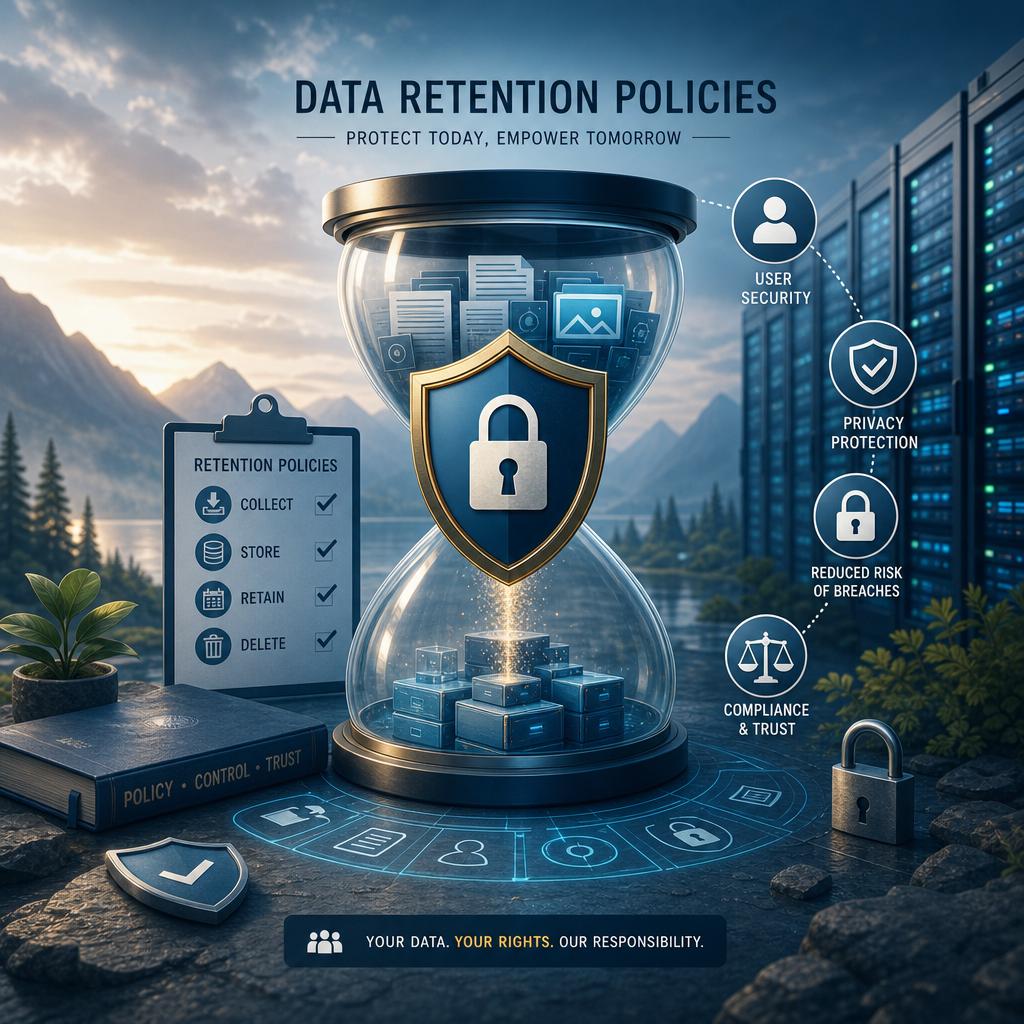
Understanding Data retention Policies and Their Impact on User Security
Data retention policies dictate how long your information is kept, storedand ultimately disposed of by organizations-especially those leveraging AI technologies. These policies are crucial in defining the lifespan of your data across various platforms and services. When executed poorly, they can expose sensitive information to prolonged risks, including unauthorized access and breaches.Effective retention strategies prioritize limiting data exposure periods, ensuring that information is not retained beyond its necessary use, thereby sharpening the focus on protecting user privacy and minimizing vulnerabilities.
- Retention duration: Specifies timeframes for data storage.
- Access controls: Determines who can view or manipulate stored data.
- Data disposal methods: Procedures for irreversibly deleting data.
| Policy Component | user Security Impact |
|---|---|
| Short Retention Period | Reduces risk of long-term data leaks |
| Strict Access Controls | Limits insider threats and unauthorized usage |
| Secure Disposal Methods | prevents data recovery after deletion |
Evaluating Risks Associated with AI Data Storage and Management
The rapid advancement of artificial intelligence brings with it complex challenges related to how data is stored and managed. When AI systems process vast amounts of personal and sensitive information, the risk of breaches, unauthorized accessor data corruption becomes notable. Organizations must prioritize the implementation of robust encryption protocols, strict access controlsand routine audits to mitigate these threats. Moreover, understanding the nuances of data retention policies is critical; keeping data longer than necessary not only burdens storage infrastructure but also increases exposure risks. By adopting proactive measures, businesses can ensure that data integrity and privacy standards are not compromised in this AI-driven landscape.
Several key factors influence the risk profile associated with AI data management:
- data Sensitivity: The more personal or proprietary the data, the greater the potential impact of a leak.
- Storage Location: On-premises vs. cloud environments have different vulnerabilities and compliance requirements.
- access Policies: How strictly permissions are controlled can determine the likelihood of misuse.
- Retention Period: Excessively long retention increases chance of outdated or irrelevant data being exploited.
| Risk Factor | Potential Impact | Mitigation Strategy |
|---|---|---|
| Weak Encryption | Data exposure in transit or at rest | Utilize AES-256 and TLS 1.3 protocols |
| Excessive Data Retention | Increased regulatory penalties and breach risks | Implement automated deletion policies |
| Unrestricted Access | Unauthorized data manipulation or leakage | Apply role-based access control (RBAC) |
Best Practices for Ensuring Data Safety in AI Applications
In the rapidly evolving realm of artificial intelligence, safeguarding sensitive data requires more than just basic encryption and access controls. Organizations must adopt a holistic approach to data privacy and retention that emphasizes transparency,accountability,and continuous monitoring. This involves implementing robust data minimization practices-only collecting what is absolutely necessary-and carefully defining how long data should be retained to reduce exposure to breaches or misuse.Equally critical is the adoption of clear privacy policies that inform users about the specific data points collected, the purpose behind their useand the rights they have to access, corrector erase their personal information.
Key best practices include:
- Regular Audits: Conduct thorough data audits to identify and eliminate redundant or obsolete information.
- Data Anonymization: Use techniques such as masking or tokenization to prevent direct identification from stored data.
- Access Controls: Enforce strict user authentication protocols and role-based permissions to limit who can view or manipulate datasets.
- Retention schedules: Establish timelines for data retention aligned with legal requirements and business needs.
| retention Policy Aspect | Recommended Practice | Impact on Data safety |
|---|---|---|
| Data Minimization | Collect only necessary data for AI models | Reduces attack surface and breach consequences |
| Access management | Implement multi-factor authentication | Prevents unauthorized access |
| Data Anonymization | Mask PII before storage | Protects individual identities |
| Retention Timelines | Delete data after predefined periods | Limits long-term exposure risks |