

The Definition of Art in the Age of Artificial Intelligence
In the rapidly evolving landscape of creativity, the conventional boundaries that define art have been challenged by the advent of artificial intelligence. AI systems now generate imagery, musicand literature once solely attributed to human inventiveness and emotion. This shift compels us to reconsider what constitutes artistic expression: is it the intentionality and consciousness behind the creationor can it also be attributed to complex algorithms that mimic human-like creativity? Many argue that art’s essence lies in the human experience and subjective interpretation, elements AI currently lacks.Yet,the increasing sophistication of AI-generated art raises questions about authenticity,originality,and the unique human imprint.
- Human Role: Does the presence of a human curator or prompt creator maintain the human element in AI art?
- Ethics: How do copyright, authorshipand cultural appropriation concerns evolve when art is co-created or autonomously produced by machines?
- Value: Should AI-generated works be judged by traditional artistic standards or should new criteria be developed?
| Aspect | human Art | AI Art |
|---|---|---|
| Creativity Source | Emotional, experiential | algorithmic, data-driven |
| intentionality | Conscious, purposeful | Simulated, programmed |
| Originality | Unique, personal | Derivative, recombined |
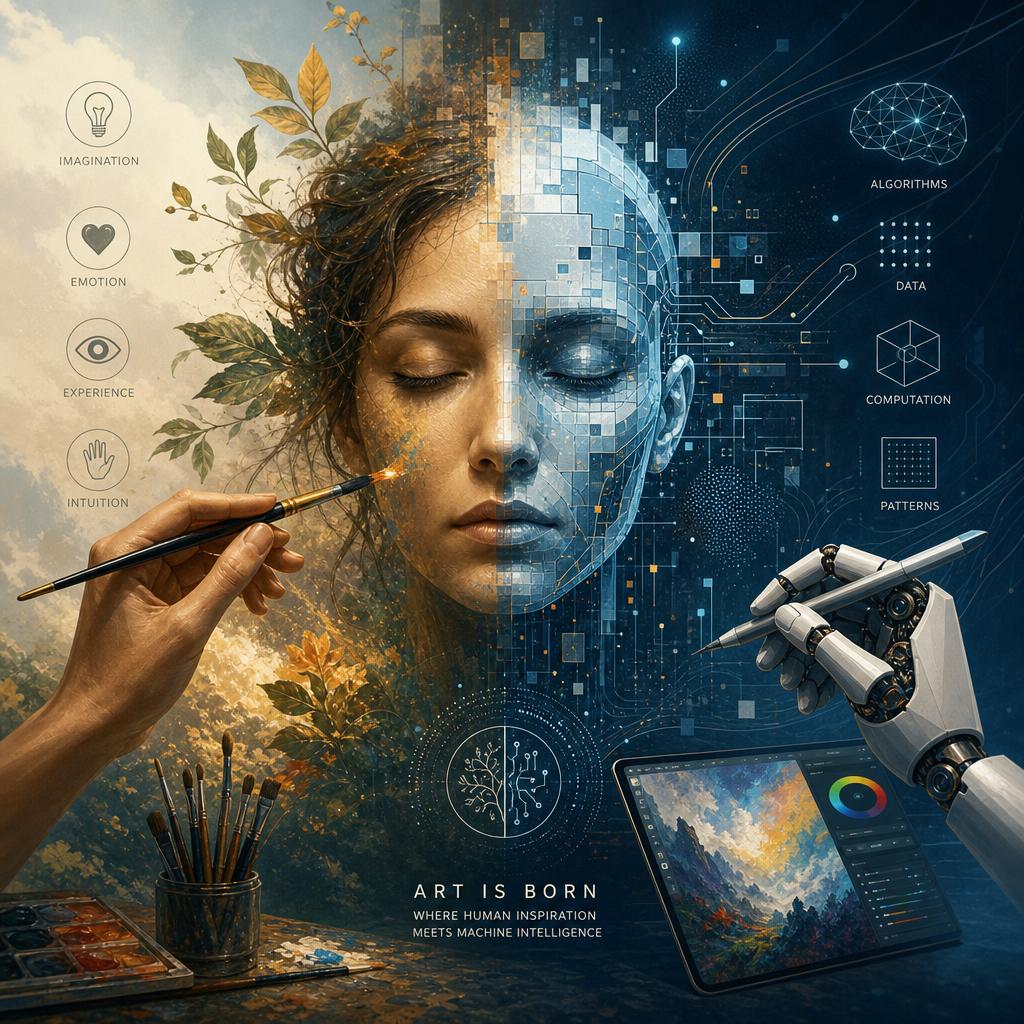
Examining the human Contribution in AI-Generated Artworks
The relationship between artificial intelligence and artistic creation is far from a simple binary of machine versus human. While AI algorithms can autonomously generate images, musicand literature, the human touch remains crucial at multiple stages of the process. From curating datasets that shape the AI’s style, to defining prompts that guide its outputand ultimately selecting and refining the AI-generated pieces, human creativity and judgment are deeply embedded. This collaboration challenges the traditional notion of authorship, prompting us to reconsider what it means to be an artist in the digital age.
Ethical considerations further complicate the human role in AI art. Issues such as intellectual property rights, openness of the creative process, and accountability for perhaps biased or controversial outputs reveal the need for conscientious human oversight. The table below summarizes key human contributions and the associated ethical concerns in AI art generation:
| Human Contribution | Ethical Concern |
|---|---|
| Dataset Curation | Bias and Representation |
| Prompt Engineering | Transparency and Intent |
| Selection & Refinement | Attribution and Authenticity |
| Dissemination & Contextualization | Impact on Art Communities |
Ultimately, the interplay between human insight and machine output does not diminish artistic value but rather transforms it into a collaborative dialogue, extending our creative potential while demanding responsible stewardship.
Ethical Considerations Surrounding AI Art Creation and Ownership
The emergence of AI-generated art has ignited a complex ethical dialogue, challenging traditional ideas about creativity, ownershipand accountability. Unlike human artists who infuse their work with personal experiences and emotions, AI systems operate driven by algorithms and data inputs, raising vital questions about authorship. Who truly owns the rights to a piece created thru machine learning- the developer of the algorithm, the user who prompts the creationor the AI itself? These questions extend into copyright law, where legal frameworks are still grappling with whether AI-generated works qualify for protection and, if so, under what conditions.
Key ethical considerations include:
- Transparency: Clear disclosure about the involvement of AI in the creative process is vital for consumers, curatorsand other stakeholders.
- Attribution: Assigning credit fairly between AI developers, prompt engineersand human collaborators remains controversial yet essential.
- Impact on Human Artists: The rise of AI art challenges human creators economically and philosophically, sparking debates on whether this technology diminishes or expands artistic expression.
| Aspect | Human Artist | AI System |
|---|---|---|
| creativity Source | Personal experience and emotion | Data patterns and algorithms |
| Accountability | Individual artist | Developers and users |
| Legal Ownership | Established; copyright protected | Uncertain; evolving legislation |
Guidelines for Integrating AI Art into Contemporary Creative Practices
Prosperous integration of AI into contemporary creative workflows demands a thoughtful balance between human intuition and machine-generated insights. Artists and creators should consider AI as a collaborative partner rather than a sole originator of artistic content. Key recommendations include:
- Maintain artistic intention: Always anchor AI outputs within a clear creative vision to avoid art becoming a mere algorithmic experiment.
- Ethical clarity: Transparently disclose AI’s role in the creation process to respect the viewer’s understanding and consent.
- Iterative refinement: Use AI-generated elements as raw material subject to continuous human refinement and contextualization.
This approach ensures that the artistry remains human-centered, with AI serving as an extension of creative capacity rather than a replacement.
| Aspect | Human Role | AI Contribution |
|---|---|---|
| Concept Development | Originate ideas, themes, and emotional intent | Provide inspiration, generate multiple variations |
| Execution | Apply craftsmanship, ensure fidelity to vision | Perform technical tasks, suggest compositional alternatives |
| Ethical Oversight | Evaluate social and cultural implications | Identify potential biases in data sets and outputs |
By clearly delineating responsibilities, creators can harness AI’s efficiency while preserving the irreplaceable emotional and cultural depth that only human artists contribute. This synergy is foundational to addressing the ongoing ethical dialogue surrounding AI art.