

Human Roles in AI Decision-Making Processes
Human involvement remains pivotal in guiding, supervising, and ultimately validating AI-driven decisions. Despite rapid advancements in machine learning and automation, the necessity for human judgment in interpreting AI outputs and contextualizing their application cannot be overstated. Human roles in AI decision-making encompass:
- Auditing AI systems for biases, errors, and ethical compliance;
- Intervening in edge cases where AI predictions may be unreliable;
- Establishing governance frameworks that define accountability standards;
- Evaluating societal impacts before deployment of AI solutions.
Moreover, effective collaboration between humans and AI enhances accountability through transparent decision trails and clarifies obligation in complex scenarios. This interaction ensures that AI serves as an augmentative tool-empowering professionals to make informed choices rather than replacing nuanced human reasoning.Consider the following comparative overview of roles:
| Role | Primary Responsibility | Impact on AI Decisions |
|---|---|---|
| Data Scientist | Model development and training | Ensures accuracy and fairness of AI predictions |
| Ethics Officer | Policy formulation and review | Safeguards ethical considerations and legal compliance |
| End User | Operational application | Validates AI recommendations in real-world contexts |
| Auditor | Independent system assessment | Maintains transparency and trustworthiness |
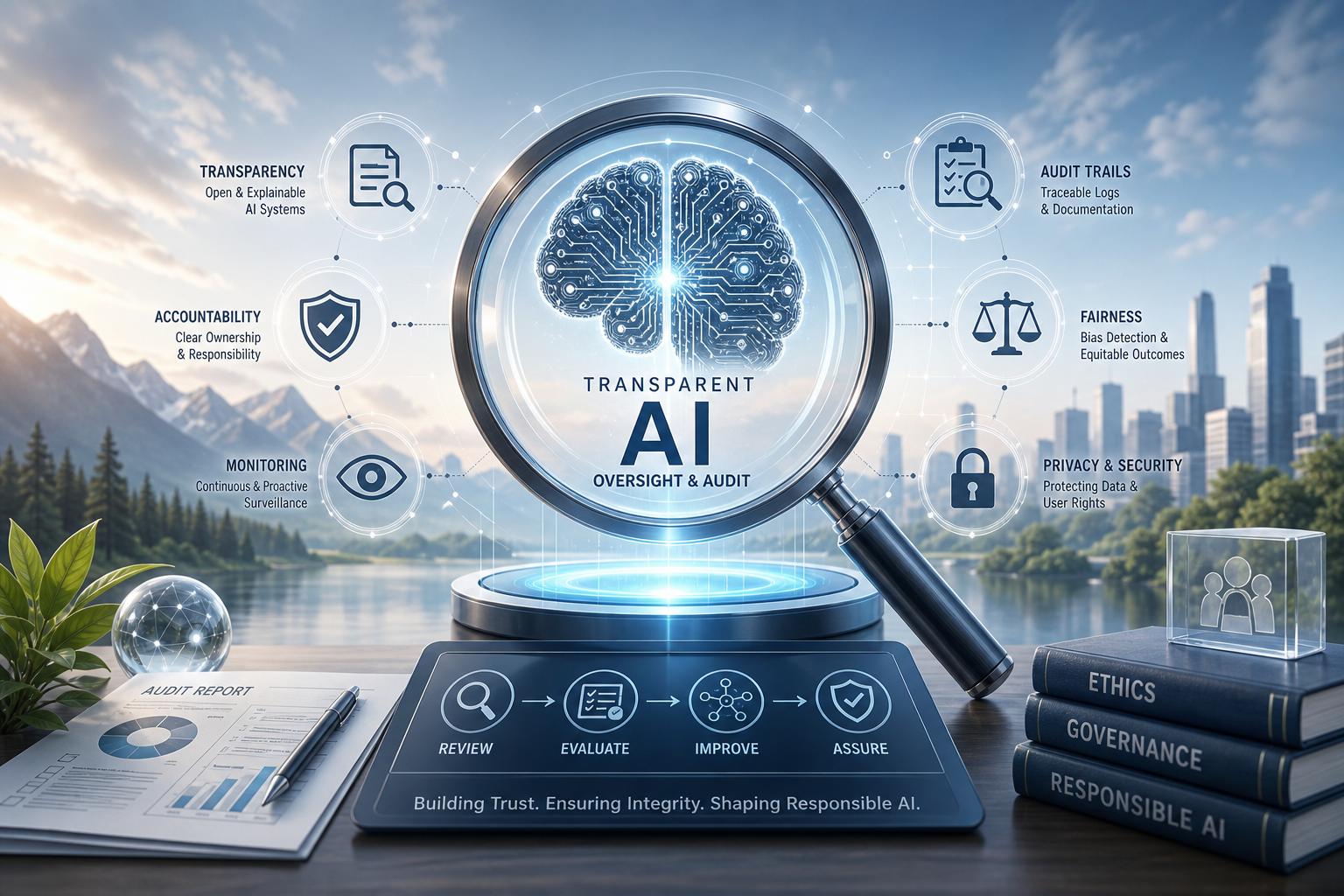
Mechanisms for Transparent AI Oversight and Audit
Central to fostering trust and reliability in AI systems is the establishment of robust frameworks that allow for continuous human supervision.this involves designing AI algorithms wiht transparent decision-making pathways that can be readily examined at any stage. Such transparency not only aids in identifying potential biases or errors but also empowers stakeholders to understand and, when necessary, contest the AI’s outputs. Key mechanisms include:
- Real-time monitoring dashboards displaying system performance and anomaly alerts.
- Explainability tools that translate complex AI processes into interpretable formats for auditors.
- Comprehensive logs that record decision data, enabling post-hoc analyses and accountability reviews.
Additionally, periodic audits conducted by independent entities serve as an essential layer of oversight, ensuring that AI systems adhere to regulatory requirements and ethical standards. These audits typically focus on the fairness, accuracy, and security of AI-driven decisions. The table below summarizes key attributes evaluated during audits and their corresponding oversight benefits:
| Audit Attribute | Oversight Benefit |
|---|---|
| Bias Detection | Ensures equitable treatment across demographic groups |
| Data Integrity | Confirms reliability and accuracy of input data |
| Compliance Verification | Validates adherence to legal and ethical standards |
| Security Assessment | Protects against unauthorized manipulation |
Challenges in Maintaining Human Accountability in Automated Systems
As automated systems become increasingly elegant, delineating clear human accountability presents a multifaceted challenge. Decision-making processes ofen occur through complex algorithms, making it challenging to trace responsibility when errors arise. The inherent opacity of many AI models-particularly those employing deep learning-further complicates efforts to assign accountability.Organizations must grapple with questions such as: Who is responsible when an AI system fails? Is it the developer, the operator, or the institution deploying the technology? Without transparent mechanisms to monitor and audit these systems, accountability risks becoming obscured, undermining trust.
Moreover, the integration of automated systems into real-world operations requires continuous oversight, yet sustaining human vigilance is itself challenging. Humans may become complacent due to automation bias or over-reliance on AI outputs, perhaps leading to oversight lapses. Critical challenges include:
- Maintaining clarity in role delegation between human operators and AI systems
- Implementing real-time monitoring frameworks that balance automation efficiency with human judgment
- Ensuring accountability protocols adapt dynamically as systems evolve
addressing these issues demands robust governance structures and an unwavering commitment to embedding ethical standards into AI deployment strategies.
Best Practices for Integrating Human Control in AI Development and Deployment
Embedding human control in the lifecycle of AI systems is pivotal to maintain trustworthiness and ethical integrity. Developers must prioritize transparency by making AI decision processes interpretable to human overseers. This can be achieved through rigorous documentation, explanation interfaces, and continuous monitoring frameworks that enable operators to intervene when necessary. Moreover,an iterative feedback loop between developers and human supervisors enhances the system’s ability to self-correct and adapt responsibly to evolving scenarios. Ensuring humans remain “in the loop” during critical decision-making stages mitigates risks of automated bias and unintended consequences, thereby embedding accountability at the core of AI deployment.
Best practices to reinforce human oversight extend beyond the technical domain into organizational policies and culture. Training programs should empower personnel with the skills to interpret AI outputs critically and understand their implications. Establishing clear escalation protocols and accountability chains prevents unchecked machine autonomy. Below is a summarized comparison of key practices critical for integrating human control effectively:
| Practice | Purpose | Impact |
|---|---|---|
| Transparency & Explainability | Clarify AI decisions | Builds trust and facilitates human review |
| Continuous Monitoring | Track AI behavior over time | Early detection of anomalies or biases |
| Human-in-the-Loop (HITL) | Enable human intervention | Prevents automated errors and enforces accountability |
| Training & education | Empower AI operators | Ensures informed decision-making and oversight |
| Escalation Protocols | Define intervention steps | Maintains organizational control and responsibility |