

The Role of Human judgment in Enhancing AI Decision-Making Accuracy
Integrating human judgment into AI decision-making processes creates a necessary safeguard that elevates accuracy and accountability. While AI excels in processing vast datasets and identifying patterns beyond human capacity,it can lack contextual understanding and ethical considerations that humans naturally apply. By embedding human oversight, decision outputs undergo critical evaluation before implementation, ensuring that biases are identified, unintended consequences are minimized, and nuanced scenarios are appropriately handled.This synergy between human insight and machine intelligence fosters a more robust framework for decisions in high-stakes environments such as healthcare, finance, and legal applications.
Key contributions of human involvement include:
- Contextual interpretation: Humans assess subtleties and situational variables that AI might overlook.
- Ethical validation: Ensuring AI-generated conclusions align with societal norms and moral values.
- Error correction: Detecting and amending inaccuracies or data anomalies in AI recommendations.
- Continuous learning: Providing feedback that refines and improves future AI outcomes.
| Component | Human Role | AI Role |
|---|---|---|
| Data analysis | Identify relevant context & anomalies | Process large volumes & detect patterns |
| Decision Validation | Evaluate ethical implications & impact | Generate recommendations & predictions |
| feedback Loop | Provide corrective insights | Incorporate feedback for model adjustment |
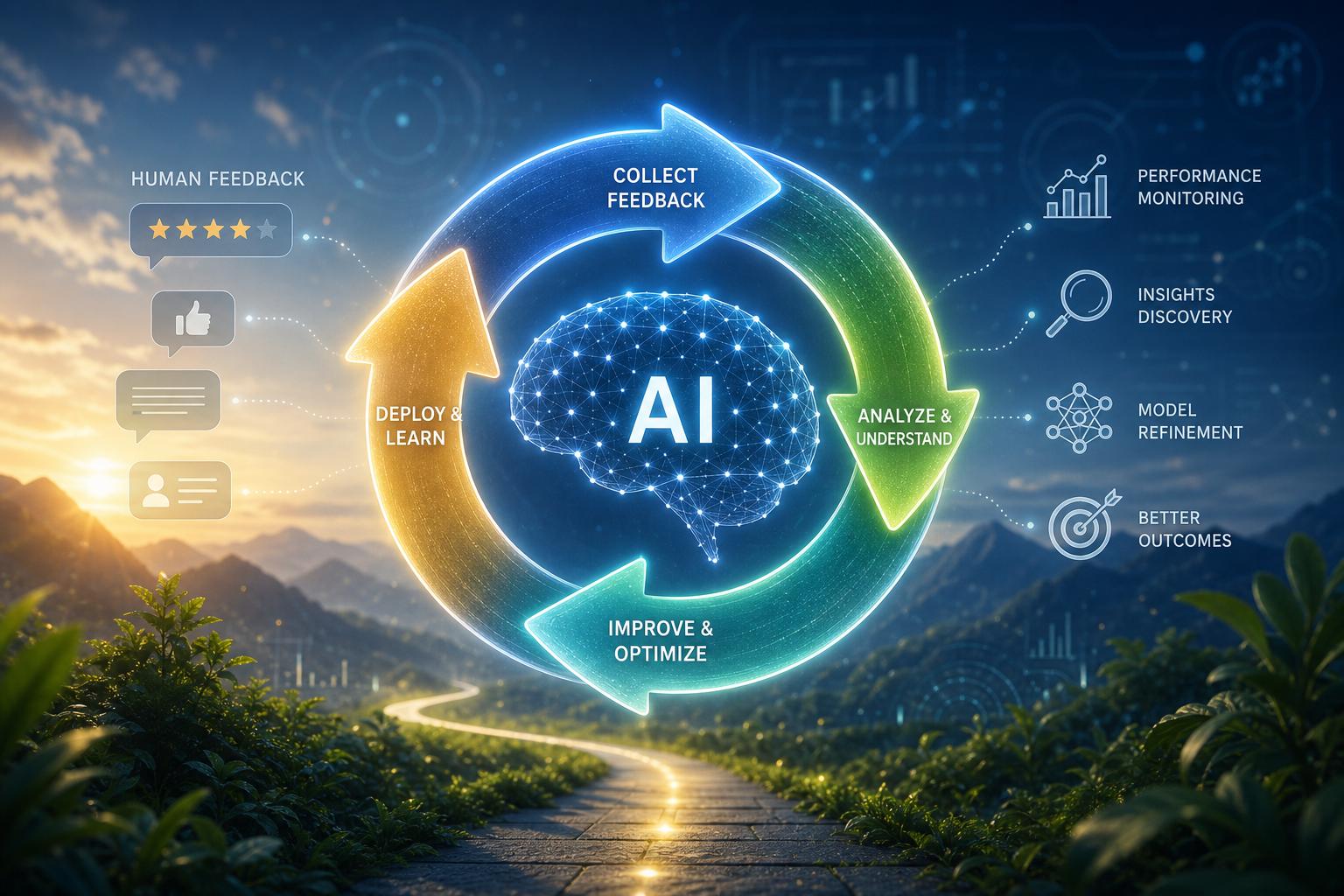
Implementing Effective Feedback Mechanisms for Continuous AI Improvement
To sustain and elevate the performance of AI systems, establishing robust feedback loops is paramount. These mechanisms gather insightful data from both AI outputs and human interactions, enabling continuous refinement. Effective feedback processes often incorporate structured evaluation criteria and real-time monitoring to detect deviations or biases promptly. By integrating human judgment at critical checkpoints, organizations ensure that AI decisions align with ethical standards and organizational goals, preventing unintended consequences that purely automated systems might overlook.
Key components of an impactful feedback mechanism include:
- Regular human reviews to validate AI-generated results and intervene when necessary.
- Transparent reporting systems that track errors, biases, and user concerns.
- Adaptive learning frameworks capable of assimilating new feedback to update AI behavior dynamically.
| Feedback Component | Purpose | Example |
|---|---|---|
| Human Review Panels | Quality assurance and ethical oversight | Weekly audit of AI-generated content |
| Error Reporting Interface | Captures user-reported issues for resolution | In-app bug reporting form |
| adaptive Learning | Incorporates lessons from feedback to improve algorithms | Model retraining based on flagged outputs |
Balancing Automation Efficiency with Human Ethical Oversight
Automated systems have dramatically improved operational efficiency across industries by accelerating decision-making and minimizing human error. though,the indispensable role of ethical oversight by humans ensures that these systems operate within the bounds of societal norms and values. Incorporating human-in-the-loop (HITL) frameworks allows for ongoing supervision, intervention, and approval of AI-driven processes, especially in high-stakes environments where moral discernment is critical. Such integration safeguards against algorithmic bias, unintended consequences, and opaque decision-making, reinforcing trustworthiness and accountability in automated technologies.
To maintain an optimal balance, organizations often adopt specific checkpoints where human review is mandatory before final execution.These can include:
- ethical validation: Assessing AI decisions against ethical guidelines.
- Error correction: Identifying and mitigating system misjudgments.
- Contextual judgment: Interpreting nuances that algorithms might overlook.
- Regulatory compliance verification: Ensuring adherence to legal frameworks.
| Aspect | Automation Benefit | Human Oversight Role |
|---|---|---|
| Speed | Rapid data processing | Decision validation for accuracy |
| Consistency | Uniform application of rules | Adjusting for ethical nuances |
| Scalability | Handling large volumes | monitoring for bias or drift |
Best Practices for Integrating Human-in-the-Loop Systems in Critical Applications
Successful integration of human-in-the-loop (HITL) systems demands a clear delineation of tasks between automated processes and human oversight. Critical applications require real-time human intervention to validate, override, or refine AI decisions, especially when stakes are high.Establishing robust protocols for alerting human operators ensures that AI recommendations are never blindly accepted, but rather scrutinized through experienced judgement. In addition, ongoing training programs must be implemented so human participants remain adept at interpreting AI outputs and can respond adeptly to emergent issues or ambiguous scenarios.
Designers should also prioritize clarity and explainability in HITL workflows. Empowering users with insights into how AI reaches its conclusions builds trust and facilitates more effective collaboration. Key best practices include:
- Clear escalation paths for urgent decision-making backed by AI recommendations.
- Continuous feedback loops from human reviewers to improve AI model accuracy and reliability.
- Adaptive user interfaces tailored to the cognitive load and context of the task.
| Best Practice | Benefit |
|---|---|
| real-time alerts & overrides | Prevents critical errors |
| Explainable AI outputs | Enhances user trust |
| Feedback mechanisms | Drives continuous improvement |
| Context-aware UI design | Reduces operator fatigue |