

Understanding Core AI Quality Metrics and Their Business Implications
Businesses increasingly rely on quantitative metrics to gauge the effectiveness of their AI systems, ensuring these technologies deliver tangible value aligned with organizational goals. Key performance indicators such as accuracy, precision, recall, and F1 score serve as foundational measures in evaluating model outputs, especially in classification and prediction tasks. Though, beyond these technical standards, firms also prioritize metrics like model robustness, latency, and fairness, which address the AI’s operational reliability, responsiveness, and ethical implications respectively.Such a multifaceted approach helps executives understand not only how well an AI performs, but also how it integrates into real-world scenarios without amplifying biases or causing unintended disruptions.
To encapsulate the relationship between common AI quality metrics and their business impact,consider the following simplified overview:
| Metric | Focus Area | Business Implication |
|---|---|---|
| Accuracy | Correctness of predictions | Higher customer satisfaction and reduced error costs |
| Latency | Response time | Enhanced user experiance and operational efficiency |
| Fairness | bias mitigation | improved brand reputation and regulatory compliance |
| Robustness | System stability under varied conditions | lower downtime and increased trustworthiness |
- Interpretability ensures stakeholders can understand AI decisions,reducing uncertainty.
- Scalability measures how well AI can handle growing data and user demand without performance loss.
- Cost-efficiency balances resource investment with the AI’s output quality and business gains.
By integrating these diverse metrics into their evaluation frameworks, companies gain the ability to tailor AI initiatives that are both technically sound and strategically advantageous. This alignment fosters informed decision-making, accelerates innovation, and ultimately strengthens competitive positioning in rapidly evolving markets.
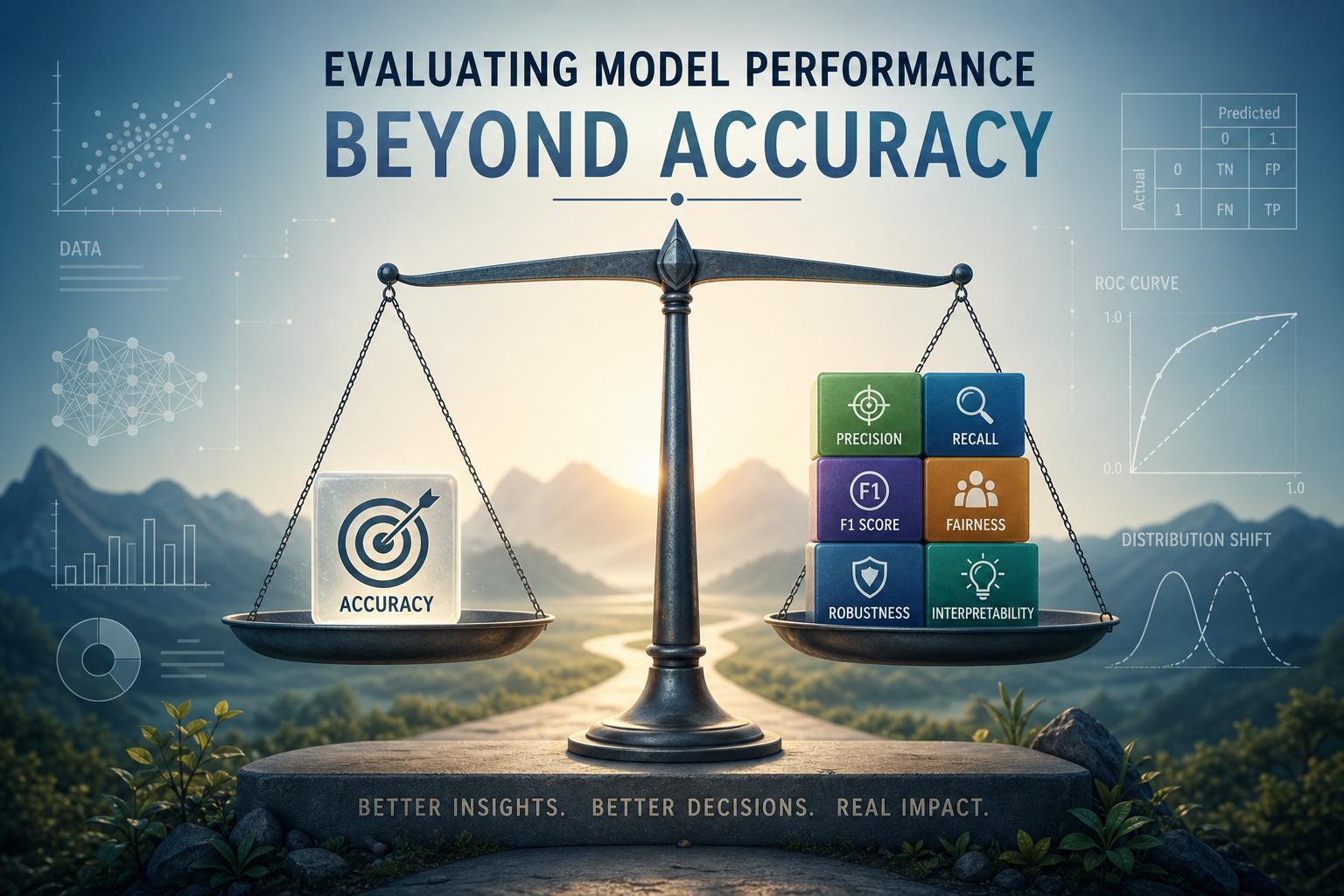
evaluating Model Performance Beyond Accuracy
When assessing AI models, relying solely on accuracy can paint an incomplete picture of their true potential. While accuracy indicates the proportion of correctly predicted instances, it often masks critical nuances such as class imbalances or varying error costs. As a notable example, in fraud detection, a high accuracy rate might still correspond to many undetected fraudulent transactions if the dataset is overwhelmingly composed of legitimate cases. To tackle this, firms enhance their evaluation frameworks by incorporating metrics that offer a more granular and insightful outlook on model behavior.
Key metrics considered include:
- Precision and Recall: pinpointing not just how many predictions are right, but how many relevant instances are captured and missed.
- F1 Score: striking a balance between precision and recall, especially valuable when false positives and false negatives carry different consequences.
- ROC-AUC and PR-AUC: Assessing model discriminative ability beyond fixed thresholds, offering a view of performance across all classification thresholds.
- Confusion Matrix Analysis: Visualizing and quantifying the types of errors to guide strategic improvements.
| Metric | Primary Insight | When It Matters Most |
|---|---|---|
| Precision | accuracy of positive predictions | When false positives are costly |
| Recall | Coverage of actual positives | When missing positives is harmful |
| F1 Score | Balance of precision & recall | In class-imbalanced scenarios |
| ROC-AUC | Overall discrimination ability | When threshold-self-reliant evaluation is needed |
In moving beyond conventional accuracy metrics, companies ensure their AI systems are robust, fair, and aligned with real-world demands. This rigorous evaluation not only enhances model reliability but also fosters trust among stakeholders, ultimately driving better business outcomes.
Integrating User Feedback for Holistic AI Assessment
Incorporating user feedback into AI evaluation frameworks provides an indispensable perspective that purely quantitative metrics frequently enough miss. Users interact with AI systems in diverse,real-world scenarios,revealing nuanced strengths and weaknesses that algorithms or automated tests may overlook. Firms adept at gathering this feedback employ a variety of channels such as in-app surveys, direct user interviews, and automated feedback collection tools. This qualitative data complements traditional performance metrics, allowing organizations to capture the human experience-highlighting issues like usability, trust, and contextual relevance that significantly impact perceived AI quality.
Key methods for assimilating user feedback include:
- Sentiment Analysis: Evaluating text or voice feedback to detect emotional tone and user satisfaction levels.
- A/B Testing Feedback Loops: Comparing user responses across different AI model versions to guide iterative improvements.
- Behavioral Analytics: Monitoring how users navigate and engage with AI-driven services to identify friction points.
| Feedback type | impact on AI Assessment |
|---|---|
| Direct User Ratings | Measures immediate satisfaction and trustworthiness |
| Contextual Comments | Illuminates specific pain points and feature gaps |
| Usage Patterns | Identifies real-world applicability and longevity issues |
By weaving user feedback into the AI quality assessment fabric,firms achieve a more holistic and actionable understanding of system performance. This multidimensional insight empowers data science teams to balance statistical accuracy with human-centric design,fostering AI solutions that are not only technically sound but also intuitively aligned with user needs and expectations.
Best Practices for Implementing Continuous AI Quality Monitoring
Maintaining the highest level of AI quality demands a structured approach that integrates continuous monitoring into the progress lifecycle. Leading organizations prioritize proactive detection of model drift, data inconsistencies, and performance degradation by employing automated validation pipelines. These pipelines leverage real-time feedback loops that ensure AI systems align with evolving business objectives and regulatory standards. Equally critical is fostering a culture where cross-functional teams regularly review monitoring metrics, allowing for swift recalibration and minimizing risks associated with erroneous outputs.
Effective continuous monitoring hinges on a set of well-defined metrics tailored to the AI use case and operational environment. Primarily, businesses track accuracy, precision, recall, and latency, but these are complemented by domain-specific indicators such as fairness and interpretability scores. To facilitate decision-making, firms often use dashboards that consolidate key performance indicators (KPIs) into digestible formats:
| Metric | Purpose | Ideal Monitoring frequency |
|---|---|---|
| Accuracy | measures prediction correctness | Continuous |
| Latency | Tracks response time | real-time |
| fairness | Detects bias across groups | Weekly |
| data Drift | Identifies changes in input data | Daily |
- Automate anomaly detection: Embed triggers to alert teams when performance dips below thresholds.
- Document metrics evolution: Maintain an audit trail to understand long-term trends and causal factors.
- Iterate regularly: Use monitoring insights to refine models and data ingestion strategies continuously.