
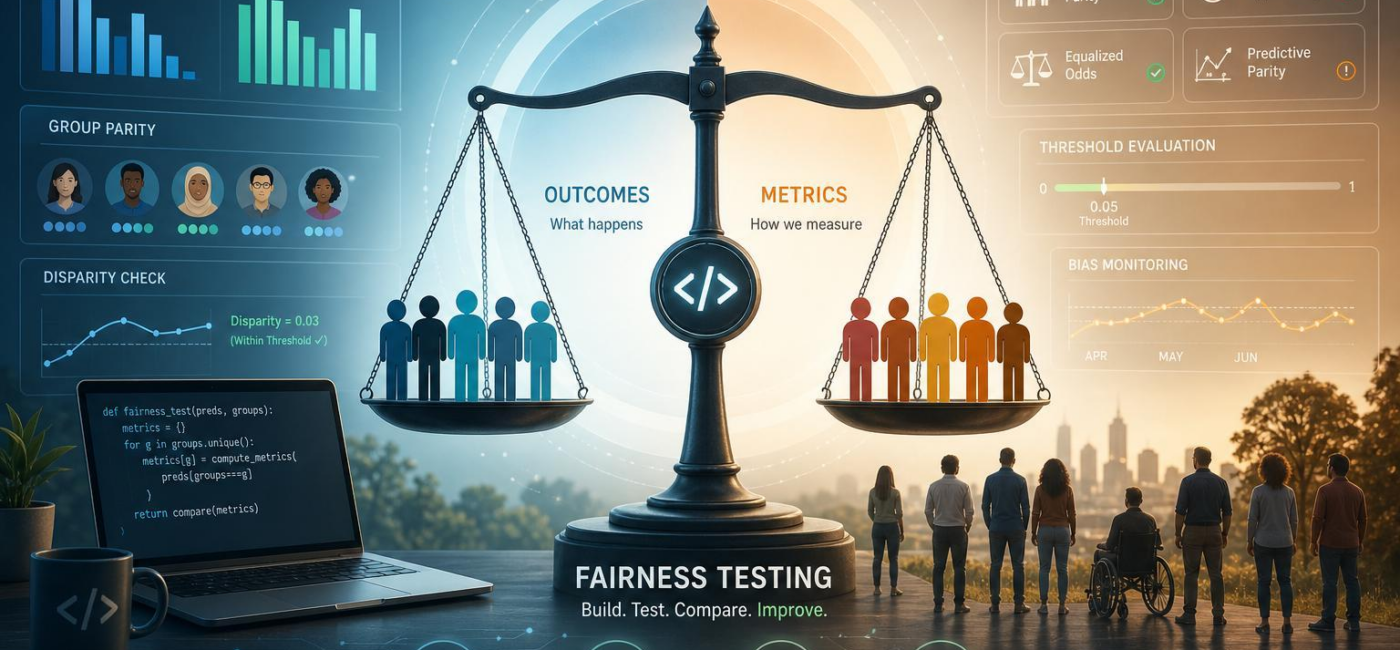
Understanding Fairness Testing in Development Environments
In modern development environments, fairness testing has become a critical dimension of software quality assurance. developers utilize various metrics to assess whether algorithms or systems treat different user groups equitably, aiming to identify adn mitigate biases that coudl lead to discriminatory outcomes. These fairness metrics often include disparate impact ratio,equal chance difference,and demographic parity,enabling a quantitative comparison of results across demographic segments. By systematically collecting data on how a system performs for various user profiles, teams can pinpoint unintended disparities and make informed adjustments early in the development lifecycle.
To illustrate, consider the following comparison of common fairness metrics used to evaluate a hypothetical decision-making system:
| Metric | Purpose | Interpretation |
|---|---|---|
| Disparate Impact Ratio | Measures selection rate differences between groups | Values close to 1 indicate fairness |
| Equal Opportunity Difference | Examines true positive rates across groups | Near-zero differences signify equitable outcomes |
| Demographic Parity | Ensures equal acceptance rates regardless of group | Higher deviation suggests potential bias |
Through continuous comparisons using such metrics, developers can embed fairness as a foundational aspect rather than an afterthought, fostering trust and accountability in their applications.
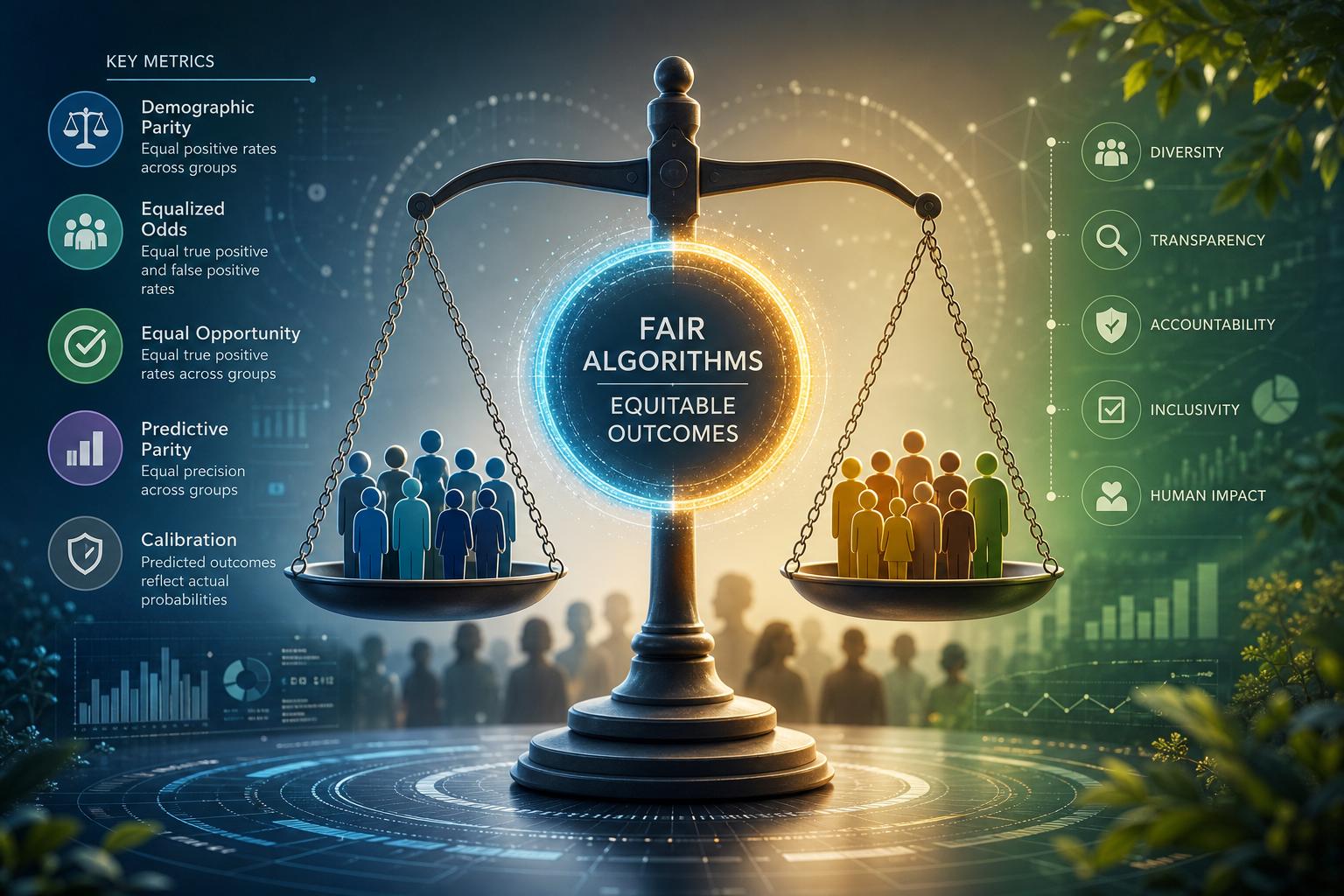
Key Metrics for Evaluating Fairness in Algorithmic outcomes
When assessing fairness in algorithmic outcomes, developers rely on a suite of key metrics that spotlight different dimensions of bias and equity.among the most critical are statistical parity, which measures whether outcomes are distributed equally across groups, and equal opportunity, which focuses on whether true positive rates are consistent among different populations. Additionally, predictive parity ensures that predictions carry the same validity across groups, mitigating disparities in error rates. These metrics collectively help identify whether an algorithm disproportionately benefits or harms any demographic segment, enabling targeted adjustments that promote balanced results.
In practice, fairness evaluation is frequently enough supplemented by comparative analysis of these indicators using structured tables and visualizations to reveal nuanced disparities. For example, a developer might examine the following fairness metrics for a hiring algorithm:
| Metric | group A | group B | Notes |
|---|---|---|---|
| Statistical Parity | 0.48 | 0.46 | Close parity |
| Equal Opportunity | 0.82 | 0.70 | Disparity requires review |
| Predictive Parity | 0.89 | 0.88 | Measures balanced across groups |
By interpreting such data, developers gain a extensive view of fairness, helping to ensure that algorithmic decisions do not perpetuate existing inequities but foster trust and inclusivity in automated systems.
Methodologies for Comparing Fairness Across Diverse Data Sets
When evaluating fairness across data sets that vary substantially in demographics, context, or scale, developers employ a variety of methodological frameworks to ensure comparative integrity. One prevalent approach is statistical parity assessment, which measures whether different groups experience similar positive outcome rates despite underlying differences in data distribution. To complement this, fairness metrics such as Equal Opportunity and Demographic Parity are calculated and juxtaposed, allowing developers to quantify bias not just at a surface level but also in terms of actionable decision outcomes.
Developers often create benchmark tables to visualize and communicate fairness metrics captured during tests.These tables help highlight disparities and guide corrective measures.As an example, consider the following illustrative comparison of fairness scores across two hypothetical datasets:
| Metric | Dataset Alpha (%) | Dataset Beta (%) |
|---|---|---|
| Statistical Parity | 85.4 | 78.1 |
| Equal Opportunity | 88.9 | 74.2 |
| Predictive Equality | 90.1 | 80.3 |
- Cross-validation of metrics: Ensures robustness by testing multiple fairness indicators side-by-side.
- Subgroup analysis: Identifies hidden biases that may affect only specific portions of the population.
- iterative recalibration: Enables refinement of algorithms based on comparative fairness findings.
Best Practices and Recommendations for Ensuring Equitable Results
Achieving fairness in algorithmic outcomes requires developers to adopt a suite of best practices centered on transparency, continuous evaluation, and stakeholder engagement. Clear documentation of data sources and bias detection methods enables teams to identify and address potential disparities early in the development lifecycle. Regular auditing using multiple fairness metrics-such as demographic parity, equalized odds, and predictive parity-ensures a comprehensive understanding of model impact across diverse groups.Engaging with affected communities and domain experts further enriches this process by incorporating real-world perspectives that challenge assumptions and surface hidden biases.
- Integrate fairness testing within CI/CD pipelines to catch regressions.
- Employ counterfactual simulations to explore “what-if” scenarios that reveal model sensitivities.
- Leverage multi-metric dashboards for holistic outcome monitoring.
| Practice | Purpose | Benefit |
|---|---|---|
| Continuous Metric Evaluation | Track performance disparities | Early detection of bias shifts |
| Community Feedback Loops | Capture lived experiences | improved model relevance |
| Transparency in Documentation | Reveal data provenance and decisions | Builds trust and accountability |
Beyond quantitative checks, cultivating a culture that prioritizes fairness increases the likelihood of equitable AI applications. Developers should foster interdisciplinary collaboration, uniting technical teams with ethicists, legal experts, and social scientists. This ensures that fairness evaluations are not just algorithmic exercises but are grounded in ethical imperatives and societal contexts. Moreover,continuous education around emerging fairness challenges and mitigation techniques empowers developers to stay ahead in an evolving landscape,ultimately driving results that are just and inclusive for all stakeholders.