

How AI Revolutionizes the Summarization of Complex Research Data
Artificial intelligence streamlines the daunting task of distilling vast, intricate datasets into clear, concise summaries, enabling researchers to grasp core findings without wading through exhaustive reports. By leveraging natural language processing and machine learning algorithms, AI can identify key patterns, correlationsand trends that might or else remain buried under layers of raw data. This not only accelerates the research workflow but also enhances the accuracy of initial data interpretation,freeing scholars to focus on hypothesis growth and experimental design.
Core advantages AI brings to research summarization include:
- Rapid synthesis of multi-dimensional data sources
- Automated extraction of relevant insights and anomalies
- Reduction of human bias by standardizing data interpretation
- Dynamic adaptability to evolving datasets
| Traditional Method | AI-Driven Summarization |
|---|---|
| Manual note-taking and data reading | Automated parsing and summarization |
| Time-intensive and prone to oversight | Fast processing with enhanced accuracy |
| Static interpretation of fixed datasets | Adaptive learning as new data arrives |
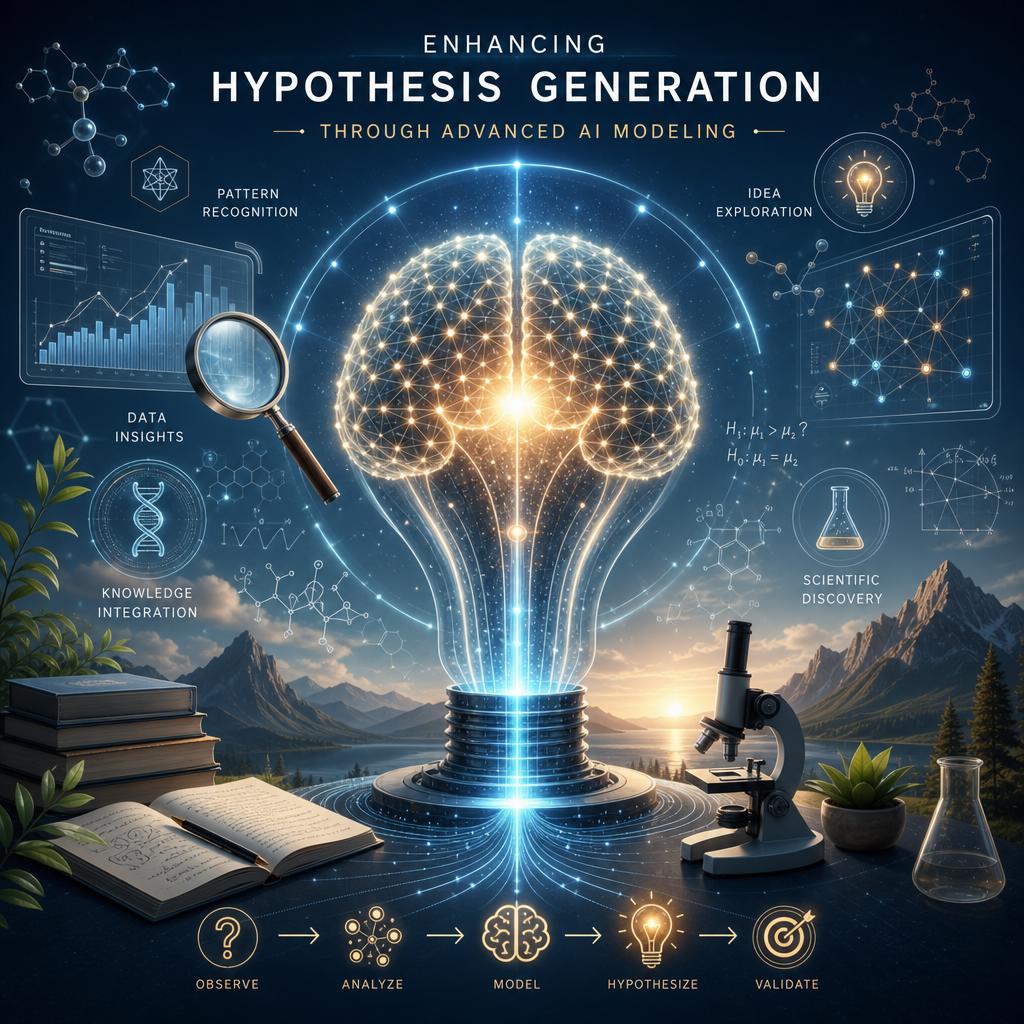
Enhancing Hypothesis Generation Through Advanced AI Modeling
Advanced AI modeling revolutionizes the way researchers generate hypotheses by leveraging deep learning algorithms to identify hidden patterns and correlations within vast datasets. This capability surpasses traditional manual methods, enabling a more precise and nuanced understanding of complex phenomena. Researchers benefit from AI’s ability to rapidly synthesize multidisciplinary data sources, which sparks innovative hypotheses that might otherwise remain unexplored due to the sheer volume and complexity of details involved.
Key advantages of integrating AI into hypothesis generation include:
- Enhanced Pattern Recognition: AI detects subtle trends and anomalies with unparalleled accuracy.
- Accelerated Idea Development: Hypothesis formation transitions from weeks to hours, increasing research efficiency.
- Cross-Domain Insights: AI bridges gaps between diverse fields, fostering interdisciplinary breakthroughs.
| Feature | Impact on Research | Example |
|---|---|---|
| Natural Language Processing | Extracts nuanced insights from scientific texts | automated literature summarization |
| Predictive Modeling | Anticipates experimental outcomes based on prior data | Optimizing clinical trial designs |
| Data Integration | Combines heterogeneous data for comprehensive analysis | Multi-omics in biomedical research |
Leveraging AI for In-Depth Analytical Precision in Research
Modern research benefits profoundly from AI’s ability to process vast datasets with unmatched speed and accuracy. By employing advanced machine learning algorithms, AI systems can extract key patterns and trends that might elude even the most seasoned researchers. This capability enhances data summarization, turning mountains of raw information into clear, actionable insights, streamlining the decision-making process in complex research scenarios.
Beyond summarization, AI excels in generating and testing hypotheses by simulating multiple research pathways together. This dynamic analytical power enables researchers to:
- Identify hidden correlations within complex variables
- Predict outcomes with greater confidence based on historical data
- Optimize experimental designs for maximum efficiency and accuracy
| AI capabilities | Research Impact |
|---|---|
| Automated Data Processing | Speeds up analysis phases by 70% |
| Hypothesis Generation | Expands scope of possibilities explored |
| Predictive Analytics | Enhances accuracy of research forecasts |
Strategic Recommendations for Integrating AI Tools in Scientific Inquiry
To harness the full potential of AI in scientific research, it is indeed crucial to adopt a strategic framework that emphasizes seamless integration with existing methodologies. Researchers should prioritize selecting AI tools that complement their specific investigative needs-whether for data summarization, hypothesis generationor complex analyses. Establishing clear protocols for AI collaboration ensures that human expertise guides the interpretative process,mitigating risks associated with over-reliance on automated outputs. Incorporating iterative validation practices can also foster confidence in AI-derived insights, strengthening reproducibility and scientific rigor.
furthermore, successful integration requires fostering interdisciplinary collaboration and continuous training to keep pace with evolving AI capabilities. Key recommendations include:
- Developing tailored training programs that enable researchers to proficiently use AI analytics and interpretation tools.
- Implementing transparent AI workflows that elucidate how conclusions are reached, enhancing trust and acceptance.
- Encouraging data standardization to streamline AI processing and improve cross-study comparability.
| Proposal | Benefit | Example application |
|---|---|---|
| Custom training | Enhanced researcher proficiency | Workshops on NLP summarization techniques |
| Transparent Workflows | Increased reproducibility | AI-generated hypothesis with traceable data sources |
| Data Standardization | Efficient cross-study AI analysis | Unified formats for genomic datasets |