

The Role of AI in Optimizing Patient Scheduling and Resource allocation
Artificial intelligence has transformed hospital workflows by leveraging advanced algorithms to predict patient influx and optimize workforce deployment. By analyzing past data and real-time inputs, AI systems can identify patterns that help administrators align staff schedules with anticipated demand, drastically reducing wait times and avoiding burnout. This proactive approach ensures that patients receive timely care while healthcare professionals operate efficiently, even during peak periods.
The integration of AI-driven resource allocation also extends to managing medical supplies and equipment. Smart platforms track usage rates and predict shortages before they occur, enabling just-in-time inventory replenishment.Below is an example of how AI can balance critical resources during diffrent times of the day:
| Time of Day | Estimated Patient Load | Staffing Level | Critical Equipment Allocated |
|---|---|---|---|
| Morning (6 AM – 12 PM) | High | Full | Ventilators: 8 |
| Afternoon (12 PM – 6 PM) | Moderate | Reduced | Ventilators: 5 |
| Night (6 PM – 12 AM) | Low | Minimal | Ventilators: 3 |
- Dynamic scheduling: adjusts shifts instantly based on patient arrival forecasts.
- Resource prioritization: allocates critical equipment to departments with the highest current need.
- Reduced operational costs: by minimizing idle time and excess inventory.
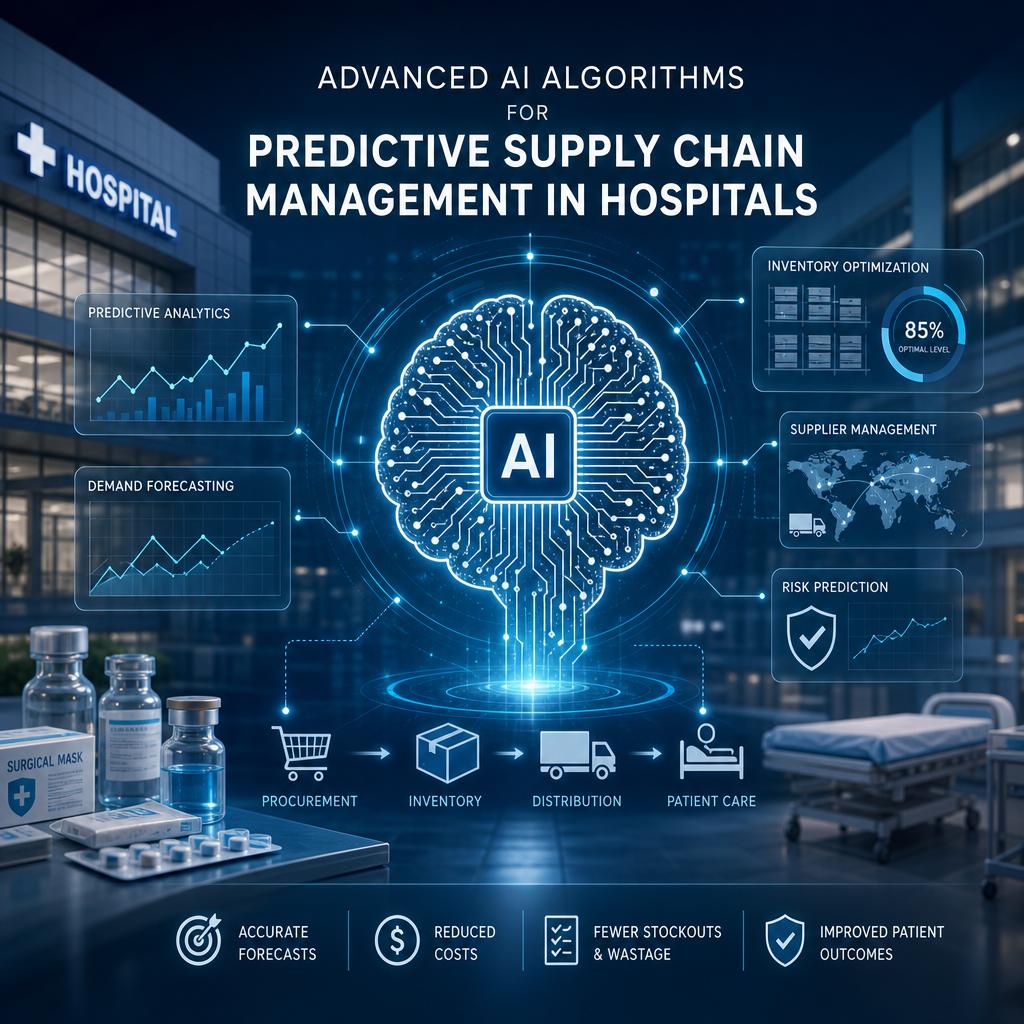
Advanced AI Algorithms for Predictive Supply Chain Management in Hospitals
Hospitals today face the constant challenge of optimizing their supply chains amidst unpredictable demands and critical time constraints. Leveraging advanced AI algorithms enables healthcare institutions to move beyond customary methods to predictive analytics that anticipate shortages and overstock situations well in advance. These AI models analyze historical data, seasonal trendsand real-time inventory levels to accurately forecast supply requirements. By integrating machine learning techniques such as reinforcement learning and neural networks, hospitals achieve higher accuracy in demand prediction, ensuring essential medical supplies are always available without wasteful surpluses. The result is a streamlined supply chain that not only cuts costs but also enhances patient care by minimizing the risk of equipment or medication shortages.
- Real-time demand sensing: AI continuously evaluates incoming patient data and treatment trends to adjust supply needs dynamically.
- Automated replenishment: systems trigger procurement processes the moment predicted thresholds are met, enabling proactive restocking.
- Risk mitigation: Predictive models highlight potential supply chain disruptions allowing preemptive intervention.
| AI Technique | Application | Impact |
|---|---|---|
| Neural Networks | Demand forecasting | High prediction accuracy |
| Reinforcement Learning | Resource optimization | Adaptive inventory control |
| Natural Language Processing | Supplier communication analysis | improved supplier reliability |
Moreover, AI algorithms facilitate sophisticated scheduling that synchronizes supply availability with hospital operations. By predicting patient admission rates and procedure volumes, these systems enable logistics teams to plan deliveries and stock rotations efficiently, avoiding bottlenecks and downtime. This holistic approach ensures that every department-from emergency rooms to surgical suites-receives the right materials exactly when needed. Coupled with predictive maintainance AI tools, hospitals can foresee equipment failures before they impact supply chain activities, further enhancing operational resilience. Such integrated solutions transform supply chain management into a smart, anticipatory ecosystem crucial for modern hospital environments.
Enhancing Clinical Workflow Efficiency Through AI-Driven Automation
Artificial Intelligence (AI) is revolutionizing hospital operations by streamlining complex processes that traditionally consume excessive time and resources. From patient scheduling systems that dynamically adjust based on real-time data, to automated supply chain management that reduces waste and shortfalls, AI technologies are crafting a more responsive and efficient clinical surroundings.Hospitals leveraging AI can now predict peak hours and allocate staff accordingly, ensuring optimal patient flow without causing burnout among healthcare professionals. This shift not only improves institutional productivity but also enhances patient satisfaction by minimizing wait times and scheduling conflicts.
Key areas where AI-driven automation sharply elevates clinical workflow efficiency include:
- Appointment Coordination: Intelligent scheduling tools that integrate with electronic health records (EHR) to automate reminders and adapt to cancellations instantly.
- Inventory Optimization: Predictive analytics for supply restocking that prevents shortages of critical medical supplies and medicines.
- Resource Allocation: Automated allocation of rooms, equipmentand personnel based on predictive demand models.
- Data-Driven Decisions: real-time dashboards offer decision-makers clear insights to manage shifting operational demands effectively.
| AI Function | Benefit | Impact on Hospital Operations |
|---|---|---|
| Smart Scheduling | Reduced patient wait time | improved patient throughput and satisfaction |
| Inventory Forecasting | Reduced waste and stock-outs | Cost savings and uninterrupted care delivery |
| automated Staff Allocation | Balanced workload | enhanced staff morale and operational efficiency |
| Operational Analytics | Proactive decision-making | Swift adjustments to changing conditions |
Strategic Implementation of AI Technologies to Improve hospital Operational Outcomes
AI-driven systems are fundamentally transforming hospital workflows by optimizing scheduling and enhancing resource allocation. Through advanced predictive analytics, hospitals can now forecast patient admissions and surgical demands with greater accuracy, enabling tailored staff rosters that minimize downtime and labor costs. these algorithms analyze vast datasets, including historical patient flow, seasonal trendsand even local events, to dynamically adjust shift patterns and ensure the right personnel are available at the right times. This shift not only improves operational efficiency but also significantly reduces burnout, fostering a more resilient workforce aligned with patient care priorities.
key benefits of AI-enabled scheduling include:
- Real-time adjustment: Automated updates in response to sudden changes like emergency surges or staff absences.
- Optimized resource utilization: Balanced workload distribution that enhances service quality and reduces overtime expenses.
- Improved patient flow: Smoother transitions between departments, minimizing wait times and avoiding bottlenecks.
Beyond scheduling, AI is revolutionizing supply chain management within healthcare institutions. Intelligent systems monitor inventory levels in real time, predict usage patternsand automate procurement processes to prevent shortages of critical supplies. The integration of AI with hospital details systems enables seamless synchronization between consumption and restocking schedules,significantly cutting down waste due to overstocking or expiration. as illustrated in the table below, AI-driven supply management delivers measurable improvements across key operational metrics.
| Operational Metric | Before AI | After AI implementation |
|---|---|---|
| Inventory stockouts | 15% | 3% |
| Waste Due to Expiry | 12% | 4% |
| Procurement Cycle Time | 7 days | 2 days |