

How Artificial Intelligence Transforms Data Cleaning Processes
Artificial Intelligence (AI) revolutionizes the traditional data cleaning landscape by automating error detection and correction, reducing the reliance on manual intervention. Modern AI algorithms leverage pattern recognition and machine learning to identify inconsistencies such as missing values, duplicates, and outliers with remarkable precision. This approach not only accelerates the cleaning process but also enhances accuracy by learning from vast datasets, adapting dynamically to new types of data anomalies without explicit reprogramming.
Furthermore, AI-driven data cleaning tools often integrate seamlessly with broader data science workflows, providing real-time feedback and smart suggestions. key benefits include:
- Adaptive Learning: Continuously improves cleaning models based on new data trends.
- Context-aware Corrections: Applies domain-specific rules to maintain data integrity.
- Scalability: Efficiently processes large volumes of data beyond human capacity.
| Traditional Cleaning | AI-Enhanced Cleaning |
|---|---|
| manual rules-based checks | Automated anomaly detection |
| Time-consuming, error-prone | Faster, with higher precision |
| Static processes | Dynamic, learns from data |
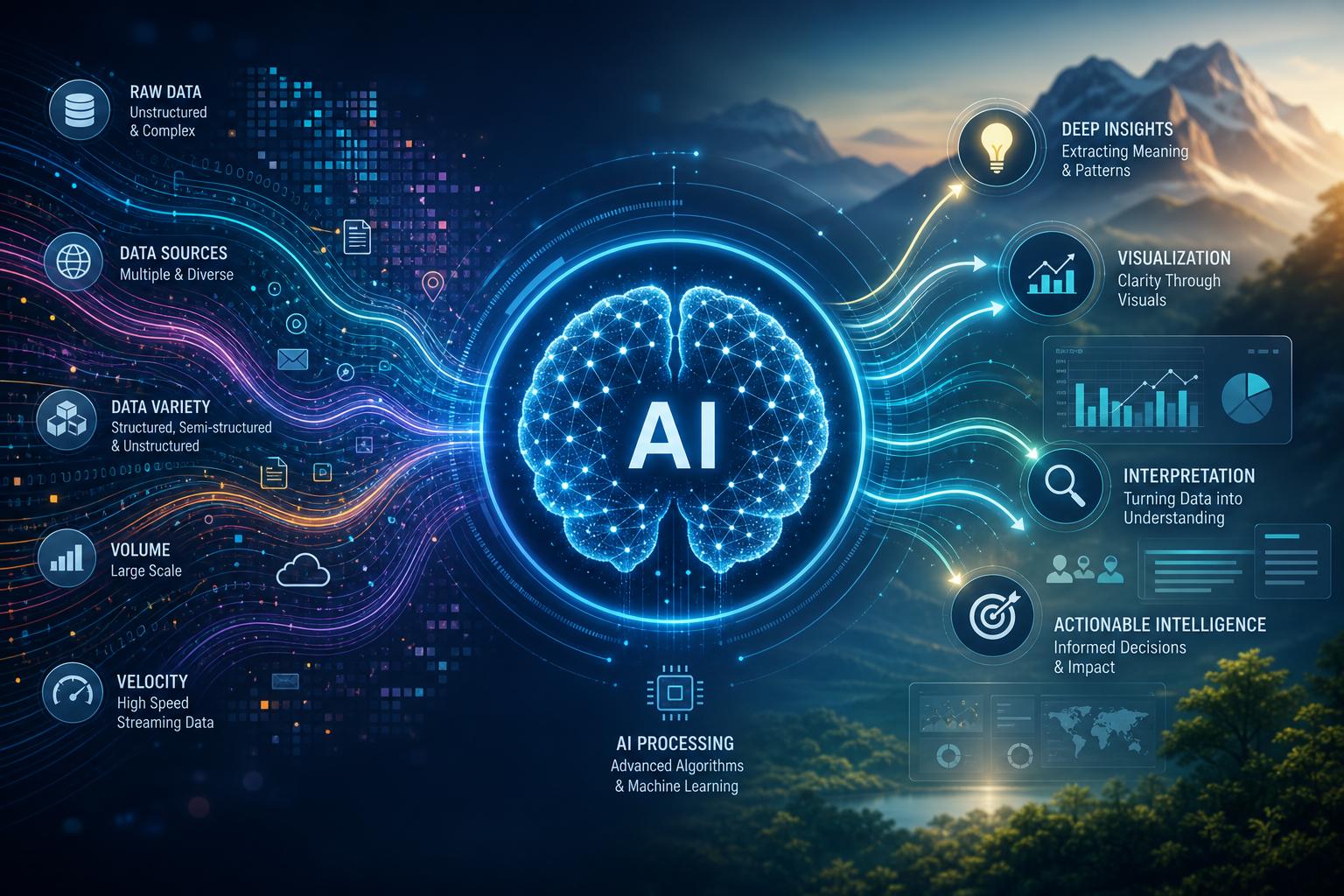
Leveraging AI for In-Depth Data Explanation and Interpretation
AI-driven models are revolutionizing how data science professionals decode complex datasets, offering unprecedented clarity through automated pattern recognition and contextual analysis. By deploying advanced algorithms such as natural language processing and neural networks, artificial intelligence can surface hidden correlations and trends that traditional statistical methods might overlook.This capability not only accelerates the data interpretation process but elevates the precision of insights, enabling decision-makers to act on more robust, nuanced facts. Key advantages include:
- Rapid anomaly detection that highlights outliers for further scrutiny
- Contextual explanations that translate raw numbers into meaningful narratives
- adaptive learning that continually refines models as new data streams in
Moreover, AI’s interpretative strength extends to generating dynamic visualizations tailored to the complexity of the data. these graphical representations aid in making abstract data more accessible and actionable across diverse stakeholder groups. Consider the practical comparison below illustrating AI’s impact on data interpretability in business analytics:
| Aspect | Traditional Analysis | AI-Enhanced Interpretation |
|---|---|---|
| Speed of Insight | Hours to days | Seconds to minutes |
| Depth of Explanation | Surface-level correlations | Multi-dimensional pattern detection |
| visualization Adaptability | Static charts | Interactive, real-time dashboards |
Enhancing Data Visualization through Advanced AI Techniques
Advanced AI techniques are revolutionizing the way data visualizations are designed and interpreted. By leveraging deep learning models and natural language processing, AI can identify nuanced patterns within large datasets that traditional methods often overlook. This empowers data scientists and analysts to create visuals that not only depict raw data but also highlight key insights with greater clarity and precision. Essential AI-powered enhancements include:
- Automated anomaly detection: Spotting outliers instantly to guide focus to potential issues or opportunities.
- Context-aware recommendations: Suggesting the most effective chart types and styles based on the dataset’s structure and the target audience.
- Dynamic explanatory layers: embedding narrative captions and tooltips generated by AI to make complex data more accessible.
Integrating AI into the visualization process also broadens accessibility by adapting presentation formats for diverse users. For example, AI can generate auditory descriptions or simplified visuals tailored to those with visual impairments or cognitive challenges. moreover, sophisticated AI algorithms enable real-time updates and predictive visualizations that anticipate future trends, making dashboards not just descriptive but prescriptive. Consider this comparison of traditional versus AI-enhanced visualization capabilities:
| Feature | Traditional Visualization | AI-Enhanced Visualization |
|---|---|---|
| Pattern recognition | Manual identification | Automated with high accuracy |
| Customization | Static and limited | Adaptive and personalized |
| Insight delivery | Basic annotations | contextual narratives and interactive guides |
Strategic Recommendations for Integrating AI into Data Science Workflows
To effectively harness AI within data science workflows, organizations should prioritize creating a robust ecosystem where machine learning models and traditional analytical methods complement each other. Start by implementing AI-driven automation tools that expedite data cleaning and preparation-critical steps where AI excels at detecting anomalies, filling missing values, and standardizing datasets at scale. Additionally, AI-powered explanation techniques such as SHAP values or LIME can be embedded early in the process to enhance transparency and trust in model outputs. This dual focus ensures that data scientists spend less time on repetitive tasks and more on deriving actionable insights while maintaining accountability across project stages.
Key strategic actions include:
- Investing in modular AI tools that integrate seamlessly with existing data platforms
- Training teams on interpretability frameworks to better communicate AI-driven findings
- Establishing cross-functional collaboration to align AI outputs with business objectives
| Workflow Phase | AI integration Benefit | Action Priority |
|---|---|---|
| Data Cleaning | Automated anomaly detection | High |
| Model Explanation | Enhanced transparency | Medium |
| Visualization | Dynamic, interactive dashboards | High |
embedding AI-driven visualization tools is equally critical. By leveraging AI to generate dynamic, interactive visual narratives, data science teams can unlock deeper understanding and enable stakeholders to explore data patterns intuitively.Prioritizing tools that automatically adapt visuals based on data context empowers faster decision-making and fosters a culture of data literacy across the enterprise. Ultimately, strategic adoption of AI not only enhances workflow efficiency but also elevates the clarity and impact of data storytelling.