

The Evolution of Phishing Techniques Enhanced by Artificial Intelligence
The landscape of phishing has transformed dramatically with the integration of artificial intelligence, making scams more sophisticated and arduous to detect. AI enables attackers to craft highly personalized messages by analyzing vast amounts of personal data harvested from social networks and other online platforms. This hyper-targeted approach increases the likelihood of victims falling for scams since the fraudulent communications exhibit a convincing level of detail and contextual relevance. Automated systems powered by AI can also adapt in real-time, tweaking the content of phishing attempts based on user interactions to maintain plausibility and trust.
Beyond textual deception, AI-driven technologies such as voice cloning have escalated fraudulent possibilities to an unprecedented level. Scammers now deploy synthetic voices that mimic the tone, pitchand cadence of trusted individuals, enabling them to execute scams through phone calls that sound eerily genuine. These developments necessitate an urgent reassessment of security protocols, as traditional methods struggle against AI-enhanced manipulations. Below is a comparison of classic phishing techniques versus AI-enhanced methods, highlighting the evolving challenges:
| Technique | Traditional Approach | AI-Enhanced Approach |
|---|---|---|
| Message Personalization | Generic templates | Custom, data-driven targeting |
| Response Adaptation | Static scripts | Real-time interaction tuning |
| Voice Scams | Recorded clips or impersonation | AI-generated voice clones |
| Scale | Manual distribution | Automated mass deployment |
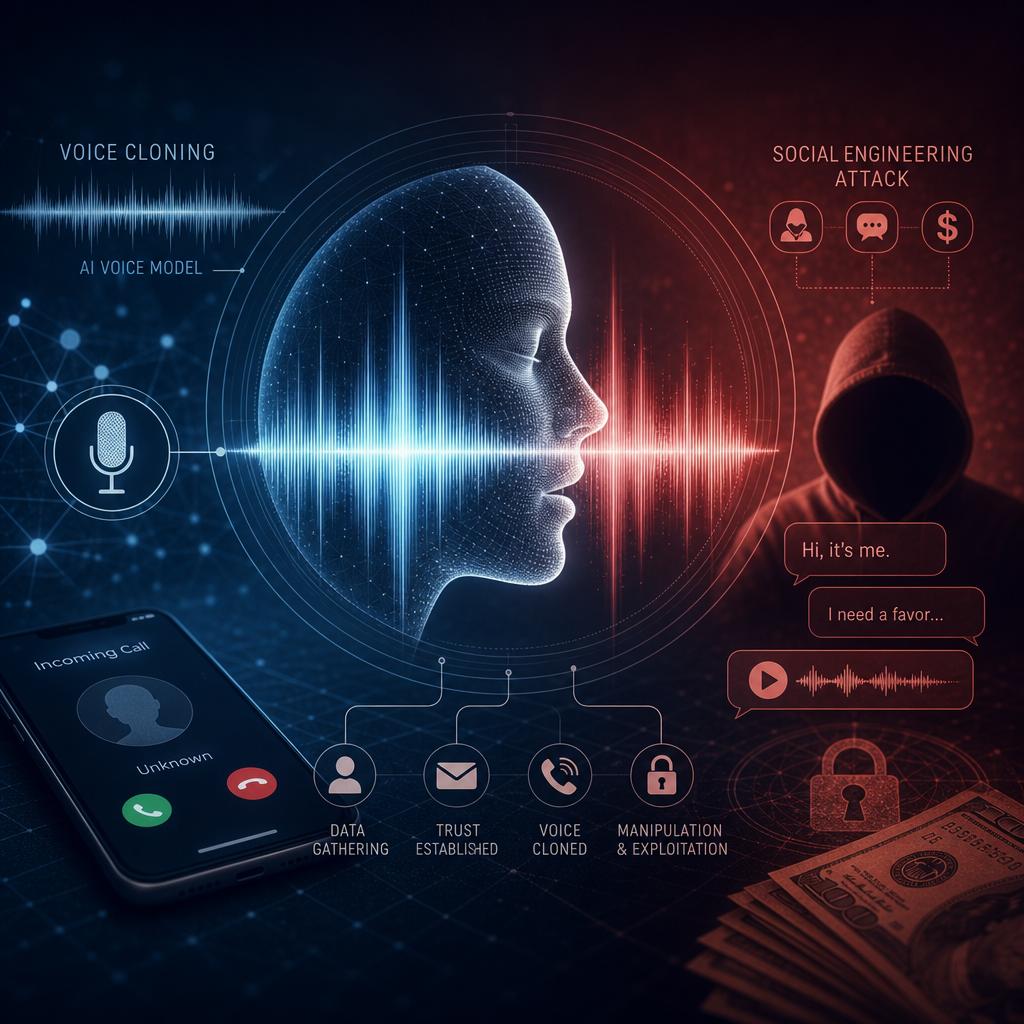
Voice Cloning Technology and Its Role in Sophisticated Social Engineering Attacks
Voice cloning technology, fueled by advances in AI, has revolutionized the landscape of social engineering by enabling malicious actors to create highly convincing audio impersonations.These synthetic voices can mimic a target’s tone, pitchand inflection with striking accuracy, making it alarmingly easy to deceive victims. From replicating a CEO’s voice to instruct employees to transfer funds, to impersonating loved ones to solicit urgent financial help, voice cloning amplifies the effectiveness of traditional phishing tactics by injecting an auditory layer of trust and authenticity.
Such sophistication introduces new vectors of risk that are difficult to detect and counteract. Key vulnerabilities exploited through voice cloning include:
- Instant Trust Exploitation: Human reliance on voice recognition bypasses many cognitive filters applied during text-based dialog.
- Speed and Scalability: Attackers can generate personalized messages en masse, targeting multiple individuals or organizations simultaneously.
- Cross-Channel Deception: Combining cloned voices with other AI-generated content (emails, deepfake videos) creates multi-faceted attacks that erode conventional security boundaries.
Organizations must urgently integrate voice authentication protocols and raise awareness to mitigate the risk posed by these emerging AI-driven social engineering tactics.
Artificial Intelligence Driven Fraud schemes and Their Financial Impact
Artificial intelligence has revolutionized cybercriminal tactics, enabling fraudsters to execute more sophisticated and convincing scams with unprecedented precision. Phishing attacks, once rudimentary and easily spotted, now leverage AI-powered algorithms to craft hyper-personalized messages that mimic the style, toneand context familiar to their targets. These messages often bypass traditional spam filters, making detection more challenging for individuals and organizations alike. Additionally, AI-driven voice cloning technology allows scammers to impersonate trusted voices in real-time, tricking victims into revealing sensitive financial data or authorizing fraudulent transactions. The rapid evolution of these methods has resulted in a significant rise in financial losses, as both consumers and businesses struggle to keep pace with the technology underpinning these threats.
Below is a summary table illustrating key AI-driven fraud schemes and their financial impact:
| Fraud Scheme | AI Technology Used | Average Financial loss (Annual) | Typical Targets |
|---|---|---|---|
| Phishing | Natural Language Processing (NLP) | $2.3 billion | Individuals, Small businesses |
| Voice Cloning | Deep Learning Neural Networks | $1.5 billion | Corporations, Financial Institutions |
| Deepfake Scams | Generative Adversarial Networks (GANs) | $750 million | High-profile Executives, Politicians |
As AI-powered scams grow in complexity, the financial repercussions extend beyond direct monetary theft, impacting brand reputations, consumer trustand long-term operational costs. A complete understanding and continuous adaptation of fraud prevention strategies are crucial to mitigating these evolving threats.
Strategic Measures to Detect and Counter AI Empowered Scams Effectively
In the face of rapidly evolving AI-empowered scamsorganizations and individuals must adopt a multi-layered approach to detection and prevention. Utilizing advanced AI-based monitoring tools that analyze behavioral anomalies in communication patterns is vital. These tools can flag suspicious activities-such as uncharacteristic email requests or voice interactions-that deviate from established norms. Equally crucial is the integration of continuous authentication mechanisms, like biometric verification combined with AI-driven fraud detection, to ensure the identity of users in real time. Education campaigns tailored to raise awareness about AI-generated phishing and voice cloning can empower end-users to recognize subtle cues that indicate deception.
- Deploy AI-driven threat intelligence platforms that aggregate data from multiple sources to identify emerging scam trends.
- Implement layered verification protocols, including multi-factor authentication and AI-assisted anomaly detection.
- Regularly update and audit cybersecurity policies to address the nuances of AI-augmented attack vectors.
- Encourage collaboration across industries and government agencies to share intelligence on AI-powered scam methodologies.
| Strategic Action | benefit |
|---|---|
| Behavioral Analysis AI | Detects unusual patterns in communication |
| Multi-factor Authentication | Strengthens identity verification |
| continuous Employee Training | Enhances scam recognition skills |
| Cross-sector Intelligence Sharing | Improves response to emerging threats |