

The Evolution of Phishing Techniques Fueled by Artificial Intelligence
The rise of artificial intelligence has dramatically transformed the landscape of phishing attacks, making them more sophisticated and challenging to detect. Cybercriminals now leverage AI to craft highly personalized and believable emails, messagesand websites that can deceive even the moast vigilant users. By utilizing machine learning algorithms, they analyse vast amounts of data from social media profiles, breached databasesand online interactions to mimic the tone, styleand context of legitimate communications. This level of precision not only increases the success rate of phishing attempts but also allows criminals to automate attacks on a massive scale, amplifying their reach and impact.
Key advancements include:
- Deepfake technology: Creating convincing audio and video to impersonate trusted individuals.
- AI-generated phishing pages: Designing near-perfect replicas of authentic websites that evade conventional detection methods.
- Adaptive attack strategies: Adjusting phishing tactics in real-time based on victim responses and environmental cues.
| Phishing technique | AI-Driven Enhancement | Effectiveness |
|---|---|---|
| Spear Phishing | Hyper-personalized messaging using data analytics | Very High |
| Clone Phishing | Authentic-looking email replicas generated rapidly | High |
| Vishing (Voice Phishing) | Deepfake calls mimicking authority figures | Moderate to High |
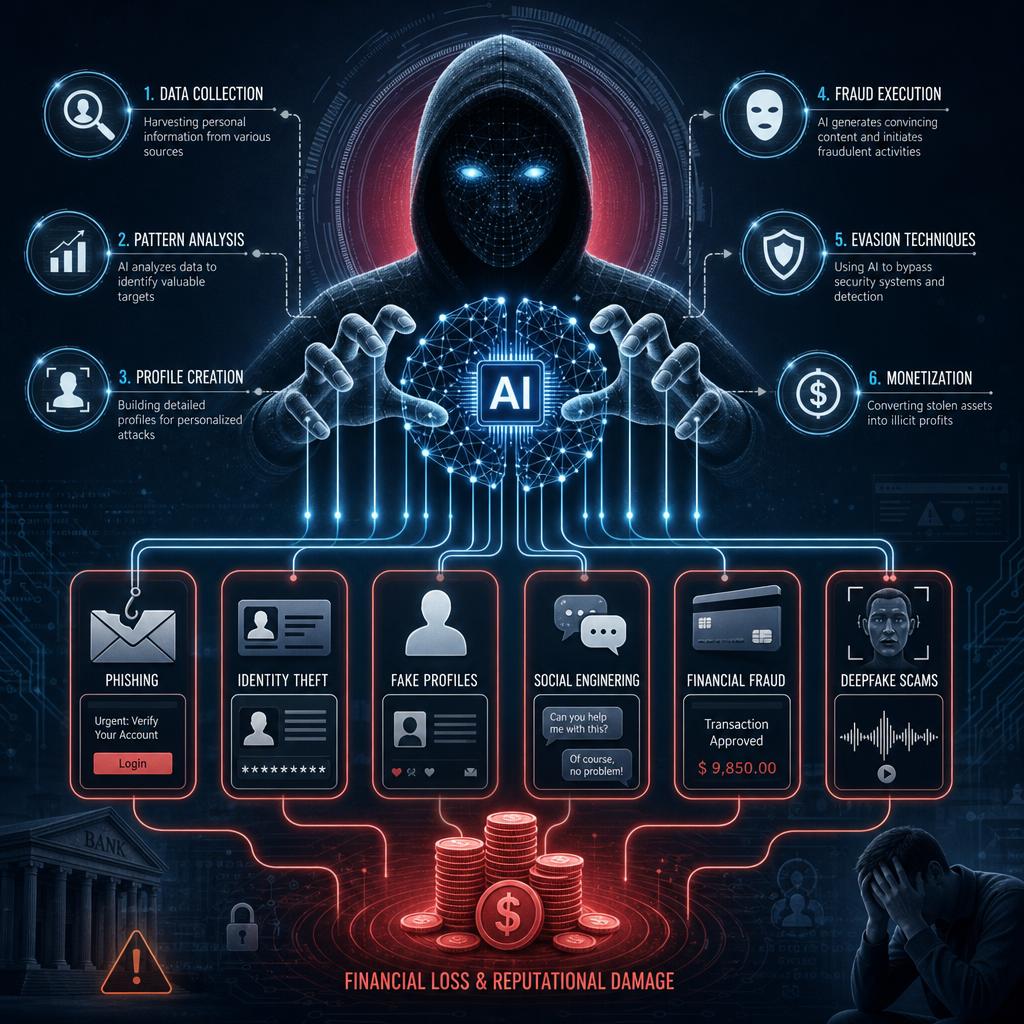
Detailed Mechanisms behind AI-Driven Fraudulent Activities
Artificial intelligence has revolutionized the landscape of cybercrime by enhancing the sophistication and scale of fraudulent schemes. At the core, AI algorithms analyze vast datasets to craft highly convincing phishing campaigns that adapt to their targets’ behavior and preferences. By using natural language processing (NLP),these systems generate personalized messages that mimic trusted organizations with alarming accuracy,making it difficult for victims to discern genuine communications from malicious ones. Moreover,AI-powered bots continuously scan social media and other digital footprints,harvesting personal facts that fuels these precisely targeted attacks,amplifying their deceptive nature.
Beyond message crafting, AI facilitates real-time adaptation during fraudulent interactions. Criminals leverage machine learning models to identify vulnerabilities in security systems and optimize their infiltration techniques. for example, automated voice synthesis and deepfake technology are employed to impersonate executives or trusted contacts, enabling fraudsters to manipulate victims through voice phishing (vishing). Below is a simplified breakdown of AI techniques exploited in fraudulent activities:
| AI Technique | Role in Fraud | Typical Use Case |
|---|---|---|
| Natural Language Processing (NLP) | Creates believable phishing emails | Targeted spear-phishing campaigns |
| Machine learning | Improves attack strategy based on feedback | Adaptive malware deployment |
| Voice Synthesis | Impersonates trusted voices | CEO fraud in vishing attacks |
| Deepfake Technology | Generates realistic fake identities | Social engineering scams |
The Impact of AI on the Scale and Sophistication of Cybercrime
Artificial intelligence has revolutionized the landscape of cybercrime by enabling perpetrators to orchestrate phishing and fraud schemes at an unprecedented scale. Leveraging AI-driven automation, criminals can now create highly convincing phishing emails and websites tailored to individual victims by analyzing vast amounts of personal data harvested from social media and other sources. this personalization dramatically increases the likelihood of success, turning what used to be generic spam into targeted spear-phishing campaigns that can bypass traditional security filters.
moreover, AI-powered fraud exploits sophisticated techniques such as deepfake audio and video, enabling scammers to impersonate trusted individuals or brands with alarming accuracy. The use of machine learning algorithms allows these criminals to adapt and refine their tactics in real time,effectively staying one step ahead of cybersecurity defenses. Consider the table below illustrating the key AI capabilities exploited by cybercriminals and their impact on phishing and fraud:
| AI Capability | Criminal Request | resulting Impact |
|---|---|---|
| Natural Language Processing (NLP) | Crafting personalized phishing messages | Increased victim engagement rates |
| Deepfake Generation | Audio/video impersonation | Higher trust exploitation |
| Automation & Scalability | Mass distribution of fraud attempts | Widespread financial losses |
| Behavioral Analysis | Real-time adjustment of tactics | Enhanced evasion of detection |
Strategic Approaches to Mitigating AI-Enabled Phishing and Fraud Risks
To effectively counter AI-driven phishing and fraudorganizations must adopt multi-layered defenses that combine cutting-edge technology with human vigilance.Proactive threat intelligence systems powered by AI can identify suspicious patterns and emerging attack vectors before they wreak havoc. Equally crucial is deploying robust behavioral analytics that monitor deviations in user activities, enabling rapid detection of fraudulent behavior. Complementing these technical measures, comprehensive employee training programs foster awareness about the sophisticated tactics criminals now employ, reinforcing the human element as a critical line of defense.
implementing a strategic framework requires integrating several key components to ensure resilience:
- Continuous AI model updates: Regularly refining detection algorithms to adapt to evolving phishing methods.
- Multi-factor authentication: Adding layers of user verification to prevent unauthorized access even if credentials are compromised.
- Incident response automation: Accelerating containment and mitigation through smart workflow orchestration.
- Collaborative threat sharing: Partnering across industries for real-time exchange of fraud intelligence.
| Strategic Element | Benefit | Implementation Focus |
|---|---|---|
| AI-Powered Analytics | early detection of anomalies | Machine learning models |
| Multi-Factor Authentication | Enhanced access control | user-centric verification |
| Employee Training | Heightened awareness | Regular phishing simulations |
| Incident Automation | Faster response times | Automated workflows |