

How Artificial Intelligence Customizes Educational Content to Meet Individual Student Needs
Artificial intelligence leverages vast datasets and advanced algorithms to create educational experiences tailored to each student’s unique learning pace and style. By analyzing patterns such as response times,error frequency,and engagement levels,AI systems adapt instructional materials in real time,ensuring students receive content that matches their current abilities. This dynamic customization fosters deeper understanding and reduces frustration by presenting challenges that are neither too easy nor overwhelmingly challenging. Educators benefit from detailed insights, allowing them to fine-tune their teaching strategies to better support individual learners.
- Personalized Assessments: AI designs quizzes that target specific knowledge gaps, promoting efficient remediation.
- Adaptive Learning Paths: Students follow customized sequences that align with their strengths and weaknesses.
- Real-Time Feedback: Instantaneous evaluation helps learners correct mistakes and build confidence.
| Feature | Conventional Education | AI-Powered Approach |
|---|---|---|
| Content Delivery | One-size-fits-all | Customized to student’s needs |
| Feedback | Delayed, periodic | Immediate and continuous |
| Engagement | Generalized materials | Interactive, adaptive content |
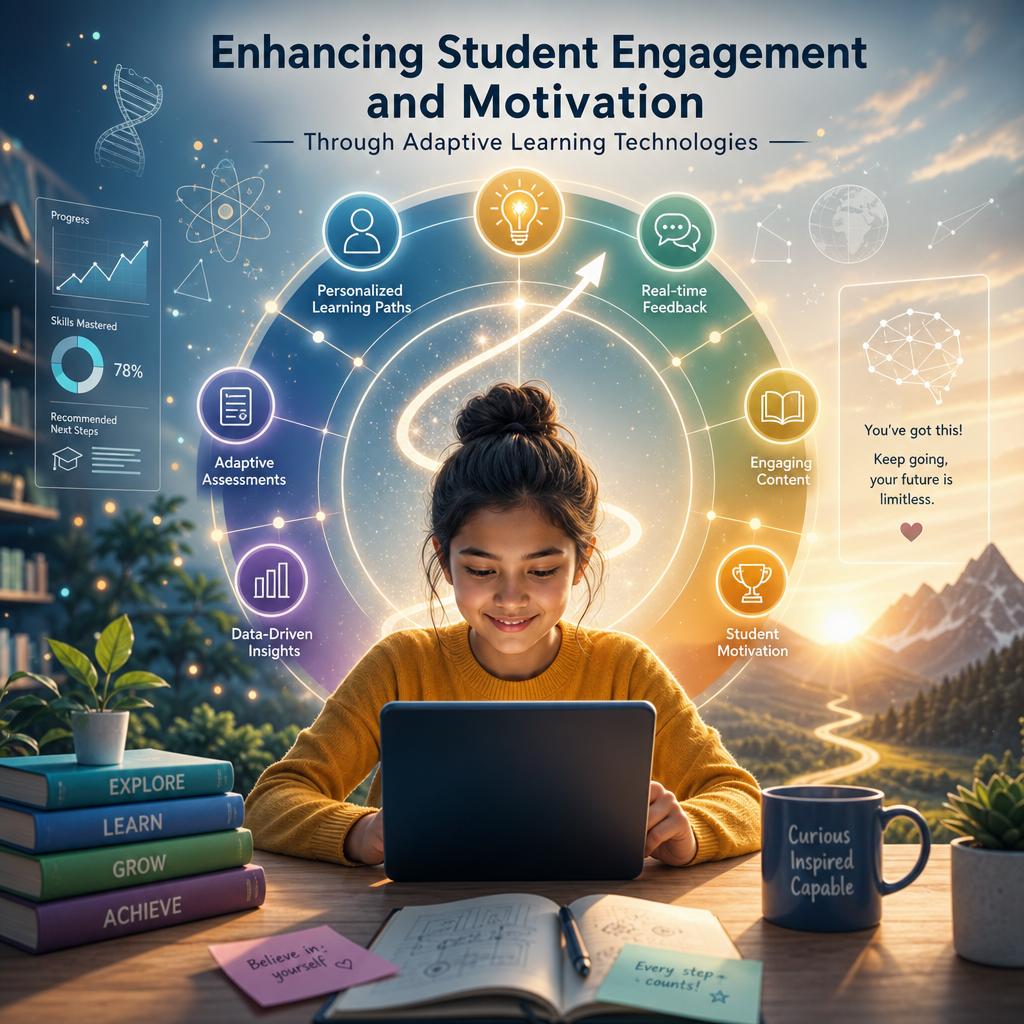
Enhancing Student Engagement and Motivation Through Adaptive Learning Technologies
Adaptive learning technologies leverage artificial intelligence to tailor educational experiences to each student’s unique needs and pace. By continuously analyzing performance data, these systems identify strengths and weaknesses, allowing for the dynamic adjustment of content difficulty and delivery methods. this personalized approach not only fosters deeper comprehension but also reignites student motivation by ensuring that learners remain challenged without feeling overwhelmed. Importantly, it cultivates an habitat where students take ownership of their progress, thus boosting engagement and encouraging lifelong learning habits.
- Instant feedback: AI provides real-time insights, helping students correct mistakes promptly.
- Custom resources: Adaptive platforms offer varied materials to suit individual learning styles.
- Goal-oriented paths: Learners are guided through personalized trajectories aligned with their objectives.
| Feature | Benefit |
|---|---|
| Progress Tracking | Enables data-driven adjustments for optimized learning |
| Adaptive Assessments | Ensures accurate measurement of skill levels |
| Interactive Content | Encourages active participation and retention |
The Role of Data Analytics in Tracking Progress and Refining Personalized Instruction
Harnessing the power of data analytics fundamentally transforms the way educators monitor student achievement and adapt instructional strategies. By processing vast amounts of performance data, intelligent systems identify patterns and trends that might or else go unnoticed. This continuous feedback loop enables teachers to pinpoint specific areas where learners struggle or thrive, allowing for a precision-based adjustment of lesson plans. These insights don’t just capture grades but delve into learning habits, response times, and engagement levels, delivering a multidimensional assessment that supports more nuanced decision-making.
To further illustrate the impact, consider the table below showcasing sample metrics tracked through data analytics in a personalized learning environment:
| Metric | Example Insight | Actionable Outcome |
|---|---|---|
| Engagement Rate | Drop during mid-module | Introduce interactive content |
| Quiz Accuracy | Consistent errors on key concepts | Focus on remedial exercises |
| Response Time | Slower responses on applied questions | Provide targeted practise |
By leveraging these detailed analytics, educators can refine personalized instruction with precision, ensuring each student receives targeted support tailored uniquely to their learning profile. This data-driven approach accelerates mastery of content while fostering a more engaging and efficient educational experience.
Practical Strategies for Integrating AI Tools into Modern teaching Practices
Integrating AI tools within educational frameworks empowers educators to tailor learning experiences to the unique needs and pace of each student. By utilizing adaptive learning platforms, teachers can obtain real-time insights into student progress, allowing for prompt adjustments in instructional strategies.Key practical methods include:
- Embedding AI-driven formative assessments that dynamically adapt question difficulty.
- Leveraging predictive analytics to identify students at risk and provide targeted interventions.
- Facilitating personalized content delivery through intelligent tutoring systems.
This nuanced approach not only enhances engagement but also promotes mastery of complex subjects more effectively than traditional one-size-fits-all instruction.
| AI Tool | Function | Benefit |
|---|---|---|
| Adaptive quizzing | adjusts question difficulty in real-time | Improves skill precision |
| Learning Analytics | Monitors engagement and comprehension | Enables timely interventions |
| Intelligent Tutors | Customizes instructional content | Supports diverse learning styles |
To successfully implement these strategies, educators must combine their pedagogical expertise with the capabilities of AI, ensuring ethical use and maintaining the human element crucial to empathetic teaching. Continuous professional development focused on AI literacy is essential for fostering confidence and competence in utilizing these tools to their fullest potential.