

How AI Enhances Code Analysis for Streamlined Migration
AI-powered tools revolutionize the way developers approach code migration by conducting exhaustive analyses that identify dependencies, deprecated functions, and potential compatibility issues within existing codebases. These bright systems leverage machine learning models to recognize patterns and anomalies that human reviewers might overlook, ensuring a thorough validation process before migration commences. The result is an accelerated migration timeline with minimized risk of runtime errors and functionality loss.
Key capabilities of AI-enhanced code analysis include:
- Automated Code refactoring: AI assists in restructuring legacy code to align with modern standards without altering itS behavior.
- Cross-Version Compatibility Checks: Intelligent scanners verify compatibility with targeted platform versions, highlighting necessary adjustments.
- Impact Prediction: Predicting the ripple effects of specific code changes helps in proactive risk management.
- Comprehensive Dependency Mapping: Visualizing interdependent components allows seamless migration sequencing.
| Feature | Benefit | AI Contribution |
|---|---|---|
| Code Pattern Recognition | Identifies obsolete constructs | machine learning-driven accuracy |
| Error Detection | Reduces manual debugging | Automated anomaly flagging |
| Dependency Mapping | Ensures smooth transitions | graph-based AI analysis |
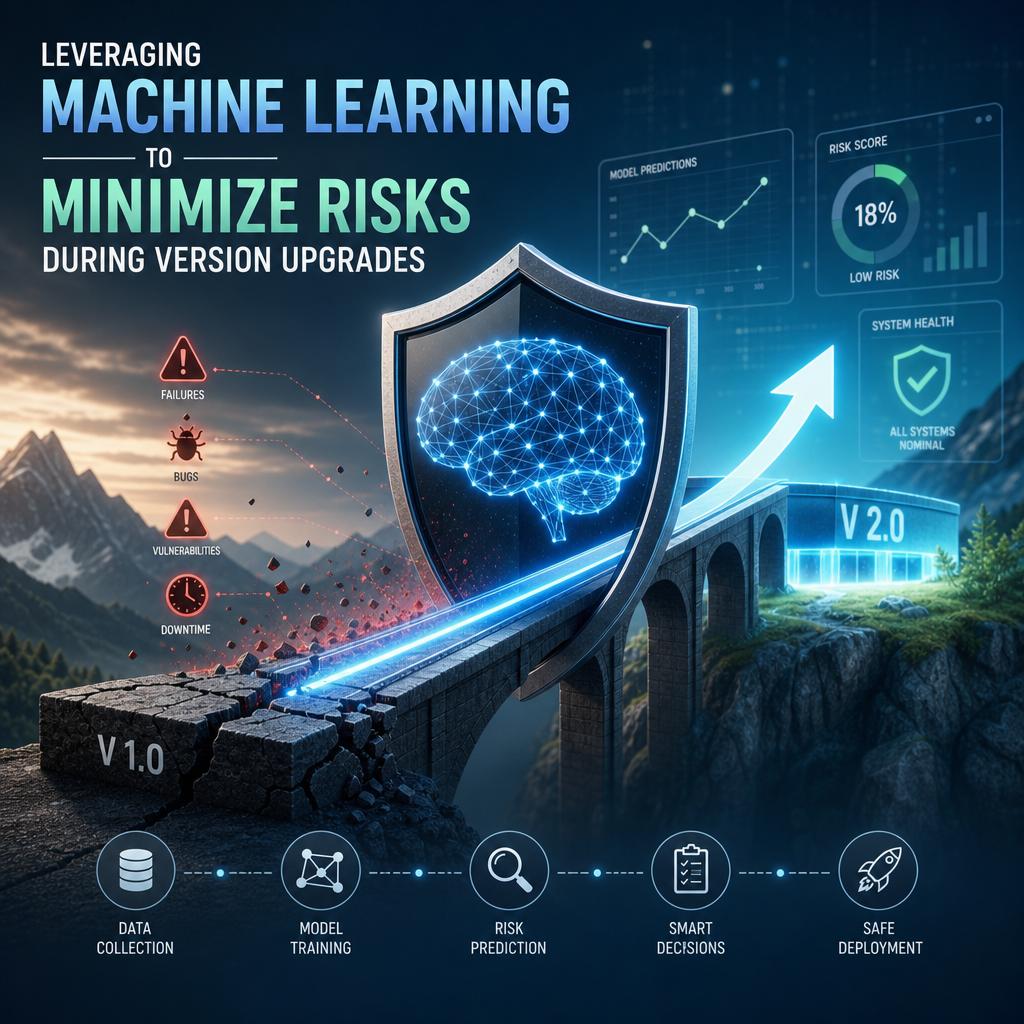
leveraging machine Learning to Minimize risks During Version Upgrades
By harnessing the predictive power of machine learning, progress teams can identify potential pitfalls before initiating version upgrades. Algorithms trained on past upgrade data analyze patterns of code incompatibilities and surroundings-specific errors, enabling predictive alerts that proactively highlight high-risk components. This approach reduces costly rollbacks by ensuring targeted testing and preemptive fixes,streamlining the entire migration lifecycle with precision and foresight.
In practice, machine learning models optimize workflows with capabilities such as:
- Intelligent Dependency Mapping: Automatically detecting interdependent modules that could cascade failure risks.
- Error Pattern Recognition: Learning from previous upgrade failures to flag similar vulnerability zones.
- Adaptive Test Suite Prioritization: Dynamically recommending the most critical test cases based on real-time risk assessments.
| Upgrade Phase | Machine Learning Impact | Risk Reduction |
|---|---|---|
| Pre-migration Analysis | Predicts incompatibilities | 30% |
| code Refactoring | Recommends fixes automatically | 40% |
| Testing Prioritization | Focuses on high-risk areas | 35% |
Automating Compatibility Checks to Ensure Seamless Integration
Ensuring that new code versions and migrated applications work harmoniously within an environment frequently enough requires rigorous compatibility checks, which can be both time-consuming and error-prone when done manually. by leveraging AI-driven automation, developers can execute comprehensive compatibility validations across different modules, librariesand systems with remarkable speed and accuracy. This not only reduces human oversight but also highlights interoperability issues early in the migration process, enabling quicker resolution and smoother transitions.
Key benefits AI brings to compatibility checks include:
- Dynamic identification of deprecated API usages and incompatible dependencies
- Automated simulation of integration scenarios to detect runtime conflicts
- Real-time alerts for version mismatches or configuration inconsistencies
- Continuous learning models that improve detection criteria with each migration cycle
| Conventional Checks | AI-Powered Checks |
|---|---|
| Manual script writing and execution | Automated test generation and execution |
| Static analysis only | Dynamic and contextual analysis |
| High false positives | Improved accuracy through adaptive learning |
Best Practices for Implementing AI-Driven Code Migration and Upgrade Strategies
Leveraging AI for code migration and version upgrades demands a strategic balance between automation and oversight. One of the foremost practices is to establish a robust validation framework that incorporates both AI-driven testing and human code review. This framework ensures that migrated code not only meets functional requirements but also adheres to security and performance standards. additionally, utilizing AI’s pattern recognition capabilities to analyze legacy code dependency maps minimizes risk by highlighting potential conflict areas before migration begins.
Another key approach involves incremental migration coupled with continuous integration systems. Incremental steps allow AI tools to process manageable code segments and provide rapid feedback on upgrade impacts. Integrating AI outputs directly into CI/CD pipelines facilitates early detection of integration issues and automates rollback procedures when necessary. Below is a concise comparison of best practice focus areas:
| Focus Area | Benefit | AI Role |
|---|---|---|
| Validation Framework | Ensures code integrity and security | Automated testing, anomaly detection |
| Incremental Migration | Reduces risk and downtime | Segment analysis, issue prediction |
| CI/CD Integration | Speeds delivery and error handling | Continuous monitoring, rollback automation |