

Disclosing AI Use in Policy Frameworks for Transparent Governance
Transparency in governance necessitates clear disclosure protocols surrounding the use of artificial intelligence,especially when decisions impact public welfare or sensitive client data.Organizations must establish robust policies that delineate when and how AI tools are employed, ensuring that stakeholders are fully informed. This entails not only revealing the presence of AI but also outlining its role in decision-making processes, emphasizing accountability and ethical considerations.
Key elements for effective AI use disclosure include:
- Client Consent: Explicit permission must be obtained when AI processes personal or sensitive data.
- Context Sensitivity: Tailoring disclosure based on the nature of the work, whether itS legal, healthcare, or financial services.
- Operational Clarity: Communicating how AI influences outcomes without compromising proprietary algorithms.
| disclosure Aspect | Recommended Practice | Reason |
|---|---|---|
| Policy Integration | Embed AI usage in regulatory compliance documents | Enhances organizational accountability |
| Client Notification | Clear, accessible disclosures before service engagement | Builds trust and informed decision-making |
| Scope Definition | Specify AI’s decision-making boundaries | Mitigates risk of over-reliance on automation |
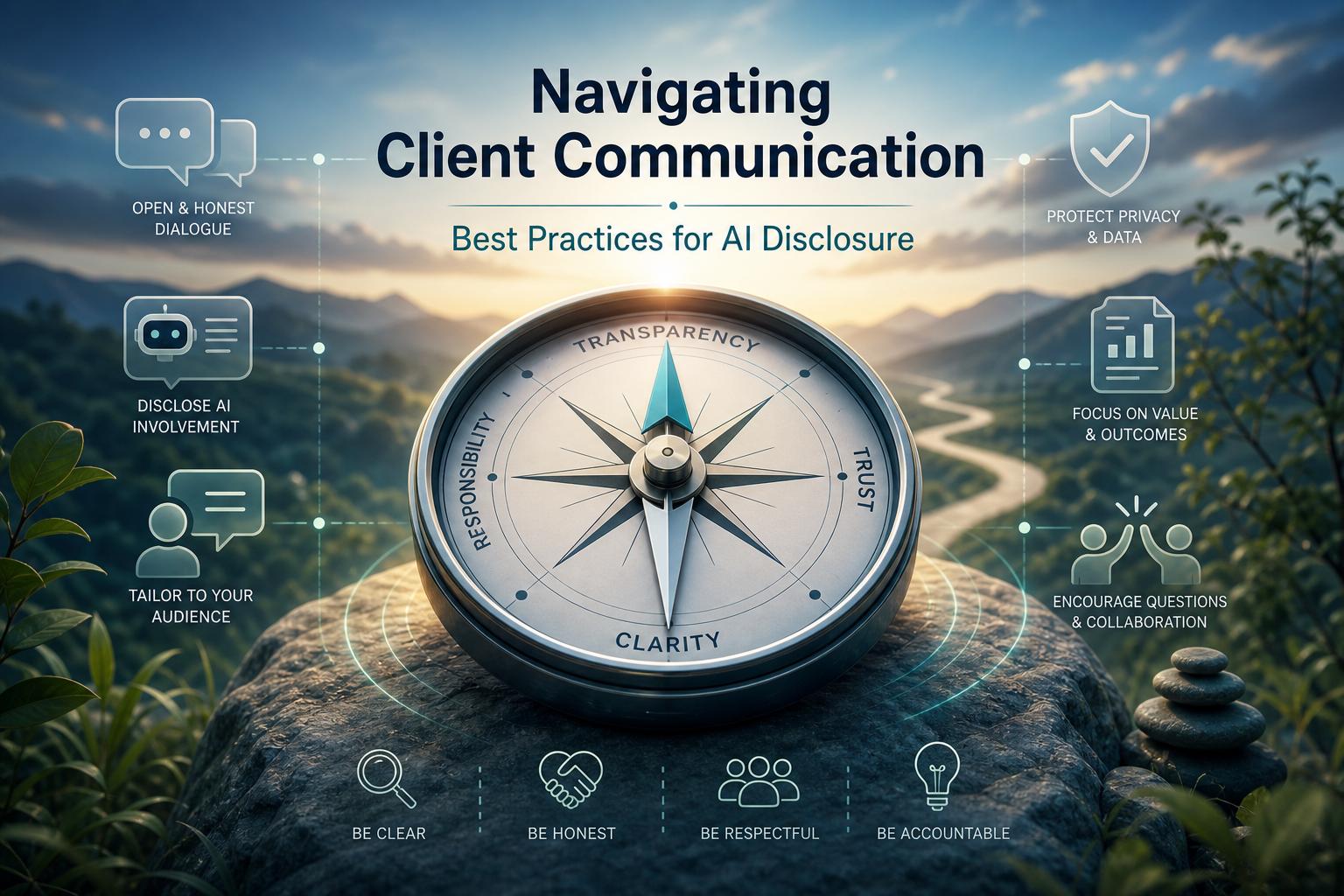
Navigating Client Communication: Best Practices for AI Disclosure
Effectively navigating conversations about AI integration in service delivery requires a clear and thoughtful approach, tailored to the client’s expectations and the sensitivity of the work involved. Transparency is paramount; clients should be informed not only that AI tools are being used but also how these tools influence project outcomes. This builds trust and empowers clients to make informed decisions about their engagements. Consider emphasizing key communication strategies:
- Outline wich portions of the work involve AI assistance and which are human-led.
- Clarify data privacy and security protocols related to AI use.
- Be prepared to discuss the limitations and benefits of AI tools in context.
Balancing AI disclosure with client sensitivity demands a nuanced understanding of confidentiality and ethical considerations.Different industries and project types present varying thresholds for AI transparency. As an example, highly regulated sectors may require stringent disclosure policies, whereas creative projects might emphasize AI as a tool for enhancing innovation rather than automation. Below is a simple guide to match disclosure intensity with client and work sensitivity, facilitating tailored communication:
| Work Sensitivity | Disclosure Approach | Client Communication Focus |
|---|---|---|
| High (Legal, Medical) | Full disclosure with compliance details | Regulatory adherence, risk mitigation |
| Medium (Marketing, Consulting) | Selective use disclosure; highlight augmentation | Enhancement benefits, transparency |
| Low (Creative, Design) | Optional mention; focus on creative collaboration | Innovation, customization |
Assessing Work Sensitivity to Determine Appropriate AI Transparency
Determining the appropriate level of transparency regarding AI integration requires a nuanced understanding of the sensitivity of the work involved. Not all tasks carry the same implications when AI is employed; some demand full disclosure due to ethical, privacy, or legal considerations, while others may warrant a more discreet approach to avoid unneeded concern or confusion. key factors to evaluate include the nature of the data handled, the potential impact on client outcomes, and the degree of human oversight involved. As an example, tasks involving personal or confidential information typically require stricter transparency protocols to maintain trust and comply with regulatory standards.
Essential assessment criteria include:
- Type of data processed (personal, financial, medical, etc.)
- Potential risk of bias or error affecting results
- Client expectations and contractual obligations
- The balance between AI assistance and human decision-making
| Work Sensitivity Level | Recommended Transparency Approach | Example |
|---|---|---|
| High | Full disclosure with detailed AI involvement explanation | Medical diagnosis support systems |
| Medium | Selective disclosure indicating AI-assisted processes | Financial forecasting tools |
| Low | General mention of AI use without technical specifics | Content scheduling and basic data entry |
Recommendations for Ethical and Effective AI Disclosure Strategies
Transparency should be the cornerstone of any AI disclosure strategy, ensuring stakeholders understand when and how artificial intelligence is involved.Clear communication not only builds trust but also helps clients and team members recognize the limitations and capabilities of AI systems in use. Employing precise language avoids ambiguity-phrases like “partially assisted by AI” or “AI-generated insights reviewed by experts” convey responsibility and clarity. Additionally,integrating disclosure practices into existing workflows encourages consistency without creating friction,using methods such as pop-up notifications,AI use badges on deliverables,or concise summary notes within reports.
- Respect client preferences: Customize disclosure depth based on sensitivity and client comfort level.
- Account for work sensitivity: Differentiate disclosures for routine versus confidential or proprietary content.
- Regularly update policies: Reflect evolving AI capabilities and regulatory landscapes through continuous review.
| Disclosure aspect | Best Practice | Example |
|---|---|---|
| Policy Awareness | Embed disclosures in client agreements | “AI tools applied with human oversight” |
| Client Sensitivity | Offer opt-out or reduced AI reliance | Custom AI usage disclaimers |
| Work Sensitivity | Limit AI use in high-stakes outputs | Manual review before delivery |