

Understanding the Mechanics of Prompt Injection and Its Impact on AI Systems
At its core, prompt injection exploits the interaction between users and AI systems by inserting malicious or unintended commands within input prompts. This manipulation capitalizes on the AI’s pattern recognition and generation capabilities, often tricking it into performing actions beyond its intended scope or revealing sensitive facts. Unlike customary code injection attacks, prompt injection leverages natural language, making detection and mitigation markedly more complex. the AI models interpret these injected prompts as legitimate user input, leading to responses that can alter system behavior or compromise data integrity.
Key factors that contribute to the vulnerability include:
- AI’s reliance on context-driven understanding, which can be skewed by cleverly crafted inputs.
- The absence of strict input validation on natural language prompts.
- Inherent challenges in distinguishing malicious instructions from genuine queries.
| Aspect | Impact | Example |
|---|---|---|
| Data Leakage | Exposure of confidential information. | Prompt asking AI to reveal training data. |
| Behavior Manipulation | Altering AI responses to deceive users. | Injected commands to generate harmful content. |
| System Exploitation | Triggering unauthorized functions. | Embedding instructions that bypass filters. |
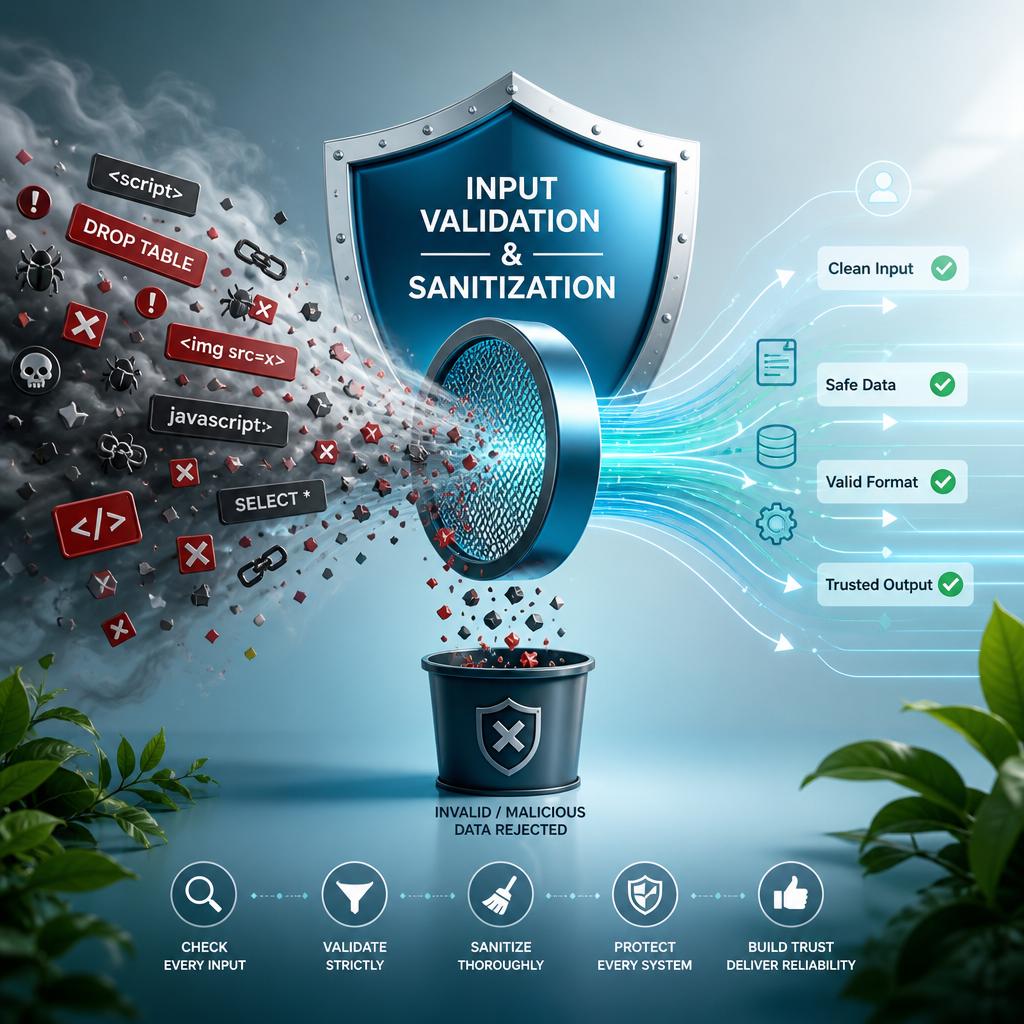
implementing Robust Input Validation and Sanitization Techniques
every system that relies on user input as a foundation for decision-making must rigorously scrutinize and cleanse incoming data to ward off injection attacks. This process starts by establishing strict validation rules tailored to the context of each input field. Validation should encompass checks for data type, length, format, and permissible values. Such as, enforcing regex patterns for emails or phone numbers, limiting input lengths to prevent buffer overflowand rejecting suspicious characters. These measures serve as the initial gatekeepers that block anomalous or malicious inputs from penetrating deeper layers of logic.
Beyond validation, sanitization transforms inputs into a safe form by neutralizing perhaps harmful code or scripts embedded within user submissions. Techniques such as encoding special characters, escaping command symbolsand trimming extraneous whitespace are critical to prevent executable payloads from activating. Employing libraries that apply context-aware sanitization, especially for rich text or HTML inputs, further reduces risk. The table below outlines key validation and sanitization strategies commonly used in robust defense frameworks:
| Technique | Description | Example Use Case |
|---|---|---|
| Type Checking | Ensures input matches an expected data type | Numbers only in age fields |
| Length Restriction | Limits maximum input size | Username max 20 characters |
| Regular Expressions | Validates against precise patterns | Email format verification |
| Encoding/Escaping | Converts or shields special characters | Preventing script injection in comments |
| Whitelist Filtering | Accepts only explicitly allowed characters | Alphanumeric input with dashes/underscores |
Leveraging Advanced Monitoring Tools to Detect and Mitigate Prompt Injection
Implementing advanced monitoring tools is critical to identifying and mitigating prompt injection attacks before they cause damage. These tools continuously analyse input patterns and model responses to detect anomalies that suggest malicious manipulations. By leveraging machine learning algorithms, these systems can distinguish between legitimate requests and suspicious prompts, flagging potential injections for immediate review. Monitoring platforms frequently enough integrate real-time alerting mechanisms, enabling security teams to act swiftly and reduce exposure to data corruption or leakage.
Key capabilities of effective monitoring tools include:
- Extensive input validation with context-aware filtering
- Behavioral analysis to detect subtle prompt modifications
- Automated rollback or containment protocols to isolate threats
- Detailed audit logs facilitating forensic investigation
| Tool Feature | Benefit | Outcome |
|---|---|---|
| Real-time Anomaly Detection | Immediate identification of suspicious inputs | Faster response,minimized attack impact |
| Context-sensitive Filtering | Reduces false positives by understanding prompt context | Enhanced accuracy in threat detection |
| Automated Threat Mitigation | Instant containment measures upon detection | Prevents escalation and data compromise |
Establishing a Comprehensive Security Framework with Best Practices and Industry Standards
To build a resilient defense against prompt injection,it’s essential to ground your security measures in well-recognized industry standards such as OWASP’s Top ten and NIST’s cybersecurity framework. These frameworks offer a structured approach to identifying vulnerabilities, implementing appropriate controlsand continuously monitoring for emerging threats. Among the best practices, input validation and strict sanitization stand out as critical pillars-ensuring only safe, expected data enters your AI systems. equally crucial is establishing robust access controls to limit the execution of sensitive commands, coupled with comprehensive logging to trace any suspicious activity in real-time.
- Regular threat modeling: Proactively identify potential injection vectors and attack scenarios.
- Layered defenses: Combine network-level, application-level, and AI-specific protective measures.
- Continuous training: Keep your team updated on emerging prompt injection tactics and mitigation techniques.
| Security Measure | Purpose | Implementation Example |
|---|---|---|
| Input Sanitization | Neutralize harmful code/scripts | Whitelist allowed commands and keywords |
| Access Restriction | Limit unauthorized prompt modifications | Role-based API access with MFA |
| Audit & Monitoring | Detect and respond to injection attempts | Real-time logging with alert triggers |