

cutting Through the AI hype to Identify Real task Improvements
To truly harness the power of AI, it’s essential to move beyond buzzwords adn critically evaluate where it delivers tangible gains in daily operations. Identifying specific tasks where AI boosts efficiency requires measuring outcomes like time saved, accuracy improvements, and error reduction. Blind enthusiasm often leads to costly implementations that add layers of complexity rather than streamlining workflow. Regularly questioning AI outputs and comparing them against traditional methods helps ensure the technology serves the goal-not the hype.Key focus areas should include:
- Task-specific performance metrics – quantifying improvements in speed and quality.
- Cost-benefit analysis – including hidden integration and maintenance expenses.
- Error tracking – identifying new or persistent faults introduced by AI automation.
| task | Expected Gain | Potential Cost | Error Risk |
|---|---|---|---|
| Customer Support | 30% faster response | High training overhead | Misinterpretation of queries |
| Data Entry | 50% reduced manual input | Moderate software license | OCR inaccuracies |
| Content Generation | Accelerated drafting process | Subscription fees | Quality inconsistency |
By rigorously accounting for these factors, businesses can avoid chasing illusions of progress and instead invest in authentic improvements. This disciplined approach separates fleeting trends from enduring advancements, optimizing resources and minimizing risk. Strategic AI adoption hinges on clear evaluation frameworks and continuous monitoring of real-world impacts.
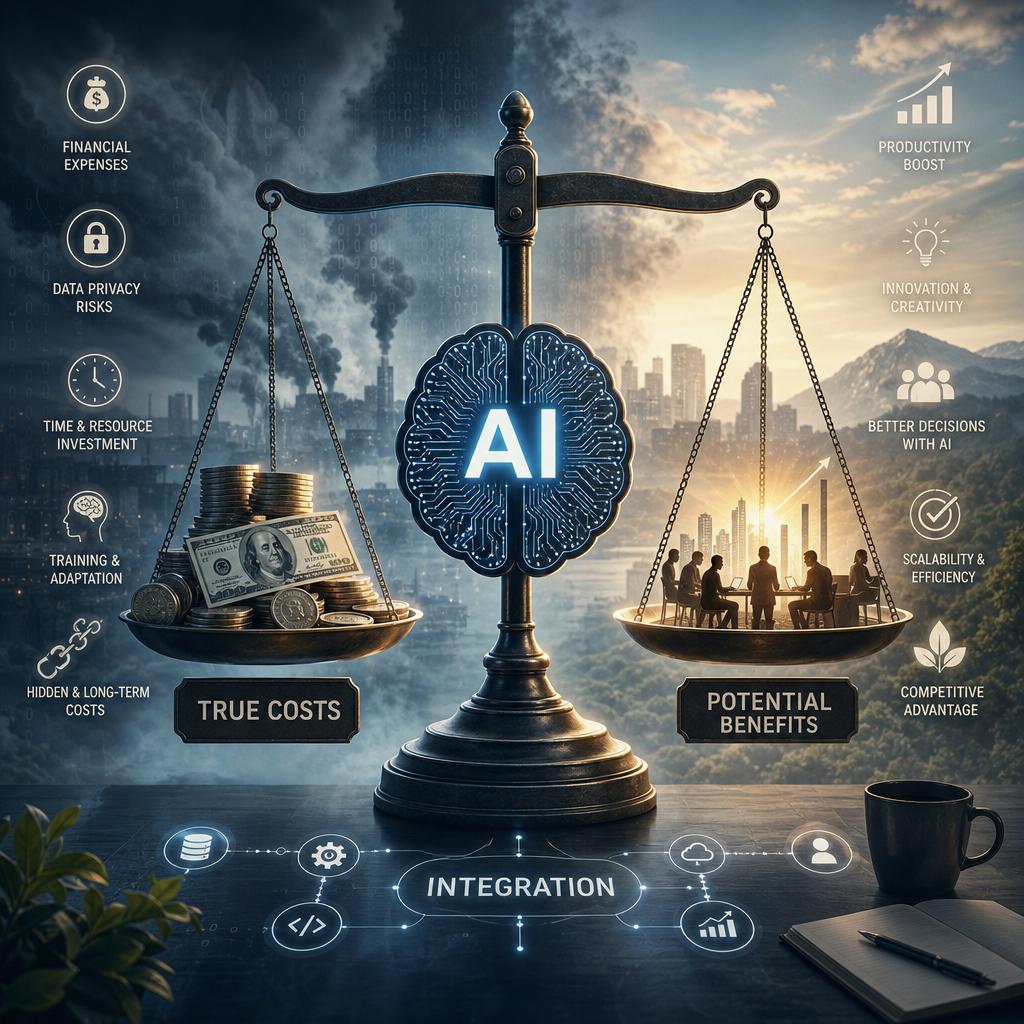
Evaluating the True Costs Behind AI Integration in Workflows
Organizations embracing AI integration often focus heavily on the promised efficiency gains without thoroughly quantifying the hidden costs and potential operational disruptions. While AI can automate repetitive tasks and accelerate decision-making, important factors such as implementation expenses, system maintenanceand employee retraining must be carefully analyzed to avoid underestimating total outlays.Moreover, unanticipated errors introduced by algorithmic biases or data inaccuracies can ripple through workflows, leading to costly rework and reputation risks. A holistic evaluation requires organizations to balance anticipated gains with these less visible yet impactful expenses.
To make informed decisions, companies should assess AI integration based on multifaceted criteria including:
- Task Performance gains: Measurable improvements in speed, accuracyand throughput
- Operational Costs: Setup, infrastructure, ongoing updatesand support
- Error incidence: Frequency and impact of mistakes introduced by AI
- Human Capital Impact: Staff adaptation challenges and productivity shifts
| Cost Component | Considerations | Impact Scope |
|---|---|---|
| Implementation | Licensing, customization, integration with legacy systems | Initial capital and time investments |
| Maintenance | Ongoing support, model retraining, software updates | Continuous operational budget |
| Error Management | Detection, correctionand mitigation of AI-induced errors | Product/service quality and customer satisfaction |
| Training & change Management | Employee upskilling, workflow adjustments | Staff productivity and morale |
Analyzing error Rates and Their Impact on AI Performance
Understanding error rates is essential when evaluating the true capabilities of AI systems.Even small inaccuracies can cascade into significant issues, affecting not only the immediate task but also downstream processes and decisions. It’s crucial to differentiate between types of errors – such as false positives, false negativesand classification errors – as each carries different implications for performance and user experience. High accuracy on paper does not guarantee real-world reliability, especially when models are deployed in dynamic environments where data variability and noise are common.
Consider the following key impacts error rates have on AI performance:
- Operational Costs: Errors can drive up costs through additional oversight, manual correctionsor customer service interventions.
- Trust and Adoption: Persistent errors erode user trust, limiting AI acceptance even if the technology is otherwise advanced.
- Task Efficiency: Error-driven rework reduces the efficiency gains AI aims to deliver, sometimes leading to overall slower outcomes than traditional methods.
| Error Type | Impact Level | Example |
|---|---|---|
| false Positive | Medium | Flagging valid emails as spam |
| False Negative | High | Missing fraudulent transactions |
| Classification Error | Variable | Mislabeling product categories |
Best Practices for Balancing AI Benefits with Operational Risks
Striking a balance between harnessing the transformative power of AI and managing its inherent risks requires a structured approach. organizations must begin by meticulously assessing the real-world gains each AI-driven task delivers-beyond the hype. This involves quantifying improvements in efficiency, accuracyand speed while juxtaposing these benefits with direct and indirect costs, such as infrastructure investments and continuous model training. equally critical is evaluating error rates and understanding their potential operational impact, ensuring that AI does not introduce vulnerabilities or propagate biases that could compromise decision-making or regulatory compliance.
To systematically navigate this landscape, adopting a framework that emphasizes continuous monitoring and iterative feedback loops proves invaluable.Key components include:
- Task-specific performance audits: Regularly analyze AI outputs to identify patterns of errors or degradation over time.
- Cost-benefit recalibration: Periodically reassess both tangible and intangible costs to ensure sustained value delivery.
- Risk scenario mapping: Develop contingency plans for potential failure points and establish clear escalation protocols.
| Aspect | Measurement | Best Practice |
|---|---|---|
| Efficiency Gains | Task completion time reduction (%) | Benchmark pre- and post-AI integration |
| Operational Costs | Resource utilization & maintenance expenses | Include hidden overheads in calculations |
| error Rate | Misclassifications or false positives (%) | Implement real-time error detection systems |
By anchoring AI strategy in rigorous task analysis combined with dynamic risk management, companies can confidently extract value while safeguarding operational integrity.