

contractual Boundaries Defining AI Application Scope
Contracts involving artificial intelligence deployments must explicitly delineate the operational boundaries to ensure legal clarity and mitigate misuse risks. Defining these limits involves specifying permitted use cases, types of data access, and restrictions on AI decision-making autonomy. This clarity prevents overreach beyond intended applications, which could breach regulatory statutes or ethical standards.Key components of these boundaries often include:
- Clear descriptions of allowed AI functionalities and prohibited actions
- Data usage constraints,including privacy and intellectual property considerations
- Obligations for ongoing compliance monitoring and reporting
- Penalties or remedies in case of contractual overstepping
To illustrate how these elements interrelate,consider the table below summarizing essential contractual components for AI boundaries:
| Component | Purpose | Example Clause |
|---|---|---|
| Scope of Use | Defines specific permitted AI activities | “AI shall be used solely for data analysis within the healthcare sector.” |
| Data Restrictions | Limits data types and sources AI may process | “AI access does not extend to personally identifiable facts.” |
| Compliance Monitoring | Outlines oversight mechanisms for adherence | “Regular audits will verify AI use aligns with contractual terms.” |
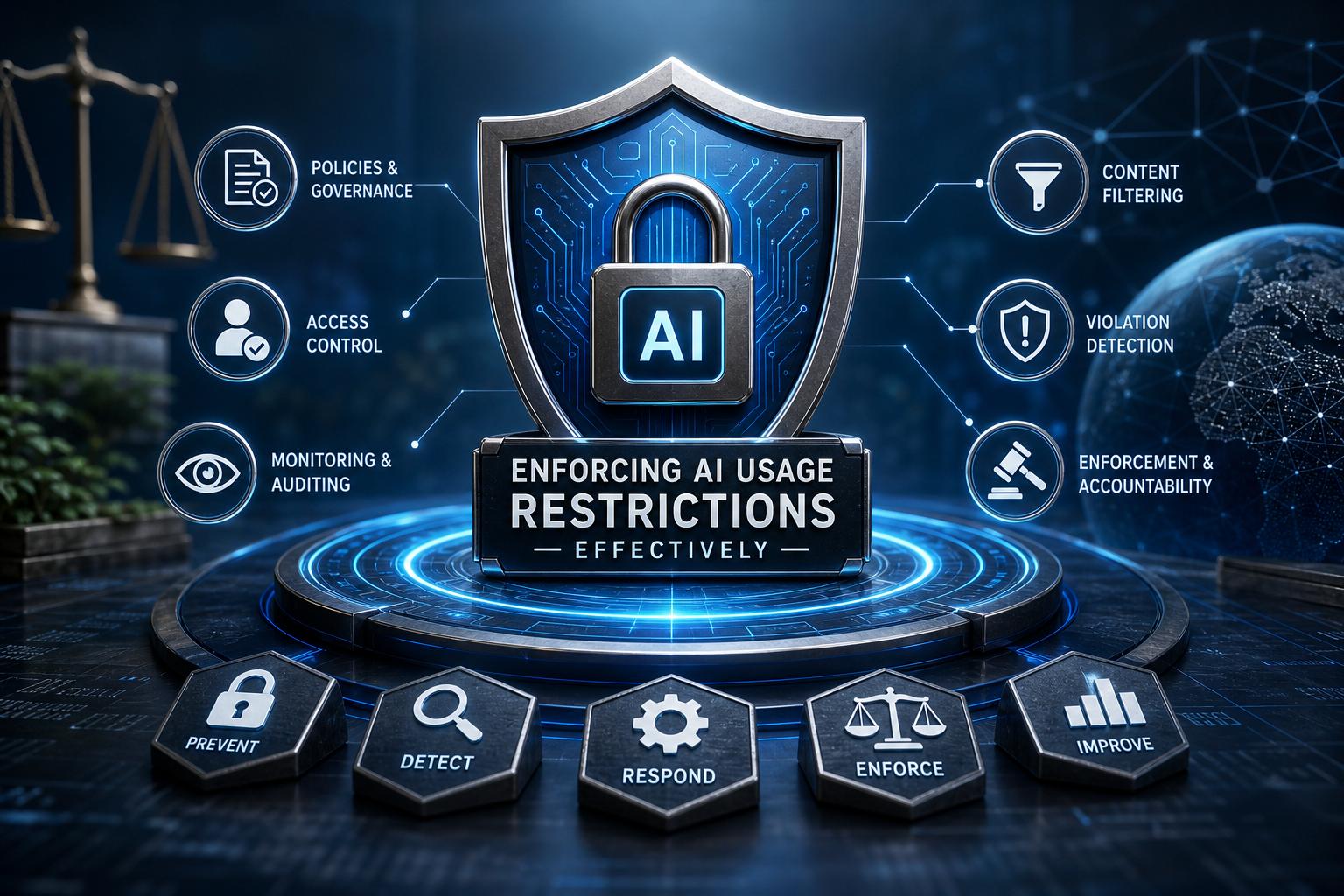
Mechanisms for Enforcing AI Usage Restrictions Effectively
Effective enforcement of AI usage restrictions hinges on clearly defined contractual obligations coupled with practical monitoring methods. One key approach involves integrating explicit clauses that specify permitted and prohibited AI applications,supported by regular compliance audits. Stakeholders should leverage automated tracking tools to detect unauthorized AI activity promptly,ensuring contractual terms are not bypassed. Additionally, establishing escalation protocols for breaches fosters accountability and enables swift remedial action.
Enforcing limits also benefits from collaborative frameworks that include:
- Granular usage reporting: Real-time logs that classify AI operations by scope and context.
- Adaptive sanction policies: Scalable penalties ranging from warnings to contract termination, reinforcing adherence.
- Dispute resolution mechanisms: Mediation and arbitration tailored for AI misuse conflicts, reducing litigation risks.
| Enforcement Mechanism | Purpose | Example |
|---|---|---|
| Usage audits | Verify compliance | Quarterly system reviews |
| Automated Tracking | Detect unauthorized AI use | Behavioral analytics software |
| Sanction Framework | Implement consequences | Penalty tiers based on violation severity |
Legal and Ethical Implications of Contractual AI Limits
When crafting agreements that impose limits on AI applications,legal precision is paramount to prevent ambiguities that could challenge enforceability. Contracts must clearly define the permissible scope of AI usage, delineating boundaries around data access, decision-making autonomy, and output dissemination. failure to specify these parameters not only leads to potential breaches but may also expose parties to liability under intellectual property laws, data protection regulations, and anti-discrimination statutes. The evolving nature of AI technology further complicates this legal landscape, demanding continual adaptation of contractual terms to reflect current capabilities and risks.
- Ethical responsibilities arise due to the autonomous decision-making powers embedded in AI, raising concerns about accountability and openness.
- The impact on privacy rights necessitates adherence to data governance frameworks, especially when personal or sensitive information is involved.
- Bias and fairness issues mandate proactive contractual clauses that require validation and monitoring of AI outputs to prevent discrimination.
| Legal Concern | Contractual Remedy | Ethical Consideration |
|---|---|---|
| Liability for AI errors | Limitation of liability clauses | Ensuring transparency in AI decision-making |
| Data misuse | Strict data access controls | Respecting user privacy and consent |
| Algorithmic bias | Regular audits and compliance checks | Promoting fairness and inclusivity |
Best Practices for Drafting Clear and Enforceable AI Use Clauses
Clarity and precision form the foundation of any effective AI use clause. To minimize ambiguity, it is essential to clearly define the permissible AI applications within the contractual framework. This includes specifying the contexts in which AI can be deployed, the types of data the AI may process, and the intended outputs or decisions supported by AI technologies. Explicitly outlining these details not only helps prevent misunderstandings but also supports enforceability by providing clear benchmarks for compliance. Additionally, integrating examples or use-case scenarios can be invaluable for illustrating boundaries and operational expectations, making the clause more practical and accessible for all parties involved.
Enforceability hinges on the careful balance between specificity and adaptability. Contracts should include mechanisms for monitoring, reporting, and addressing breaches related to AI use, ensuring that violations can be identified and rectified promptly. Consider incorporating a tiered approach to enforcement,such as a warning phase followed by defined penalties,which aligns incentives toward compliance without being overly punitive.The following table highlights key components to consider for crafting robust and enforceable AI use clauses:
| Component | Purpose | Recommended Features |
|---|---|---|
| Definition of AI Use | Clarifies scope | Explicit application types, data limits |
| Compliance Monitoring | Enables oversight | Reporting requirements, audit rights |
| Enforcement Procedures | Structures penalties | Notice periods, corrective steps, sanctions |
| Flexibility Clauses | Allows for updates | Review schedules, amendment processes |