

Understanding Contractual Limitations on Artificial Intelligence Usage
When integrating artificial intelligence solutions into business operations, it is crucial to recognize that contractual agreements often impose specific limitations on AI applications. These restrictions are crafted to safeguard intellectual property, ensure ethical usage, and mitigate potential legal liabilities arising from AI’s decision-making processes.Key contractual clauses typically address:
- Permitted scope of AI deployment within defined business functions
- Data privacy and security obligations related to AI-generated insights
- restrictions on AI’s ability to autonomously make binding decisions
- Obligations to comply with evolving regulatory standards governing AI behavior
Understanding these limitations is essential for organizations to avoid breaches that could result in financial penalties or reputational damage. Contracts may also specify escalation processes and liability caps in case the AI system causes unintended harm or operational disruption. The table below summarizes common contractual limitations on AI usage and their implications:
| Contractual Limitation | Typical Clause Description | Business Impact |
|---|---|---|
| usage Scope | Defines specific tasks AI is authorized to perform | Prevents unauthorized deployment outside agreed contexts |
| data Restrictions | Limits access to sensitive or proprietary data | Ensures compliance with privacy laws and data governance |
| Liability Limits | Caps financial duty for AI-related errors | Reduces exposure to costly litigation or claims |
| Ethical use Clauses | Mandates adherence to ethical AI standards and audit rights | Promotes transparency and trustworthiness |
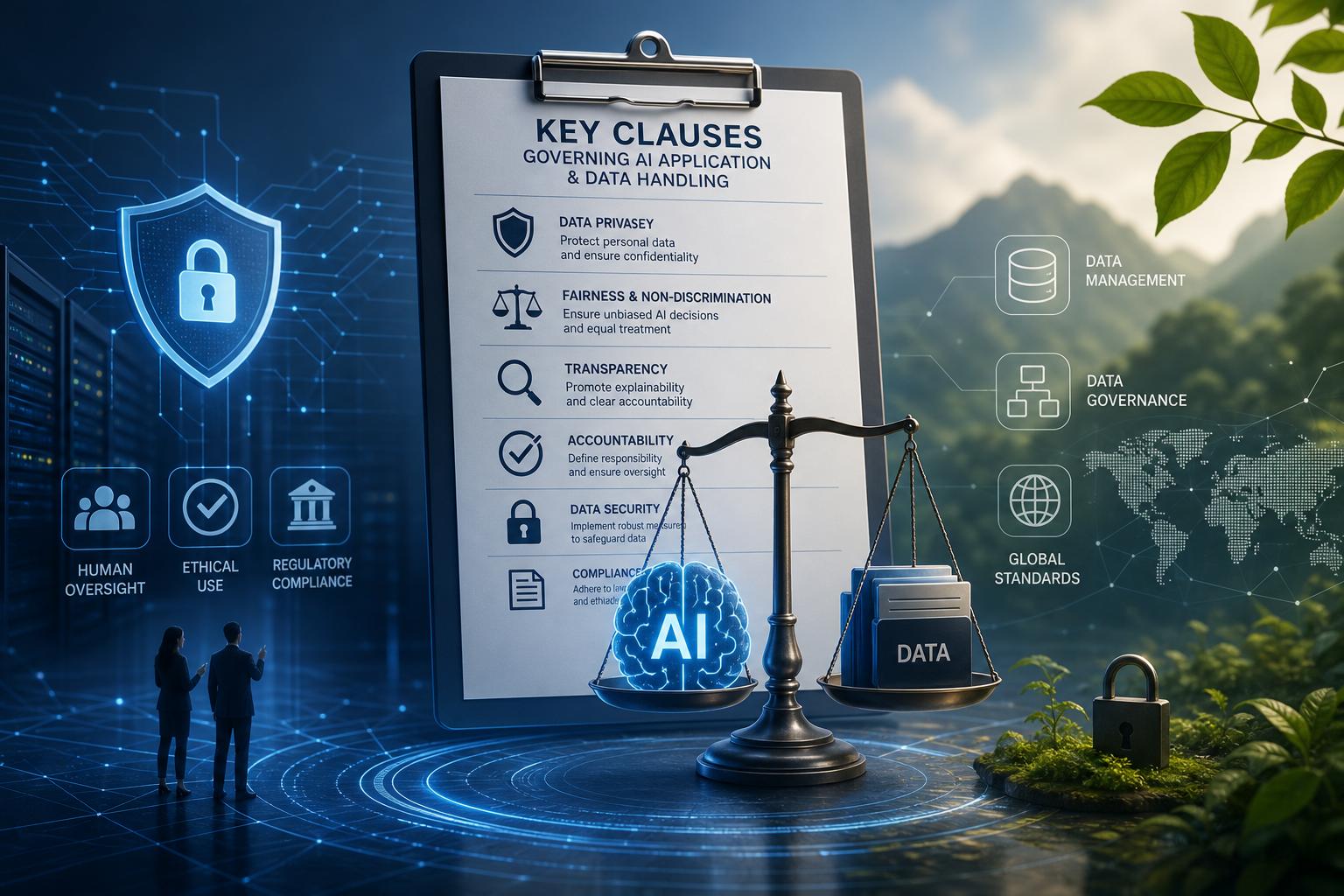
analyzing Key Clauses That govern AI Application and Data Handling
When drafting agreements that involve AI technologies, it is critical to pinpoint clauses that explicitly define permissible use and limitations on data handling. These contract elements serve as a safeguard to prevent unauthorized exploitation of AI capabilities and ensure compliance with relevant legal frameworks. Key provisions frequently enough address data privacy obligations, specifying who has access to data, the scope of permissible processing, and retention periods. Additionally, restrictions on AI functionality usage, such as prohibitions against reverse engineering or use beyond agreed geographic territories, empower parties to control the extent of AI deployment.
Another vital component is the inclusion of liability and indemnification clauses tailored to AI-specific risks. These clauses allocate responsibility for issues like data breaches, algorithmic biases, or unintended outputs, which can arise from autonomous decision-making processes. Consider the following simplified example table outlining how different contract clauses protect various interests:
| Clause | Purpose | Typical Restriction |
|---|---|---|
| Data Use | Control over data processing | No sharing with third parties |
| Usage Rights | Define scope of AI deployment | Limited to specific industries |
| Liability | Risk allocation for harm or errors | Cap on damages |
Implications of Restrictive Agreements on AI Innovation and Deployment
Restrictive agreements in AI can substantially impede the pace and scope of technological advancement. When contracts impose stringent limits on how AI models, data, or insights can be used, developers and organizations may face obstacles that stall experimentation and iterative improvements. These constraints often manifest through clauses such as exclusive licensing, prohibition of data sharing, or overly cautious use cases. Such limitations not only curb creativity but also delay the deployment of possibly groundbreaking AI applications that could benefit industries ranging from healthcare to finance. In essence, these contracts can create innovation bottlenecks that limit competitive advantage and broader societal gains.
Moreover, the ripple effects of restrictive agreements extend to the ecosystem around AI advancement. Smaller firms and startups, which thrive on flexibility and collaboration, may find themselves excluded or severely handicapped due to restrictive licensing or nondisclosure requirements. Below is a summary table illustrating common restrictions and their impact on AI stakeholders:
| Type of Restriction | Impact on Startups | Impact on Established Firms |
|---|---|---|
| Exclusive Licensing | Limits market entry and growth | Secures competitive edge but reduces collaboration |
| Data Sharing Prohibitions | Restricts access to crucial datasets | Protects proprietary data, limiting cross-industry innovation |
| Use Case Limitations | Reduces potential application scope | ensures alignment with brand but may slow expansion |
- Transparency issues: Contracts can obscure operational possibilities and responsibilities.
- Slowed knowledge transfer: Overly restrictive terms can hinder collaborative development.
- Reduced adaptability: Fixed agreements may limit AI’s ability to evolve with emerging needs.
Best Practices for Drafting Clear and Enforceable AI Usage Contracts
Ensuring that AI usage contracts are both clear and enforceable demands meticulous attention to language precision and comprehensive coverage of potential scenarios. clarity in terminology is paramount; avoid ambiguous phrases and define key terms explicitly to prevent misinterpretation. Contracts should specify the scope of AI deployment, restrictions on data inputs and outputs, and delineate responsibility for any automated decisions or errors. incorporating well-structured clauses for data privacy, intellectual property, and liability allocation further solidifies the enforceability of these agreements.
Implementing a robust framework within the contract enables proactive management of AI-related risks. Consider adopting the following elements for enhanced legal strength and operational clarity:
- Usage Boundaries: Precisely outline permitted and prohibited uses of the AI technology.
- Audit and Compliance Rights: Allow for regular assessments to ensure adherence to contractual terms.
- Dispute Resolution Mechanisms: Define clear procedures to address conflicts,including arbitration clauses.
- Update and Modification Clauses: Specify how updates to AI systems or contract terms will be managed and communicated.
| Contract Element | Purpose | key Consideration |
|---|---|---|
| Data Privacy Clauses | Protect sensitive information processed by AI | Align with GDPR and local regulations |
| Liability Limitations | Define responsibility for AI-caused damages | Balance risk-sharing fairly |
| Performance Guarantees | Ensure AI meets functional benchmarks | Set measurable, objective standards |