

Cloud AI Deployment Efficiency in Accelerating Innovation and Time to Market
embracing cloud AI deployment dramatically shortens the innovation cycle by enabling organizations to leverage scalable infrastructure and pre-built AI tools without the lengthy setup times associated wiht on-premise solutions. The cloud surroundings facilitates rapid iteration and experimentation, allowing development teams to quickly test and deploy models, which significantly compresses the time to market. This dynamic scalability combined with integrated AI services means companies can focus on refining algorithms and user experiences while the underlying infrastructure auto-adjusts to demands, ensuring seamless delivery even during unexpected traffic spikes.
Beyond speed, cloud AI deployment redefines operational efficiency through cost-effective resource allocation and enhanced collaboration capabilities. Key benefits include:
- Elastic Scalability: Allocate resources on-demand, avoiding hefty upfront investments in hardware.
- Maintenance Offloading: Cloud providers manage updates and security patches, reducing internal burdens.
- Global Accessibility: Teams across geographies can collaborate effortlessly, accelerating innovation cycles.
Below is a comparison highlighting critical factors influencing deployment efficiency:
| Factor | Cloud AI | On-Prem AI |
|---|---|---|
| Setup Time | Hours to days | Weeks to months |
| Scalability | Instant & automatic | Manual & limited |
| Cost Model | OPEX – pay as you go | CAPEX - heavy upfront |
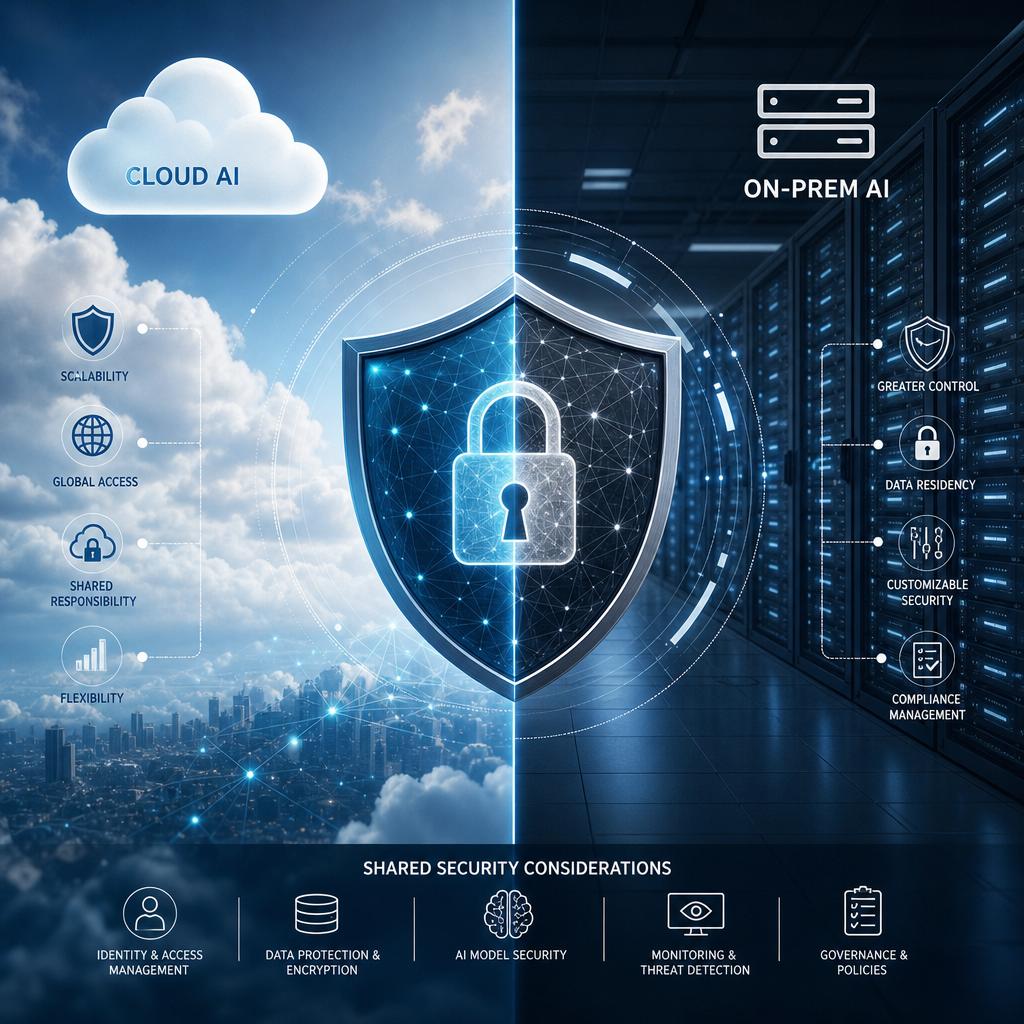
Comprehensive security Considerations in Cloud Versus On-Prem AI Environments
Balancing security requirements in AI deployments requires a nuanced understanding of potential vulnerabilities in both cloud and on-prem environments. Cloud providers follow rigorous compliance protocols, often implementing multi-layered encryption and advanced intrusion detection systems that continuously monitor for anomalies. These measures benefit from the providers’ ability to scale security resources dynamically. However, this convenience comes with challenges such as shared infrastructure risks and dependency on third-party trust models, which necessitate comprehensive contractual safeguards and ongoing vigilance.
Conversely, on-prem AI setups offer granular control over data governance, allowing organizations to enforce tailored security policies and retain exclusive control over sensitive datasets. This model excels in industries with stringent regulatory demands or where intellectual property protection is paramount. the trade-offs include the need to maintain dedicated security expertise and infrastructure investment. Below is a comparison table outlining key security aspects across both deployment models:
| Security Aspect | Cloud AI Environment | On-Prem AI Environment |
|---|---|---|
| Data Encryption | Managed end-to-end encryption by provider | custom encryption policies and key management |
| Access Control | Centralized IAM with adaptive authentication | local, role-based access tailored per department |
| Threat Detection | 24/7 provider-monitored threat intelligence | Internally operated monitoring and response teams |
| Compliance | Pre-validated certifications (HIPAA, GDPR, etc.) | Custom compliance management with direct audits |
Cost Analysis of Cloud and On-Prem AI Solutions: Budgeting for Long-Term scalability
When evaluating the financial feasibility of AI deployments, organizations must consider not only the initial capital expenditure but also the ongoing operational costs tied to both cloud and on-premises solutions. Cloud AI offers a pay-as-you-go model which can significantly lower upfront investment, accommodating fluctuations in workload without the need for costly hardware upgrades or maintenance teams. This elasticity ensures that businesses only pay for the resources they consume, providing clear budgeting advantages especially for projects with variable demand. Conversely, on-prem AI demands considerable upfront capital for infrastructure and skilled personnel, but can deliver predictable fixed costs over time, which might appeal to enterprises with stringent budget control policies or high, steady utilization rates.
Cost factors to consider include:
- Infrastructure investment: Cloud eliminates physical hardware purchases; on-prem requires hardware acquisition and depreciation budgeting.
- Maintenance and staffing: On-prem needs dedicated IT staff and ongoing maintenance; cloud providers manage these, shifting costs to a service fee.
- Scalability expenses: Cloud scales automatically with usage; on-prem scaling involves additional capital outlay.
- Energy and cooling costs: Important for on-prem data centers, often overlooked in total cost assessments.
| Cost Category | Cloud AI | On-Prem AI |
|---|---|---|
| Initial Investment | Low, pay-as-you-go | High, hardware & setup |
| Operational Expenses | Variable, usage-based | Fixed, maintenance & staff |
| Scalability Cost | dynamic scaling, cost-efficient | Capital-intensive expansion |
| Energy Consumption | Included in fees | Significant overhead |
Strategic Recommendations for Selecting the Optimal AI Deployment Model Based on Business Priorities
Choosing between cloud and on-premises AI deployment hinges on a clear understanding of your business priorities and operational constraints. If rapid scalability and agility top your agenda, cloud deployment offers unparalleled adaptability. It allows businesses to leverage powerful AI infrastructures without hefty upfront investments, ensuring swift adaptation to fluctuating demands. Conversely, organizations prioritizing stringent data control and compliance often find on-premises solutions more aligned with thier security frameworks. On-prem AI deployment empowers IT teams with full oversight, enabling customization of security policies and direct control over sensitive data flow within corporate boundaries.
Key considerations to guide your decision include:
- Speed of Deployment: Cloud models accelerate rollout times, ideal for dynamic market environments.
- Data Security & Compliance: On-premises setups support regulatory mandates and protect critical assets.
- Cost Management: Cloud offers operational expense flexibility; on-prem requires capital expenditure but may lower long-term costs.
| Factor | Cloud AI | On-Prem AI |
|---|---|---|
| Deployment Speed | Rapid, near-instant | Requires setup & configuration time |
| Security Control | Managed by provider | Full internal control |
| Cost Model | Pay-as-you-go (OPEX) | Capital investment (CAPEX) |