

Caution in AI Medicine Addressing Diagnostic Errors and Ensuring Accuracy
In the rapidly evolving landscape of AI-driven medicine, the stakes are exceptionally high when it comes to accuracy in diagnosis. Even minor errors can lead to significant consequences for patient outcomes. it is imperative to recognize that AI systems, while powerful, are not infallible and require stringent validation against diverse clinical datasets before deployment. A critical focus is on minimizing diagnostic errors by continuously refining algorithms to account for variability in patient demographics, disease presentations, and medical imaging. Ensuring transparency in AI decision-making processes also empowers clinicians to validate and interpret outputs critically, fostering a collaborative environment where human expertise and machine intelligence complement each other.
- Bias detection and mitigation: Identifying and correcting algorithmic biases related to race, gender, and socioeconomic status to ensure equitable healthcare delivery.
- Robust data quality standards: Leveraging high-quality, well-annotated data that represents diverse populations for training and testing AI models.
- Regular performance audits: Conducting audits post-implementation to detect performance drifts or unexpected errors in real-world settings.
- Comprehensive safety protocols: Establishing safeguards to prevent harm stemming from erroneous AI recommendations, with clear escalation pathways for clinicians.
| Risk Factor | Potential Impact | mitigation Strategy |
|---|---|---|
| Incomplete Data | Misdiagnosis or missed diagnosis | Use diverse training datasets |
| Algorithmic Bias | Unequal treatment outcomes | Bias audits and corrections |
| Overfitting | Poor generalization on new patients | Regular validation with fresh data |
| Lack of transparency | Misinterpretation by clinicians | Explainable AI techniques |
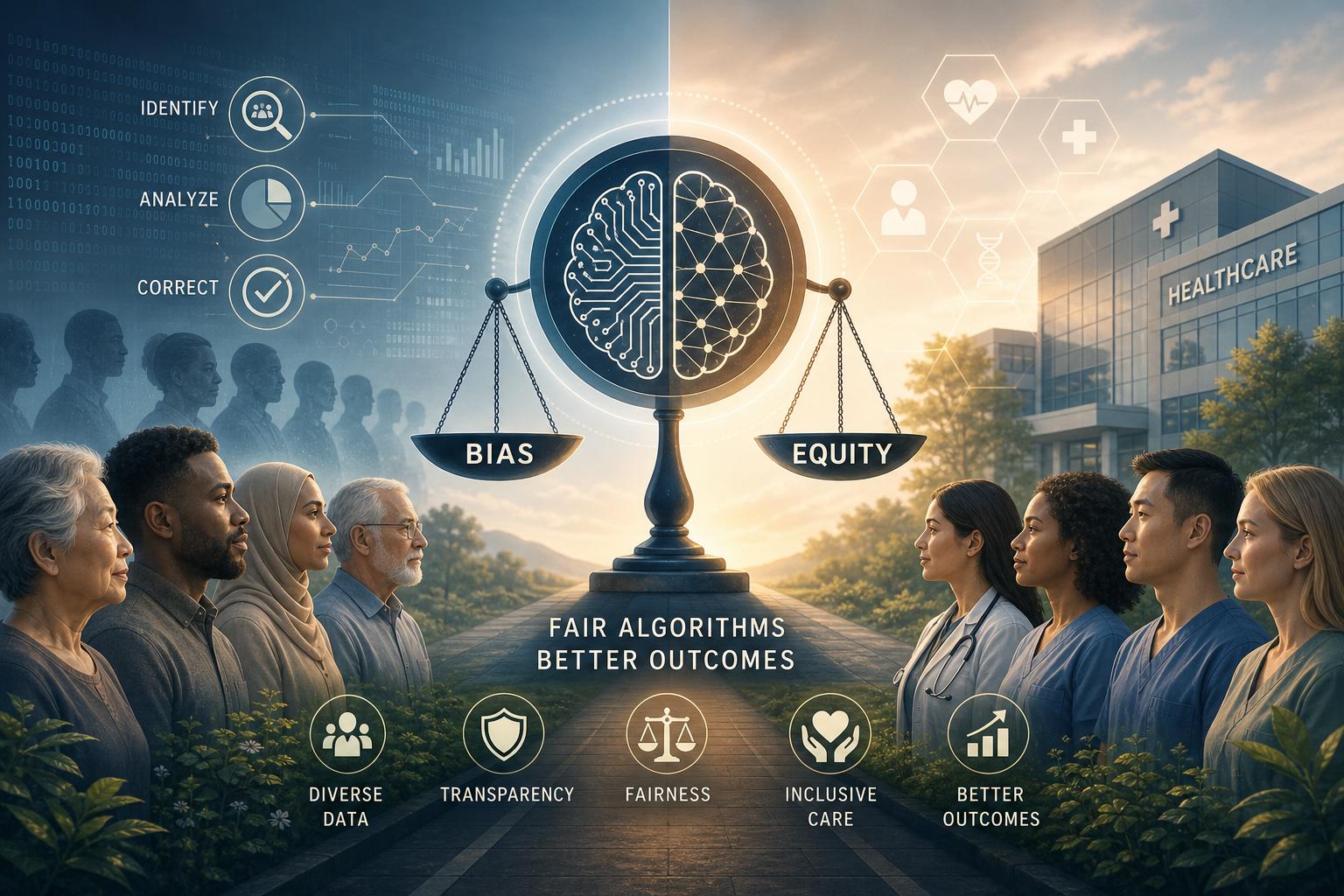
Mitigating Algorithmic Bias to Promote Equitable Healthcare Outcomes
In the quest to leverage artificial intelligence for enhanced medical diagnostics and treatment plans, a critical hurdle remains: the pervasive impact of algorithmic bias. Such bias frequently enough stems from unrepresentative training datasets that do not fully encompass the diversity of patient populations. Unchecked, these biases can perpetuate existing healthcare disparities, erroneously affecting underserved communities. Effective mitigation strategies involve the implementation of rigorous data audits that spotlight demographic imbalances, alongside the continuous retraining of models with inclusive, high-quality data. Healthcare professionals and AI developers must collaborate closely to identify potential sources of bias before deployment, ensuring fairness is embedded in AI systems right from the design phase.
- Adopt transparent model design: Explainability enhances trust and eases identification of bias.
- Utilize bias detection tools: Automated tools can flag problematic patterns in datasets or outputs.
- Incorporate stakeholder feedback: Inputs from diverse communities can reveal subtle biases often overlooked.
| Strategy | Purpose | Impact |
|---|---|---|
| data diversification | expand dataset representation | Reduces demographic bias |
| Model Explainability | Clarify decision-making paths | Builds clinician trust |
| Continuous Monitoring | Evaluate real-world outcomes | Ensures ongoing fairness |
Implementing Robust Safety Protocols for AI Integration in Clinical Settings
Integrating artificial intelligence into clinical environments demands the establishment of robust safety protocols designed to minimize risks associated with algorithmic errors and flawed decision-making. Healthcare providers must deploy continuous monitoring systems that track AI outputs against clinical guidelines and patient outcomes, ensuring any deviations or unexpected patterns are swiftly identified and addressed. Collaboration between data scientists, clinicians, and ethicists is essential to fine-tune AI models in real-time, fostering an environment where human oversight complements machine precision rather than competes with it.
Additionally,addressing inherent biases within AI systems is critical to equitable patient care. This requires implementing comprehensive data auditing practices and diversifying training datasets to reflect the demographic and clinical variability of the patient population. The following table outlines key elements that constitute effective AI safety protocols in healthcare settings:
| Safety Protocol Component | Description | Impact on Clinical AI |
|---|---|---|
| Continuous Validation | Real-time evaluation of AI outputs | Reduces error propagation |
| Bias Auditing | Regular assessment for demographic fairness | Ensures equitable treatment |
| Interdisciplinary Review | Input from clinicians, data scientists, ethicists | Balances technology with ethical standards |
Best practices and regulatory Recommendations for Responsible AI Deployment
Implementing AI solutions in healthcare demands adherence to stringent guidelines that prioritize patient safety and ethical responsibility. Among the moast critical practices is rigorous validation of AI models before deployment, ensuring that algorithms function accurately across diverse populations to minimize the risk of harmful errors. Continuous monitoring and updating of these algorithms help detect and correct biases that may inadvertently influence clinical decisions,safeguarding against disparities in patient treatment. Transparency in AI decision-making processes further fosters trust among healthcare providers and patients alike, enabling informed oversight and accountability.
Regulatory frameworks must evolve in tandem with technological advancements to provide clear mandates on responsible AI use. Key recommendations include:
- Robust data governance: Ensuring high-quality, representative datasets free from systemic biases.
- Interdisciplinary collaboration: Engaging ethicists, clinicians, and technologists in the AI progress lifecycle.
- Standardized safety protocols: Establishing thresholds for acceptable AI performance and fail-safe mechanisms.
- Periodic audits: Mandating external reviews of AI tools to verify compliance with safety and ethical standards.
| Best Practice | Regulatory Recommendation | Impact |
|---|---|---|
| Bias Mitigation | Inclusive Data Policies | Equitable Patient Care |
| Transparency | Disclosure Requirements | Increased Trust |
| Continuous Monitoring | Mandatory Reporting | Reduced Errors |
| Ethical Oversight | Ethics Committees | Accountability |