

The Capabilities and Limitations of AI in Essay Writing
Artificial Intelligence has significantly advanced in generating coherent and contextually relevant essays,leveraging vast databases and natural language processing capabilities. AI can efficiently handle research synthesis, grammar correctionand stylistic consistency, often producing polished drafts in minutes. though, it’s performance depends heavily on the input it receives and the complexity of the topic. While AI excels in factual reporting and structured composition, it struggles with nuanced argumentation, emotional depthand original critical thinking, which are essential for truly impactful essays.
Understanding AI’s limits is crucial for educators and students alike. Here are some notable constraints and risks associated with AI-generated essays:
- Contextual Gaps: AI may miss subtle cultural or subject-specific contexts, leading to shallow or off-topic content.
- Ethical Concerns: Overreliance on AI poses academic integrity risks, potentially violating school policies on plagiarism and authorship.
- Lack of Personal Voice: Generated text often lacks a distinctive, authentic student perspective, which can be crucial in certain assignments.
| Capability | Strength | Limitation |
|---|---|---|
| research Integration | rapid summarization of sources | May misinterpret nuanced data |
| Grammar and Style | Consistent correction and tone matching | Lacks adaptive creativity |
| Argument Construction | Logical sequencing of points | Insufficient original critical insight |
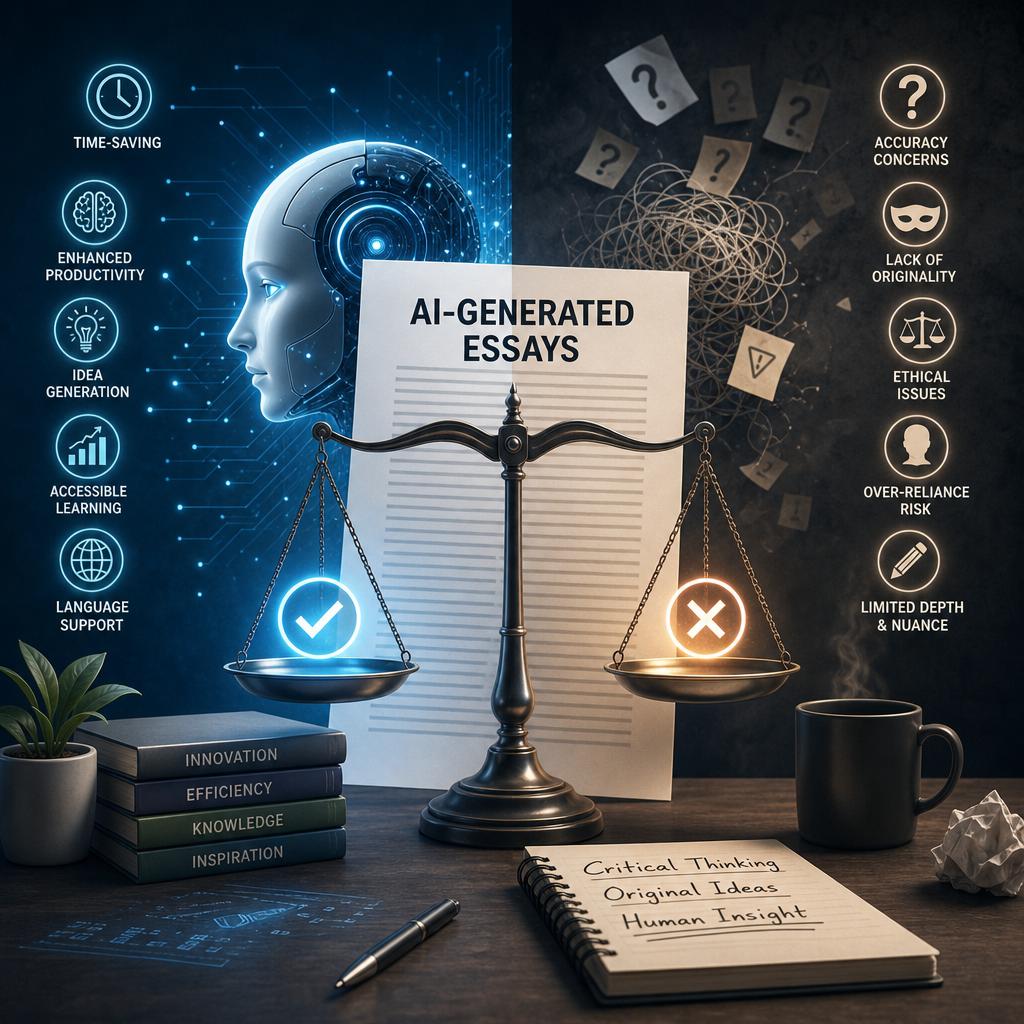
Evaluating the Benefits and Drawbacks of AI-Generated Essays
Artificial Intelligence has undeniably transformed the landscape of essay writing, offering students rapid content generation and resourceful brainstorming support. Among the key advantages are:
- Efficiency: AI tools can produce essays in minutes, saving precious study time.
- Idea generation: They help overcome writer’s block by suggesting fresh perspectives and structures.
- accessibility: Students with learning difficulties may find AI-generated drafts an easier starting point.
However, these benefits come with significant caveats. The reliance on AI for essay writing may undermine the vital progress of critical thinking and writing skills. Additionally, the risk of producing generic or inaccurate content raises concerns about originality and academic integrity. Schools are also grappling with policy challenges, as unchecked AI use can:
- Blur the line between student effort and automation.
- Complicate plagiarism detection protocols.
- Require continual updates to honour codes and submission guidelines.
| Aspect | benefits | Drawbacks |
|---|---|---|
| Speed | Fast content creation | May encourage shortcuts |
| Creativity | suggests new ideas | Produces generic text |
| Skill Development | Supports hesitant writers | Limits practice of critical writing |
Understanding the Implications for Academic Integrity and School Policies
Schools face a critical challenge in preserving academic integrity as AI-generated essays become increasingly refined. Many institutions have updated their policies to explicitly address the use of artificial intelligence tools, emphasizing the responsibility of students to produce original work. Violation of such policies can lead to severe consequences, including failing grades or disciplinary action, underscoring the seriousness of AI misuse. Educators are now tasked with developing more robust detection methods and fostering environments where ethical use of technology is clearly communicated and enforced.
moreover, school policies vary widely in how they approach AI-written content, reflecting differing philosophies on technology’s role in learning. Some schools have adopted a proactive stance by integrating AI literacy into their curricula, helping students understand when and how AI assistance is acceptable. Below is a simplified comparison of common school policy approaches to AI use:
| Policy Approach | Key Characteristics | Potential risks |
|---|---|---|
| Zero Tolerance | Complete ban on AI-generated work | May discourage honest exploration of AI tools |
| Conditional Use | Permits AI for brainstorming or drafting | Challenges in defining acceptable boundaries |
| Open Integration | Encourages AI as a collaborative aid | Risk of over-reliance and compromised originality |
Strategies for Educators to Address AI Use in Academic Work
Educators must navigate a rapidly evolving landscape where artificial intelligence tools are increasingly accessible to students. Effective strategies to address AI use involve a blend of clear communication, ethical guidanceand adaptive assessment methods. Transparency is key: institutions should establish and disseminate explicit policies that define acceptable use of AI technologies in academic work. Facilitating open dialogues about the benefits and limitations of AI fosters a culture of responsible use rather than punitive surveillance. Educators can also incorporate lessons on digital literacy and ethical AI usage into curricula to empower students with critical thinking skills necessary for navigating AI-generated content.
- Develop AI-inclusive assignments: Design tasks that encourage originality and require personal reflection or in-class components to gauge authentic understanding.
- Leverage AI-detection tools wisely: Use detection software as a supplementary measure, not the sole basis for academic integrity decisions, to avoid false accusations.
- Promote collaboration and peer review: Engage students in peer feedback to identify inconsistencies and inspire accountability.
| Strategy | Key Benefit | Potential Challenge |
|---|---|---|
| Clear Policy Communication | Sets expectations | Keeping policies updated |
| Ethics Education | Promotes responsible use | Requires curriculum time |
| Adaptive Assessments | Encourages originality | Increases grading complexity |