

The Role of Artificial Intelligence in Personalized Learning
Artificial Intelligence (AI) is revolutionizing how children learn by offering highly personalized educational experiences that adapt in real-time to their unique needs and pace. Unlike traditional classroom settings where one teacher manages many students, AI-powered platforms analyze a child’s strengths, weaknessesand learning preferences through continuous data monitoring. This enables the creation of tailored learning paths, interactive exercises, and instant feedback mechanisms designed to nurture mastery rather than rote memorization. Key benefits include:
- Customized content adjustments based on performance and engagement patterns
- Adaptive pacing that helps prevent frustration or boredom
- Immediate identification of knowledge gaps for timely interventions
though, while AI serves as an efficient tutor, it cannot entirely replace the nuanced human elements that enrich education. Emotional intelligence, encouragement, ethical guidanceand social interaction remain essential components provided by parents and educators. Balancing technology wiht human mentorship ensures a holistic environment where artificial tools augment rather than dominate learning. Below is a comparison of benefits and considerations when integrating AI tutoring with human oversight:
| Aspect | AI Tutor | Human Guidance |
|---|---|---|
| Customization | Dynamic, data-driven adaption | Personalized, emotional insight |
| Feedback Speed | Instant and consistent | reflective and subjective |
| Emotional support | Limited, algorithmic responses | Empathetic, motivational presence |
| Social Skills | Minimal interaction | Encourages collaboration and interaction |
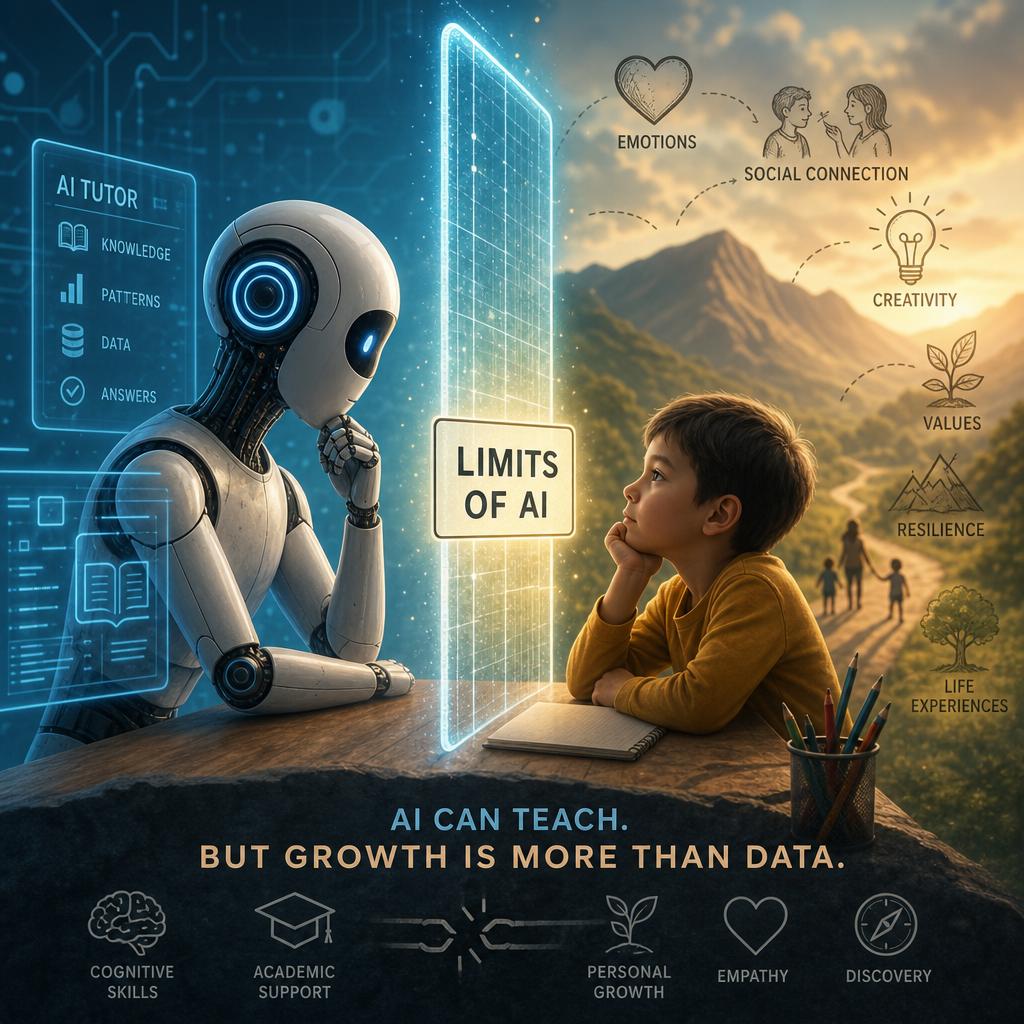
Understanding the Limits of AI Tutoring for Child Development
While AI tutoring platforms offer extraordinary capabilities in personalizing learning experiences and adapting to a child’s pace, they inherently lack the nuanced understanding that human tutors bring to child development. Children do not only require intellectual growth but also emotional support, motivationand social engagement-all of which are challenging for AI to fully replicate. The subtleties of non-verbal cues, empathyand encouragement play a critical role in fostering confidence and resilience, aspects that technology alone cannot provide. Moreover, AI systems, no matter how advanced, may sometimes deliver content without the contextual sensitivities that a human tutor instinctively applies.
Key limitations of AI tutoring include:
- Emotional Intelligence Deficiency: AI cannot perceive or respond to feelings, which is crucial for nurturing a child’s self-esteem and curiosity.
- Contextual Awareness Gaps: AI may misinterpret or overlook cultural, socialor individual contexts important in learning.
- Reduced Social interaction: Human tutors provide vital interpersonal feedback and real-time dialog that enhances critical thinking and communication skills.
| Aspect | AI Tutoring | Human Tutoring |
|---|---|---|
| Emotional support | Minimal | Extensive |
| Adaptability | Algorithm-driven | Intuitive & flexible |
| Feedback Style | Automated and standardized | Personalized and empathetic |
Integrating AI Tools with Human Guidance for Optimal Educational Outcomes
harnessing the power of AI in education is not about replacing human educators but enhancing their impact through strategic collaboration. AI tools bring personalized learning paths and real-time feedback that can adapt to a child’s unique pace and style, making learning more engaging and effective. Though, these systems frequently enough lack the empathy, intuitionand contextual understanding that only a human guide can provide. By blending AI’s analytical strengths with a caregiver’s or teacher’s emotional intelligence, we create a balanced learning environment that supports both academic growth and emotional well-being.
- Customized lesson plans: AI analyzes student data to tailor content.
- Human intervention: Teachers interpret AI insights to address emotional and motivational needs.
- Continuous assessment: AI tracks progress while humans provide encouragement and critical thinking challenges.
| Feature | AI Contribution | Human Role |
|---|---|---|
| Adaptation | Adjusts difficulty based on performance | Identifies learning obstacles and offers motivation |
| Feedback | Immediate correction and hints | Provides context and emotional support |
| Engagement | interactive multimedia tools | Encourages curiosity and social learning |
Best Practices for Parents in Navigating AI-Based Tutoring Solutions
Parents play a pivotal role in ensuring AI-based tutoring becomes a complementary tool rather than a replacement for traditional learning methods. establish clear boundaries around screen time to prevent over-reliance on AI and encourage well-rounded development. Regularly reviewing the AI tutor’s lesson plans and progress reports helps parents stay informed and intervene timely when necessary. Building a routine that balances AI sessions with active discussions and hands-on activities will foster critical thinking and social skills that AI alone can’t nurture. Ultimately, the key is to view AI tutors as enhancers-tools that support but do not supplant a parent’s engagement in their child’s education.
To practically manage this balance, parents can implement strategies that prioritize human guidance. Consider the following checklist to keep AI learning aligned with your child’s unique needs:
- Personalize AI settings: Tailor difficulty levels and content focus areas based on your child’s strengths and weaknesses.
- Monitor emotional responses: Watch for frustration or disengagement to avoid burnout or disinterest.
- Encourage collaborative learning: Pair AI tutoring with group or family study sessions to strengthen interpersonal skills.
- Regular feedback loops: Schedule discussions with teachers and tutors about AI performance and adaptability.
Below is a concise comparison to help visualize your role alongside AI in your child’s educational journey:
| Role | AI Tutor | Parent |
|---|---|---|
| Engagement | Delivers personalized content | Provides emotional support and motivation |
| Adaptability | Adjusts pace based on performance metrics | Identifies broader learning needs beyond data |
| Learning Environment | Operates digitally with instant feedback | Creates supportive and distraction-free space |