

The role of Artificial Intelligence in Transforming Customer Service Operations
Advancements in artificial intelligence have revolutionized how companies handle customer interactions, streamlining processes while maintaining responsiveness. AI-driven tools such as chatbots, virtual assistantsand automated ticketing systems enable businesses too resolve issues quickly and accurately, frequently enough without human intervention. This technological integration provides several advantages:
- 24/7 availability: Customers receive continuous support regardless of time zones or office hours.
- scalability: AI can manage immense volumes of inquiries simultaneously, which human teams cannot match.
- Consistency: Responses are standardized, reducing the risk of human error or bias affecting service quality.
Though, the question remains whether AI can fully replace human empathy and nuanced understanding. Complex or emotionally charged situations often require human judgment that machines lack. Balancing AI’s efficiency with genuine human care demands a hybrid approach where technology supports but does not supplant the human touch. Consider the following comparative overview:
| Aspect | AI Strengths | Human Strengths |
|---|---|---|
| Speed | Instant responses to common queries | Varies, slower but thoughtful |
| Emotion | Absent, purely logical | Empathy and emotional connection |
| Complexity Handling | Limited to programmed scenarios | Adaptive, creative problem solver |
| Availability | Nonstop | Bound by schedules |
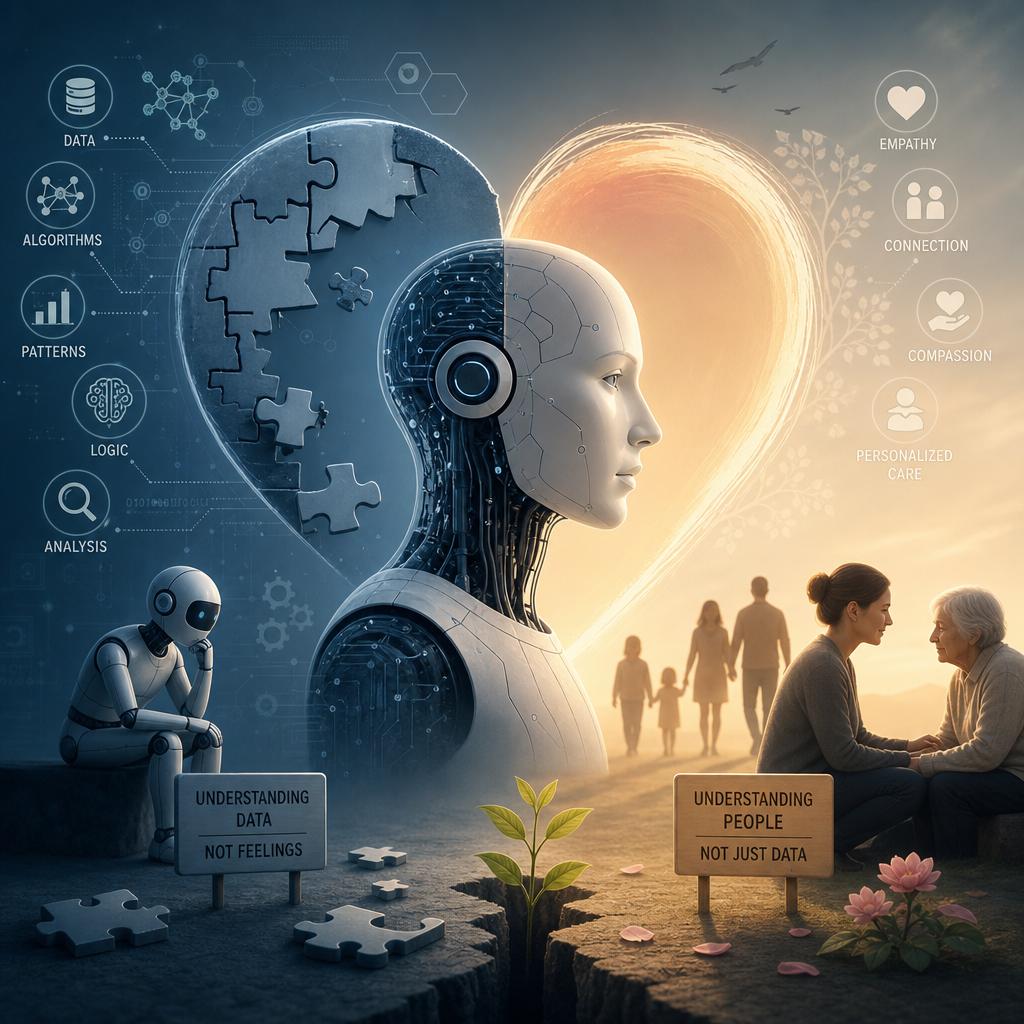
Assessing the Limitations of AI in Delivering Empathy and Personalized Care
While AI has revolutionized the speed and scalability of customer interactions, its ability to truly connect on an emotional level remains constrained. Empathy entails understanding nuanced human emotions, interpreting subtle verbal cuesand responding with an intuitive sensitivity that goes beyond scripted algorithms. Current AI technologies rely heavily on pattern recognition and predefined responses, which limits their capacity to deliver genuine personalized care. As an inevitable result, customers may experience interactions that feel mechanical or indifferent, lacking the warmth frequently enough needed to resolve sensitive or complex situations effectively.
Moreover, the inherent challenges of AI-driven empathy can be highlighted through key limitations:
- Contextual Blind Spots: AI struggles with understanding unique personal histories or emotional states that influence customer needs.
- Lack of Emotional Intelligence: machines cannot yet replicate the intuition and compassion naturally conveyed by human agents.
- One-Size-Fits-All Responses: Standardized reply frameworks may alienate customers seeking tailored solutions.
| Aspect | AI Capability | Human Advantage |
|---|---|---|
| Emotional Recognition | Basic, via voice tone and keywords | Deep understanding via empathy and experience |
| Personalization | data-driven but limited by input scope | Holistic, adaptive to context and mood |
| Flexibility | Pre-programmed | Spontaneous and intuitive |
Strategies for Integrating AI with Human Expertise to Enhance Customer Experience
To achieve the perfect synergy between artificial intelligence and human skills in customer serviceorganizations must adopt a multifaceted approach. First, AI should be employed to handle routine, repetitive inquiries, such as order tracking or FAQs, freeing human representatives to concentrate on complex or emotionally sensitive interactions. This not only increases operational efficiency but also ensures customers receive personalized care where it matters most. Empowering customer service agents with AI-driven insights-like sentiment analysis and historical interaction data-equips them to anticipate needs and tailor their responses strategically, enhancing satisfaction and trust.
Moreover, continuous training and feedback loops are critical to refining this partnership. Implementing regular sessions where human agents review AI performance and provide qualitative insights helps optimize automated processes and improves AI’s contextual understanding. Consider this simple comparative table showcasing priorities in this integration:
| focus Area | Role of AI | Role of Human Expertise |
|---|---|---|
| Efficiency | Automate FAQs and basic queries | Manage complex cases and escalations |
| Personalization | Provide data-driven customer insights | Empathize and build rapport |
| Adaptability | Continuously learn from interactions | Offer judgment and creativity when needed |
Best practices for Maintaining Customer trust and Satisfaction in an AI-Driven Environment
In an era dominated by artificial intelligence, maintaining customer trust requires a nuanced approach that combines technological efficiency with human empathy. Organizations must establish transparent communication channels that clearly explain when AI is being used and what its limitations are. This fosters a sense of honesty and control for the customer. Moreover, regular audits of AI decision-making processes should be conducted to ensure fairness and accuracy, thus preventing any bias or errors that could erode credibility. Employing AI as a first-responder to streamline interactions while reserving complex or sensitive issues for human agents creates a balanced model that honors both speed and sensitivity.
To uphold lasting satisfaction, companies should focus on three key pillars:
- Personalization: Use AI insights to tailor recommendations and responses, but always allow customers to override automated suggestions.
- Empowerment: Provide customers with easy access to both AI tools and human support, enabling them to choose how they interact.
- Feedback integration: Leverage AI-driven analytics to monitor customer sentiment, then act on these insights to refine both AI functionalities and human service strategies.
| Aspect | AI Role | Human Role |
|---|---|---|
| Speed & Efficiency | Automate routine queries | Oversee and escalate issues |
| Emotional Intelligence | Analyze sentiment patterns | Provide empathy and judgment |
| Customization | Recommend based on data | Adjust for context & nuance |