
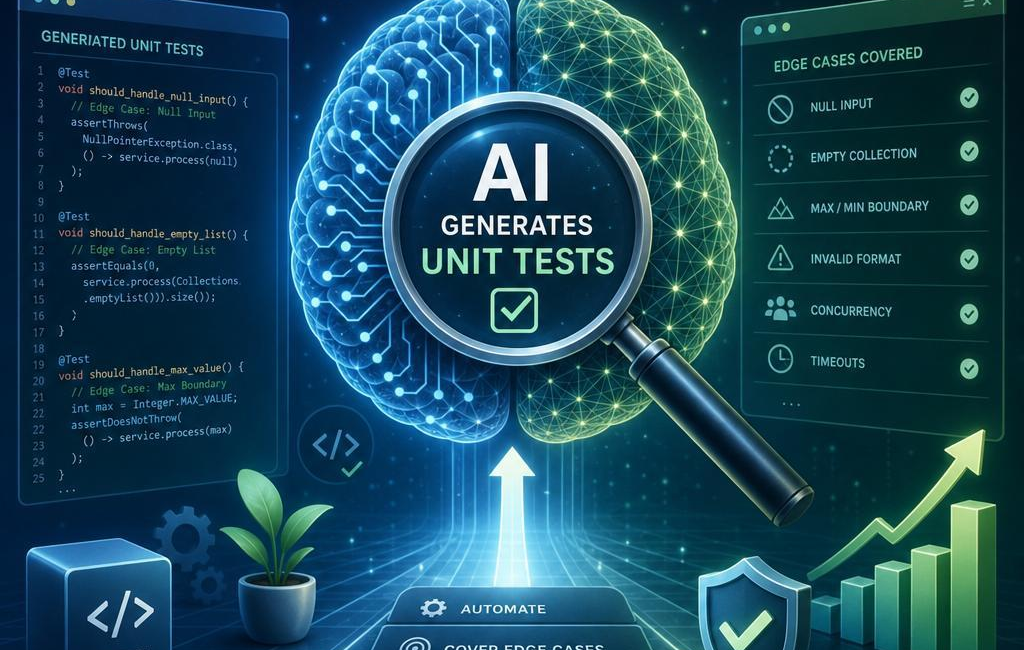
The Capabilities and Limitations of AI in Generating Unit Tests
artificial Intelligence has made significant strides in automating the creation of unit tests, notably by leveraging machine learning models trained on vast repositories of code. these models excel at generating test cases that cover common functionalities, ensuring standard paths through the code are validated. AI-driven tools can analyze function signatures, input-output relationshipsand expected behaviors to automatically produce test scripts, saving developers considerable time. Though, the reliability of AI in mapping out complex application logic and nuanced edge cases frequently enough depends on the quality and diversity of the training data as well as the sophistication of the underlying algorithms.
Despite remarkable capabilities, AI-generated unit tests exhibit critical limitations that developers must consider. For instance, AI may struggle with:
- Identifying rare or unconventional edge cases, which require deep domain knowledge.
- Understanding implicit buisness rules that are not explicitly documented in the codebase.
- generating context-specific assertions that protect against regression in evolving software environments.
| Aspect | AI Strength | AI weakness |
|---|---|---|
| Test Coverage | Broad baseline coverage of common cases | Less effective in low-frequency, high-impact scenarios |
| Interpretation | Quickly parses syntactic structures | Limited semantic understanding & domain context |
| Speed | Generates tests rapidly at scale | May generate redundant or irrelevant tests |
In essence, while AI represents a powerful assistant for generating foundational unit tests, human expertise remains essential to refine, expandand validate test suites that robustly secure software quality against all edge case contingencies.
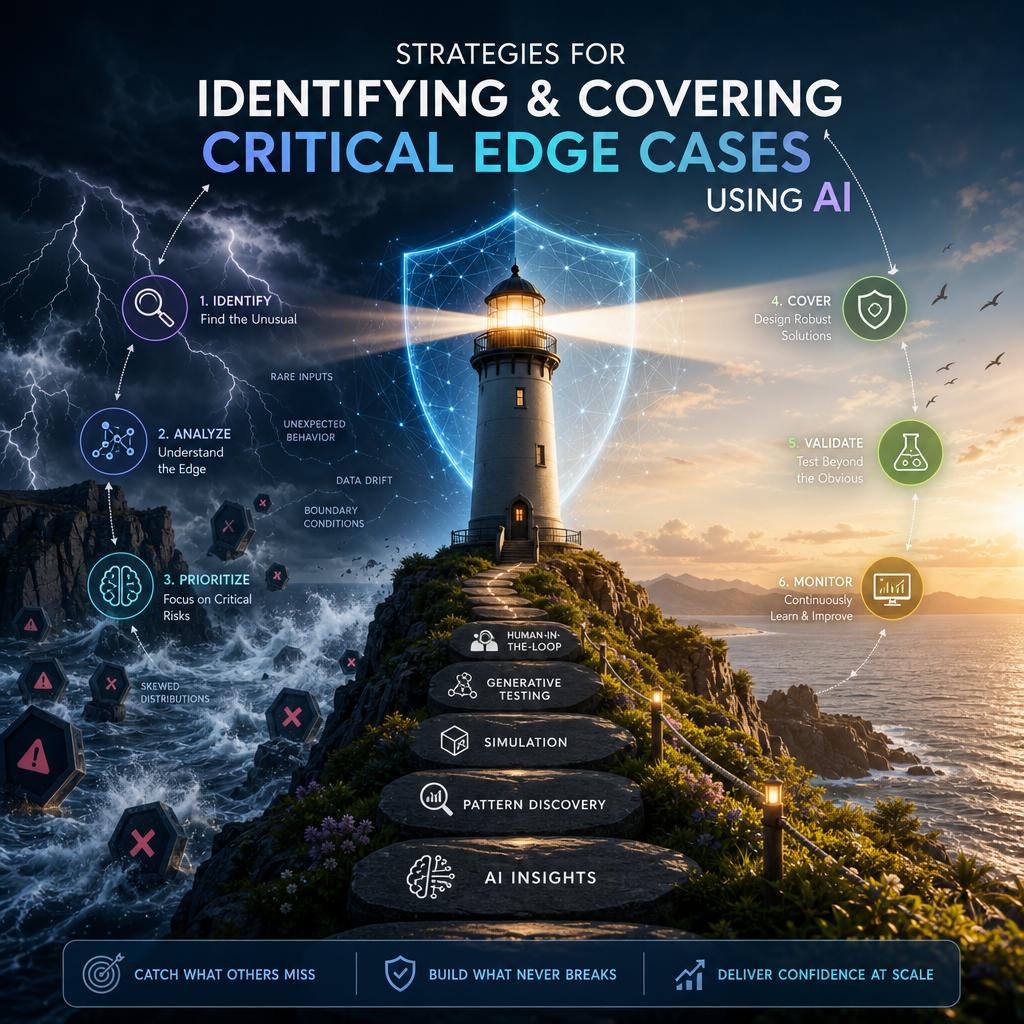
Strategies for identifying and Covering Critical Edge Cases Using AI
Harnessing AI to pinpoint critical edge cases begins with leveraging its capacity to analyze vast amounts of code and usage data swiftly. By training models on past bug databases and operational logs,AI can highlight patterns that human testers might overlook. This includes rare input combinations, boundary conditionsand uncommon user behaviors. Integrating AI-driven anomaly detection tools within the progress pipeline ensures that edge cases don’t remain hidden until late in the QA phases. Consequently, teams can proactively generate targeted unit tests that bolster the robustness of software releases.
To effectively cover these edge cases, AI-generated test scenarios must be both comprehensive and relevant. Using strategies such as fuzz testing simulations and parameter space exploration, AI can autonomously produce diverse input permutations that exercise seldom-used code paths. A practical approach is combining AI insights with developer expertise, where AI suggests candidate tests and human judgment refines them for context-specific accuracy. Below is a concise comparison of traditional versus AI-powered edge case coverage approaches, illustrating key benefits:
| Aspect | Traditional Approach | AI-Powered approach |
|---|---|---|
| Identification Speed | Manual analysis, slower | Automated, rapid insight |
| Edge Case Volume | Limited by human capacity | Extensive and varied |
| Test Precision | Dependant on tester skill | Refined by data-driven models |
| Maintenance Effort | High, due to manual updates | Adaptive and self-improving |
Best Practices for integrating AI-Generated unit Tests into Development Workflows
Integrating AI-generated unit tests into your development workflow demands a strategic approach to harness the full potential of automation while maintaining codebase integrity. Begin by adopting a continuous integration (CI) system that automatically runs AI-generated tests alongside manually writen ones. This dual-layer validation ensures comprehensive coverage and catches edge cases that might be missed by humans alone. Incorporate feedback loops where developers review the generated tests for relevance and accuracy, refining AI models based on real-world project requirements which leads to progressively smarter test generations.
Another vital practice is to define clear quality benchmarks for AI-generated tests before integrating them into the main branch.Prioritize tests by thier impact-focusing on boundary conditions and unusual scenarios that often introduce hidden bugs. Below is a concise guideline table to classify AI-generated test cases effectively, enhancing maintainability and prioritization:
| Test Category | Example Edge Case | Priority |
|---|---|---|
| Boundary Tests | Input at max/min limits | High |
| Exception Tests | Invalid data formats | Medium |
| Performance tests | Stress with large input | Low |
- Automate validation but never remove the human review-AI complements, not replaces.
- Regularly update AI models to adapt to evolving coding standards and project domains.
- Document test rationale so developers understand the purpose behind generated tests and edge cases.
Evaluating the Reliability and Maintainability of AI-Driven Test Suites
The integration of artificial intelligence in generating unit tests brings significant advancements, yet it also introduces new challenges in assessing test suite reliability and maintainability.Reliability hinges on the AI’s ability to consistently produce accurate, repeatable, and comprehensive tests that cover critical code paths, including edge cases. To achieve this, one must evaluate metrics such as test coverage completeness, false positive ratesand the AI model’s adaptability to different codebases and programming languages. A reliable AI-driven test suite not only uncovers defects effectively but also minimizes flaky tests that could mislead developers.
maintainability,on the other hand,concerns how easily the test suite evolves alongside code changes and the effort required to update AI-generated tests. Key factors include the clarity of test logic, modularizationand documentation produced by the AI tool. The table below summarizes important criteria for evaluating AI test suites:
| Aspect | Key Indicator | Evaluation Method |
|---|---|---|
| Reliability | Test consistency and accuracy | Repeated execution & coverage analysis |
| Maintainability | Ease of updates and readability | Code review & refactor frequency |
| edge Case Handling | detection of uncommon scenarios | Boundary testing & mutation tests |
- Focus on obvious AI mechanisms that explain test generation decisions to foster trust and easier debugging.
- Regularly evaluate test suites against newly discovered edge cases to ensure ongoing robustness.
- Employ hybrid approaches combining human expertise with AI to enhance overall confidence in test outcomes.