

The Technology Behind Deepfake Creation and Its Capabilities
Deepfake technology harnesses the power of advanced artificial intelligence frameworks, primarily based on deep learning and neural networks. At its core, the process uses Generative Adversarial Networks (GANs), where two neural networks-the generator and discriminator-work in opposition to refine and create incredibly realistic video output. The generator produces fake images or videos,while the discriminator evaluates their authenticity,iteratively pushing the generator to improve its creations until the resulting content becomes nearly indistinguishable from genuine footage.This synergy enable deepfakes to replicate facial expressions, vocal nuances, and even subtle background elements with astonishing precision.
Besides GANs, additional techniques contribute to deepfake capabilities, including:
- autoencoders: Used to compress and reconstruct facial features, enabling seamless facial swaps.
- Face Mapping & Tracking: Ensures real-time mimicry of intricate facial movements.
- Audio Synthesis: AI models generate synthetic voices that match the deepfake visual content.
| Technology | Primary Function |
|---|---|
| GANs | Generate realistic video frames |
| Autoencoders | Facial feature reconstruction |
| Face Tracking | Real-time expression mimicry |
| Audio Synthesis | Voice replication |
These technologies together empower deepfakes to create convincing synthetic videos that can manipulate perceptions and blur the line between reality and fabrication, posing critically important challenges for digital content verification and public trust.
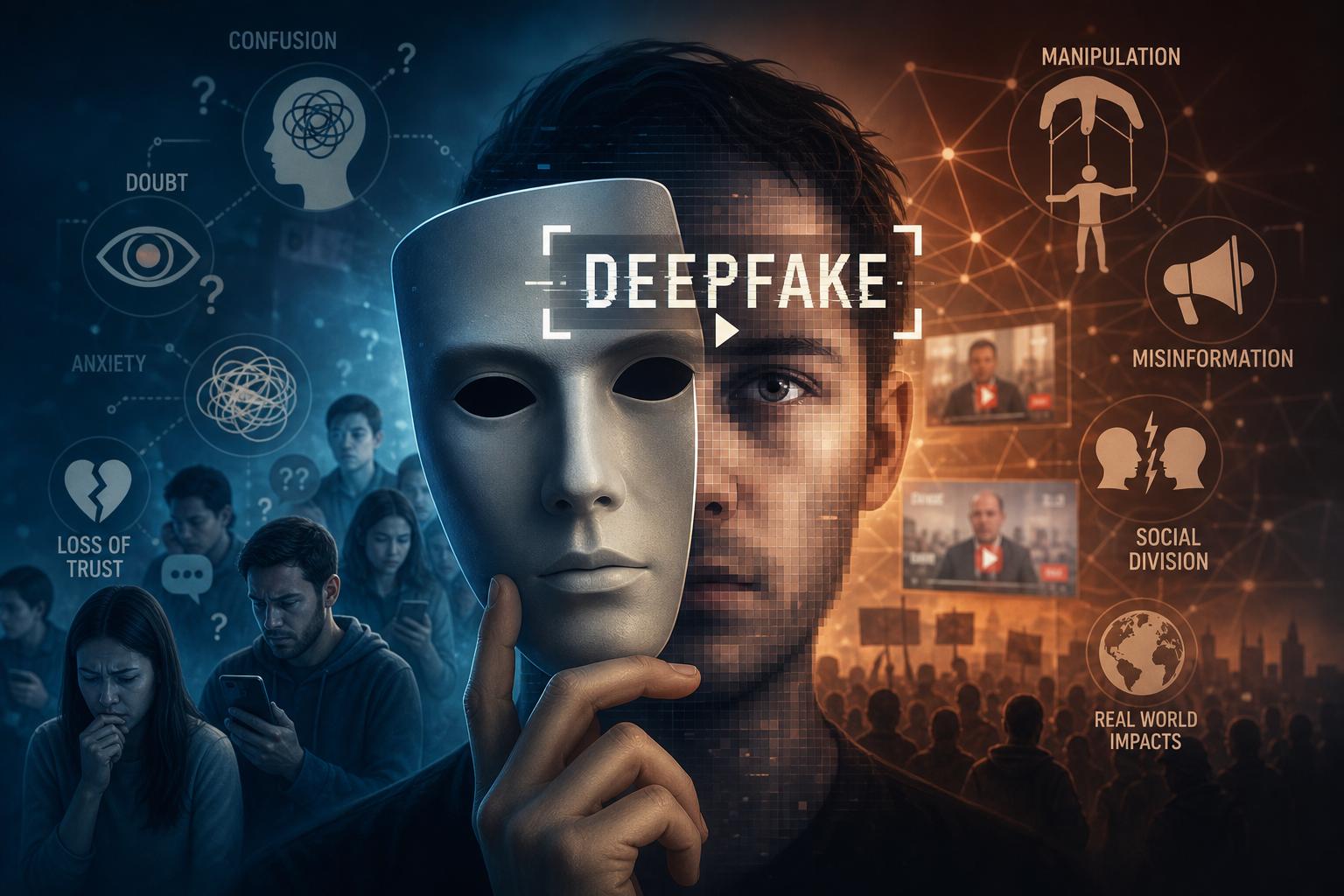
Psychological and Social Impacts of Deepfake Videos on Viewers
Deepfake videos possess a unique power to evoke strong psychological reactions due to their uncanny realism. Viewers often experience a heightened state of doubt and confusion, grappling with the authenticity of what they witness. This cognitive dissonance can lead to increased anxiety and mistrust, not only towards digital content but also towards real-life relationships and institutions. The subconscious acceptance of fabricated realities may influence memory distortion, where false experiences created by deepfakes are recalled as true. This phenomenon underscores the profound impact deepfakes have on the mental frameworks that shape an individual’s perception of truth.
Socially, deepfakes threaten the very fabric of interpersonal trust and public discourse. They can be weaponized to damage reputations, spread misinformation, and polarize communities. The rapid circulation of manipulated videos often triggers emotional responses that exacerbate conflicts and hinder constructive dialog. Consider the following table illustrating typical social consequences observed in communities affected by deepfake dissemination:
| Social Impact | Description |
|---|---|
| Misinformation spread | Rapid sharing of false narratives that distort reality. |
| Loss of Credibility | Undermining trust in news sources and public figures. |
| Polarization | Deepening divides within societies based on manipulated content. |
| Emotional Manipulation | Eliciting fear, anger, or sympathy thru fabricated stories. |
- Heightened skepticism: Viewers may become overly distrustful, questioning authentic content.
- Impaired social cohesion: The erosion of common truth reduces societal unity.
- Psychological fatigue: Constant exposure to deceptive media leads to emotional exhaustion.
Techniques for Detecting Deepfakes and Enhancing Media Verification
Amid the rapid rise of deepfake technology,experts have developed a series of sophisticated methods to identify manipulated media with increasing accuracy. These techniques frequently enough focus on subtle inconsistencies or artifacts left behind by AI-generated content. As an example, analyzing eye blinking patterns and facial muscle movements can reveal unnatural abnormalities challenging for current algorithms to perfectly emulate. Additionally, advanced forensic tools examine the metadata and compression signatures embedded within video files, leveraging discrepancies that hint at synthetic origin. Such approaches not only expose deceit but also cultivate trust by verifying authenticity at a granular level.
To systematically enhance media verification, researchers and professionals rely on multi-layered strategies combining manual scrutiny and automated detection software. below is a breakdown of some essential detection techniques employed:
- Temporal Analysis: Investigates frame-to-frame coherence and identifies unnatural transitions or timing glitches.
- Digital Watermarking: Applies verifiable marks to original content that become an authenticity benchmark.
- Deep Learning Classifiers: Utilize neural networks trained specifically to detect AI-generated alterations.
- source Authentication: Confirms origin by cross-referencing against trusted content databases.
| Technique | Detection Focus | Effectiveness |
|---|---|---|
| Eye Movement Analysis | Unnatural blinking | High |
| Metadata Inspection | File inconsistencies | Medium |
| Neural Network Classifiers | visual artifacts | High |
| Source Verification | Content origin | Critical |
Practical Recommendations for Individuals and Organizations to Combat Deepfake Misinformation
To effectively counteract the spread of deepfake misinformation,individuals should adopt a skeptical mindset when consuming video content from unfamiliar sources. Critical evaluation tools such as verifying the video’s origin, cross-checking with trusted outlets, and using reverse image or video search technologies are essential first steps. Additionally, educating oneself about common deepfake indicators-such as unnatural blinking, inconsistent lighting, or audio-visual mismatches-empowers viewers to distinguish real from manipulated footage. Social media users can further contribute by reporting suspicious content promptly, helping algorithms flag potential misinformation before it propagates widely.
Organizations, especially those relying on video communications or media publications, must implement multi-layered defenses. This includes deploying automatic video authentication tools that utilize AI to detect subtle anomalies and establishing clear protocols for fact-checking user-generated content. Furthermore, fostering a culture of digital literacy within the workforce and audience base enhances collective resilience. The table below outlines some effective organizational strategies for combating deepfakes:
| Strategy | Purpose | Implementation Tip |
|---|---|---|
| AI-Driven Verification | Detect manipulated videos | Integrate with content management systems |
| Employee Training | Increase awareness | Conduct regular digital literacy workshops |
| Clear Reporting channels | Quickly flag misinformation | Use dedicated hotlines or inboxes |
| Collaboration with Experts | Stay updated on new threats | Partner with cybersecurity firms |