
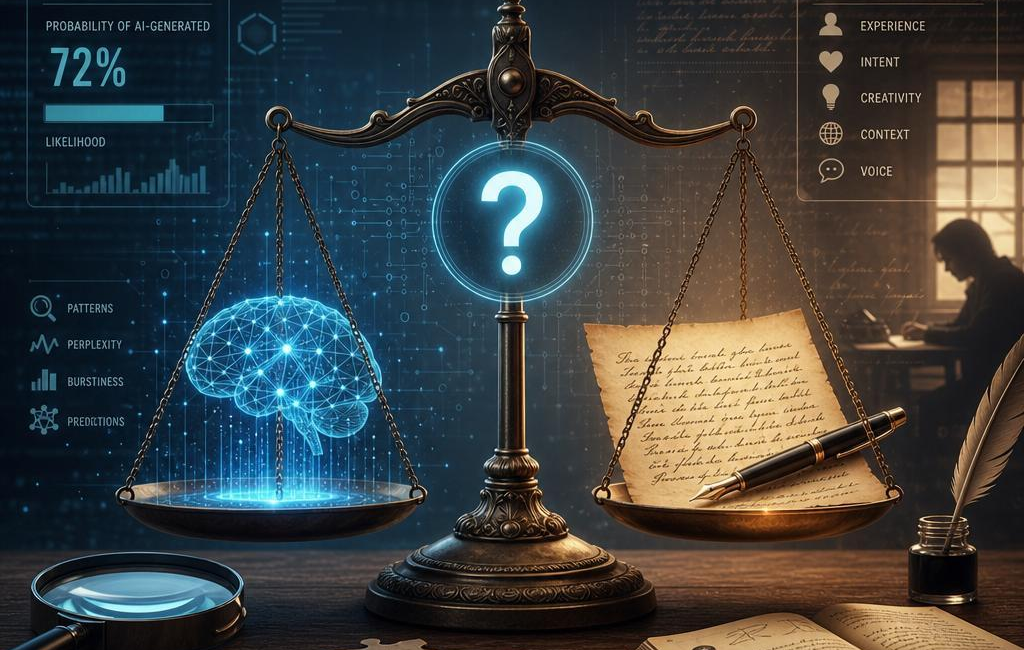
Limitations of AI Detectors in Determining Authorship
Despite the notable advancements in AI detection technology, thes systems harbor intrinsic constraints that challenge their reliability as standalone arbiters of authorship. One major limitation lies in their dependency on pattern recognition rather than genuine understanding; AI detectors primarily analyze syntax,style,and statistical features rather of the deeper cognitive processes underlying human writing. Consequently, they can be misled by skilled impersonations or edited texts that blend multiple authors’ characteristics. additionally, the models used for detection are trained on vast datasets that may not encompass the full diversity of writing styles, especially those from niche disciplines or underrepresented languages, thereby increasing the risk of false positives or false negatives.
- Susceptibility to obfuscation: Authors can deliberately alter writing patterns to evade detection.
- Contextual limitations: AI lacks cultural and contextual awareness, ofen misinterpreting idiomatic or nuanced expressions.
- Technological evolution: As generative AI improves, detectors must constantly adapt, frequently enough lagging behind emerging linguistic trends.
| Factor | Impact on Detection Accuracy |
|---|---|
| Writing Style Variability | High |
| Editing and Revisions | Moderate |
| Cross-disciplinary Jargon | High |
| Language and Dialects | High |
| AI Model Updates | Moderate |
Moreover, ethical and legal considerations further complicate reliance on AI detectors to prove authorship conclusively. Without transparent algorithms and explainable outputs, decisions based solely on AI findings risk undermining due process and fairness. For instance, false accusations sparked by misidentification can damage reputations irrevocably. Hence, AI detection shoudl be viewed as an auxiliary tool, integrated within a broader forensic framework that includes human expertise, contextual analysis, and corroborative evidence to establish authorship with confidence.

Integrating Human Expertise with AI Tools for Accurate Attribution
While AI detectors provide an innovative layer of analysis in authorship attribution,their outputs should not be considered definitive without human expertise. Expert reviewers bring nuanced understanding of context, style, and intent that AI tools currently cannot replicate. Blending the interpretive skills of seasoned linguists or forensic analysts with algorithmic data enhances reliability in identifying the true creator of a text. This symbiotic approach allows for the resolution of ambiguities an algorithm might flag but cannot resolve independently.
Consider integrating human judgment and AI outputs through a structured review process:
- Cross-verification: Experts assess flagged sections for stylistic consistency and thematic coherence.
- Contextual analysis: Humans evaluate intent and background knowledge that AI lacks.
- iterative feedback: Adjustments to AI model parameters informed by expert insights enhance future detection accuracy.
| Role | Contribution to Attribution | Limitations |
|---|---|---|
| AI Tools | Rapid pattern recognition; large dataset comparisons | Context blind; prone to false positives/negatives |
| Human experts | Contextual insight; interpretive flexibility | Resource-intensive; subjective variability |
Best Practices for Using AI detectors in Authorship Verification
When integrating AI detectors into authorship verification workflows, it is indeed essential to complement their findings with conventional methods rather than relying on them exclusively. These tools analyze linguistic patterns and statistical signals, but they cannot account for context or intent, which are critical to establishing genuine authorship. For optimal results, combine AI detector outputs with human expert reviews, corroborative evidence such as writing samples, and metadata analysis. Ensuring transparency in the detection process and setting clear thresholds for identifying potential authorship discrepancies can significantly enhance reliability.
- Cross-validation: Always validate AI findings against multiple samples and sources to reduce false positives and negatives.
- Contextual analysis: Consider the writing environment and subject matter, which might influence style variations unrecognized by AI.
- Regular updates: Keep detectors updated with the latest models and datasets to maintain detection accuracy in evolving writing trends.
- Ethical use: Maintain transparency with authors about the use of AI detection tools to preserve trust in the verification process.
| Best Practice | Benefit | Potential Limitation |
|---|---|---|
| Human Expert Review | Contextual insight and nuanced judgment | Time-consuming and subjective |
| Multiple Sample comparison | Improves accuracy by reducing bias | Requires access to sufficient writing samples |
| Metadata Correlation | Provides supporting evidence about origin | May not always be available or reliable |
Future directions in Enhancing AI Reliability for Authorship Proof
The reliability of AI detectors in proving authorship hinges on continuous advancement in machine learning algorithms combined with interdisciplinary input. Future enhancements are likely to focus on integrating contextual understanding and behavioral biomarkers unique to individual authors. These include writing style nuances, decision-making patterns, and even emotional cues embedded in text. such multifaceted data points will form a composite fingerprint that AI detectors can analyze more thoroughly than current lexical or syntactic checks. Additionally, incorporating real-time adaptation mechanisms will allow systems to evolve in parallel with an author’s changing style, thereby bolstering long-term accuracy.
Key innovations on the horizon include:
- Hybrid models combining AI with forensic linguistics to dissect semantic layers.
- Cross-referencing detected patterns against verified databases to minimize false positives.
- Dynamic updating protocols that recalibrate algorithms based on new writing samples.
| Future Feature | Benefit | Impact on Reliability |
|---|---|---|
| Contextual Deep Learning | Captures underlying intent | significantly reduces ambiguity |
| Behavioral Biometrics | Models unique cognitive signals | Enhances consistency over time |
| Adaptive Algorithms | Responds to evolving style | Maintains detection accuracy |