

– Understanding the Mechanisms Behind AI-Based Plagiarism Detection
Artificial intelligence powered plagiarism detection systems operate by leveraging advanced algorithms that analyze textual content for patterns and anomalies. These mechanisms often involve natural language processing (NLP) to understand the semantic and syntactic structure of the text, enabling the detection of subtle rephrasings and paraphrases that traditional string-matching tools might miss. Machine learning models, trained on vast datasets of original and plagiarized content, evaluate the likelihood that a piece of text has been copied or derived from existing sources. this process is supplemented by complete database indexing, where the submitted work is compared against millions of academic papers, articles, and web content to identify overlaps in ideas and phrasing.
Though, the complexity of language and the creative ways content can be manipulated pose significant challenges to AI detection systems. Key factors influencing their accuracy include:
- Synonym substitution and structural changes: AI can struggle with deeply paraphrased text where the meaning is preserved but wording and sentence construction are substantially altered.
- Contextual understanding limits: While AI can analyze words and phrases, discerning the nuanced intent behind text remains difficult, sometimes leading to false positives or negatives.
- Database limitations: AI engines can only detect plagiarism against sources within their indexed repositories, perhaps missing less accessible or proprietary materials.
| Mechanism | Function | Limitations |
|---|---|---|
| Natural Language Processing | Analyzes text structure and meaning | Difficulty with highly creative paraphrasing |
| Machine Learning Models | Predicts plagiarism probability | Requires large,diverse datasets for training |
| Database Indexing | Compares content against known sources | Limited to the scope of accessible databases |
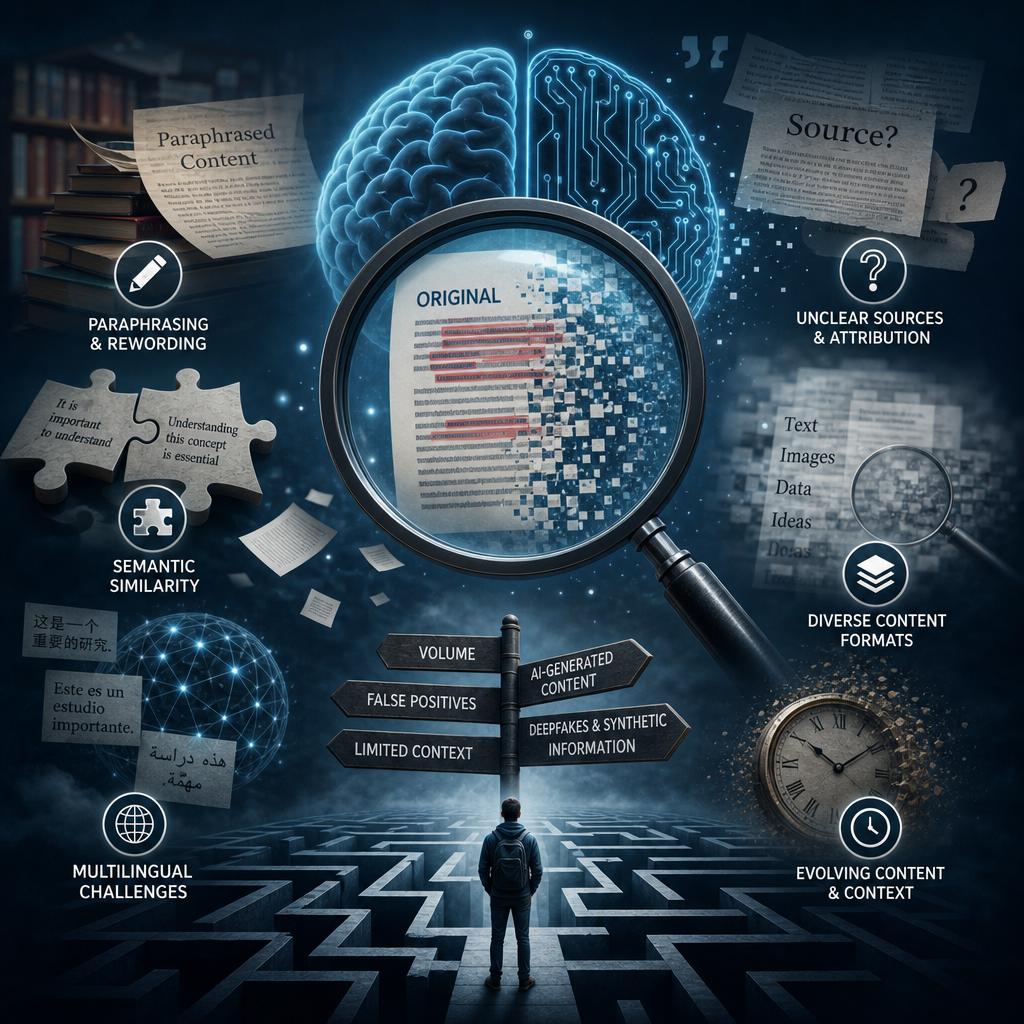
- Key Challenges in Accurately Identifying plagiarized Content using AI
detecting plagiarized content with AI involves navigating a labyrinth of complexities that challenge even the most advanced algorithms. One major hurdle is the contextual understanding of text. AI struggles to grasp subtle nuances such as paraphrasing, synonym substitutionor the intentional rearrangement of sentences designed to evade detection. Unlike human reviewers, AI systems often lack the ability to discern between legitimate citations, common knowledgeand cleverly disguised copied content. This results in both false positives, where original work is flagged erroneouslyand false negatives, where cleverly masked plagiarism goes unnoticed.
Moreover,the broad diversity and volume of digital content pose significant barriers. AI tools rely heavily on extensive and up-to-date databases to cross-check submissions; however, many sources remain behind paywalls, unpublishedor dynamically changing. This leads to incomplete comparisons. The table below summarizes key challenges faced by AI plagiarism detectors:
| Challenge | Impact | AI Limitation |
|---|---|---|
| Paraphrase Detection | High false negatives | Lack of semantic depth |
| Database Coverage | Misses unpublished/paid content | Limited access to sources |
| Context Recognition | False positives on common phrases | Inability to understand nuance |
– Limitations of Current AI Technologies in Differentiating Originality
While artificial intelligence has made significant leaps in text analysis and pattern recognition,contemporary AI systems still face considerable hurdles in distinguishing genuine originality from cleverly disguised plagiarism. These systems primarily rely on matching textual similarities against extensive databases, which limits their ability to assess the originality of ideas or nuanced contextual reinterpretations. AI struggles with subtle paraphrasing, cultural referencesand interdisciplinary knowledge synthesis, making it prone to false positives or blind spots when content is creatively transformed but not copied verbatim.
- Context Blindness: AI lacks deep understanding of context and intent, often missing the subtleties that differentiate inspiration from appropriation.
- Limited Source Coverage: Databases may not cover all published or unpublished content, especially emerging new media or languages, resulting in gaps.
- Creativity Detection Deficit: AI cannot reliably assess the conceptual originality or innovative thought processes behind a text.
| limitation | Impact on Detection |
|---|---|
| Contextual Understanding | Misidentifies legitimate remixing as plagiarism |
| Database Exhaustiveness | Misses uncatalogued or localized sources |
| Semantic Recognition | Fails to recognize paraphrased or conceptually similar content |
– Strategic Recommendations for Enhancing AI Plagiarism Detection Systems
To substantially improve AI-driven plagiarism detection systems, a multi-faceted approach must be embraced. First, integrating context-aware algorithms is essential. These algorithms assess not just verbatim matches but also semantic similarities, enabling the system to detect cleverly rephrased or translated content. Additionally, leveraging cross-lingual and cross-domain capabilities enhances detection accuracy across diverse sources and languages, addressing gaps where traditional detectors may struggle.Emphasizing ongoing data enrichment through the inclusion of up-to-date academic, digitaland informal content sources ensures the AI models remain relevant against evolving plagiarism tactics.
- Hybrid Detection Techniques: Combine rule-based and machine learning methods to cover a broad spectrum of plagiarism types.
- User Feedback Loops: Incorporate educator and user input to continuously refine detection parameters.
- Clarity in Reporting: Present detailed similarity reports that contextualize matches rather of raw similarity scores.
Moreover, enhancing system robustness demands a focus on ethics and user privacy by embedding secure data handling and anonymization protocols. The AI must be capable of distinguishing between acceptable common knowledge and improper copying, a nuanced challenge that calls for carefully calibrated threshold settings. Below is a simplified framework outlining key strategic pillars for AI plagiarism detection enhancement:
| strategic Pillar | Focus Area | Expected Outcome |
|---|---|---|
| Algorithmic Sophistication | Semantic and contextual analysis | Higher detection accuracy for paraphrased content |
| Data Expansion | Inclusion of multilingual and diverse datasets | Broader source coverage |
| User Involvement | Feedback mechanisms and transparency | Improved trust and continuous betterment |
| ethical Standards | Data privacy and fair usage policies | User confidence and compliance |